




8 Cognitive Biases That Destroy Traders
Discover the cognitive biases that hurt traders most, why they lead to emotional and irrational decisions, and how to build more disciplined trading habits.
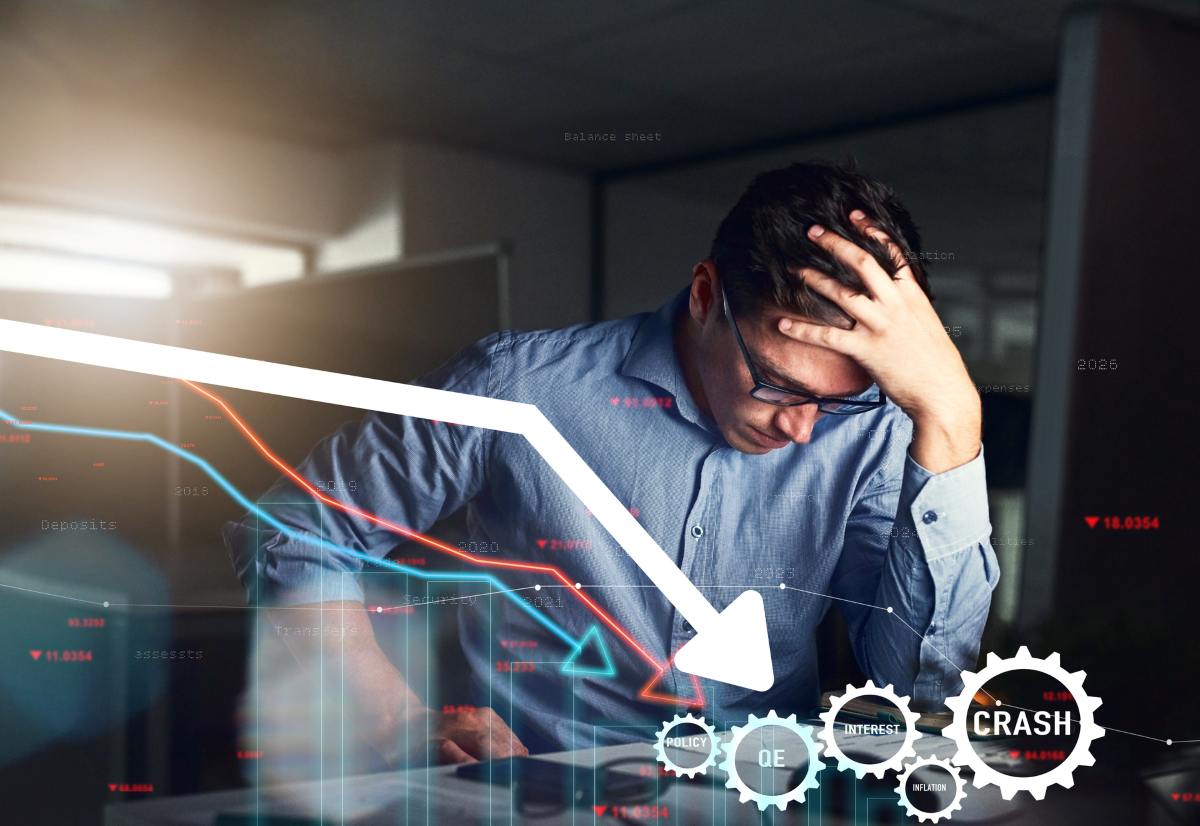
The list of cognitive biases that affect traders is essentially the list of cognitive biases that affect humans, applied to a domain where the costs of bad thinking are unusually direct and measurable. Trading doesn't create new biases. It just makes the existing ones more expensive. A bias that produces minor inefficiencies in everyday life can blow up an account in markets, because every decision is denominated in money and every error compounds.
What follows is the eight biases that, in my experience, cause the most damage to retail traders. None of them are obscure. All of them are documented across decades of behavioural economics research. The point isn't novelty. It's recognising how they operate in your own decision-making, because that's where most traders fail to apply what they technically already know.
1. Confirmation Bias
The classic. You form a view, and then you notice all the evidence that supports it while filtering out the evidence that doesn't. In trading, this means you read analysis that agrees with your bias, find chart patterns that confirm what you already think, and dismiss contradictory signals as noise.
Confirmation bias is particularly dangerous because it feels like analysis. The trader genuinely believes they're evaluating evidence rationally, when in fact they're constructing a case for a conclusion they reached emotionally. The output looks like reasoning, which makes it harder to catch.
The countermeasure is structural. Force yourself to articulate the case against your trade before entering. If you can't make a credible case for the opposing view, you haven't done enough analysis.
2. Loss Aversion
Losses feel about twice as painful as equivalent gains feel good. This asymmetry, well-documented in behavioural economics, explains why traders cut winners early and let losers run. Both behaviours feel logical in the moment. Both are produced by the same underlying bias.
The early-winner version: a small profit feels good, and you don't want to lose it, so you exit before the trade has reached its target. The late-loser version: a small loss feels bad, and you don't want to crystallise it, so you hold hoping it comes back.
Recognising both as expressions of loss aversion is the first step. Implementing systematic exits, defined before the trade, is the practical fix.
3. Recency Bias
The mind weights recent events more heavily than older ones, regardless of their actual statistical relevance. After three losing trades, the next setup looks weaker. After three winning trades, the next setup looks stronger. Neither perception is justified by the underlying data, but both feel real.
Few cognitive biases in trading psychology produce worse position sizing decisions than recency bias. Traders increase size after wins and decrease it after losses, exactly when statistical analysis would suggest doing the opposite or, more commonly, doing neither.
The discipline is to size based on strategy parameters, not on recent results. If your normal position size is 1% of capital, it's 1% after a win and 1% after a loss. The strategy doesn't change because the last trade did.
4. The Sunk Cost Fallacy
Once you've put time, money, or emotional investment into a position, it becomes harder to exit even when the underlying reasons for entering have disappeared. This is why traders hold losers for weeks, hoping for a recovery, even when the original thesis has clearly failed.
The fallacy is treating already-incurred costs as relevant to forward-looking decisions. They aren't. The question isn't "how much have I lost on this trade", it's "what's the best decision from here". A trader who internalises this can exit losing positions cleanly. A trader who doesn't will keep adding to bad trades, hoping to vindicate the original decision.
5. Overconfidence
Most traders, like most drivers, rate their skill above average. This creates problems that compound across many decisions. Position sizes get inflated. Risk management gets relaxed. Setups get taken that wouldn't have been considered during a more humble period.
Overconfidence is particularly dangerous after winning streaks. The brain interprets a run of wins as evidence of skill rather than as the upper end of normal statistical variance, and the trader starts trading bigger and looser. The drawdown that follows is usually proportionally severe, because the bigger position sizes amplify the eventual losses.
The countermeasure is mechanical. Track your performance honestly, including the variance. Set position sizing rules that don't change based on recent performance. Treat every trade as one in a long sequence rather than as an opportunity to capitalise on momentum.
6. Anchoring
Anchoring, aka the tendency to fixate on a specific number, often the entry price or a recent high, and use it as the reference point for all subsequent decisions. A stock that was at $100 and is now at $80 feels "cheap" because of the anchor, even if the fundamentals say it should be at $60.
Anchoring also affects entry decisions. Traders wait for prices to come back to a level they remember, even when the market has moved on and that level is no longer relevant. Or they take profits at round numbers because round numbers feel meaningful, regardless of what the chart actually suggests.
The fix is to evaluate trades based on current setups rather than historical reference points. The level you remember from three weeks ago has no causal effect on what the market does next.
7. The Gambler's Fallacy
The belief that random events have memory. After a string of losses, you're "due" for a win. After a string of wins, the next trade is "more likely" to be a loser. Both are statistical nonsense in independent events, which most trades effectively are. But the intuition is strong.
This bias drives the worst kind of position sizing. Traders increase size on losing streaks because they expect the streak to end. The streak doesn't end on schedule, the oversized losses compound, and what was a manageable drawdown becomes a blown account.
The treatment is understanding probability properly. Each trade is independent of the previous ones. The strategy's overall expectancy plays out across hundreds of trades, not within any specific sequence.
8. Hindsight Bias
After events happen, the brain reconstructs the past as if those events were predictable all along. This produces a particular kind of trading damage. You look back at a setup you missed, conclude you should have taken it, and develop unjustified confidence about your ability to spot similar setups in the future. Or you look back at a loss you took, decide it was "obvious" the trade would fail, and lose trust in your strategy even though the original decision was correct given the information available at the time.
Hindsight bias is corrosive because it distorts the feedback loop that's supposed to teach you from past trades. You stop learning from actual decisions and start learning from reconstructed ones, which is mostly fictional.
For traders working through these biases in a structured environment, we at AquaFunded give you the option to discover how to access trading capital under defined rules, which provides external structure for decisions that personal accounts often leave entirely to the trader's psychology.
Working With Biases Rather Than Against Them
The realistic position is that you don't eliminate cognitive biases. You learn to recognise them in yourself and structure your trading to limit their effects. This is why systematic rules, defined position sizes, written entry and exit criteria, and journal-based review processes work. They impose external discipline at the moments your biases would otherwise dominate.
The traders who survive the longest aren't the ones who have somehow transcended their cognitive architecture. They're the ones who built habits and structures that contain the damage when the biases inevitably activate. The work is ongoing rather than ever finished, which is annoying but is also the actual answer to a question most traders would prefer have a more dramatic resolution.
