




How to Know If a Trading Strategy Actually Works
Learn how to know if a trading strategy actually works. Backtest results, analyze data, measure performance, and validate your edge before risking real capital.

Having a trading strategy is one thing. Knowing whether it actually works is an entirely different matter. Many traders operate with a level of confidence in their approach that the evidence simply does not support.
A handful of winning trades, a promising backtest, or a setup that looked compelling in hindsight can all create the illusion of a genuine edge when none has actually been established. Knowing how to evaluate a trading strategy with rigor and honesty is one of the most important skills you can develop, and it is one that most traders never fully invest in.
In this article, we will walk you through the key criteria and processes you need to apply to determine whether your strategy is genuinely viable or simply benefiting from luck and favorable market conditions.
The Problem with Small Sample Sizes
The most common error traders make when evaluating a strategy is drawing conclusions from too few trades. Ten winning trades in a row can feel significant, but if you look at the bigger picture, it is not.
Markets contain enough randomness that short winning streaks can occur with almost any approach, including a completely arbitrary one. A strategy needs to be evaluated across a sample size large enough to produce statistically meaningful results, and in most cases, that means a minimum of one hundred trades, with several hundred being considerably more reliable.
The uncomfortable implication of this is that you need to be willing to trade a strategy through a substantial number of repetitions before you can say anything meaningful about whether it works.
Abandoning a system after twenty trades because it produced a drawdown tells you nothing about the system. It only tells you that you experienced a losing period, which is an expected feature of any trading approach, not evidence of fundamental failure.
Defining What "Works" Actually Means
Before evaluating a trading strategy, you need to be clear about what you are actually measuring. A strategy that wins sixty percent of its trades but loses more on its losers than it gains on its winners does not work in any meaningful sense.
A strategy with a forty percent win rate but a consistent three-to-one reward-to-risk ratio on winners is a genuinely profitable approach. Win rate alone is a poor and frequently misleading metric.
The number that matters is expectancy, which combines win rate and average reward-to-risk to tell you how much you can expect to make, on average, for every unit of risk you take.
A positive expectancy means the strategy produces profit over a large sample. A negative expectancy means it does not, regardless of how good the individual setups look or how logical the underlying concept seems.
Backtesting: What It Can and Cannot Tell You
In case you aren’t aware, backtesting is the process of applying your strategy rules to historical price data and recording the results. When backtesting is done properly, it can tell you a great deal about how a strategy could have performed across different market conditions, what its historical drawdown characteristics look like, and whether the underlying logic holds up across a meaningful data set.
Done poorly, it tells you very little and can actively mislead you. The most common form of poor backtesting is curve fitting, where the strategy rules are unconsciously adjusted until they produce excellent results on the specific historical data that is being tested.
A curve-fitted strategy looks exceptional in a backtest and falls apart in live trading because its rules were optimized for the past rather than built around a genuinely robust edge.
To avoid this, test your strategy on data you did not use during the development process. If you built and refined your rules using charts from 2022 and 2023, test the final version on 2020 and 2021 data without making any further adjustments.
If the results hold up on unseen data, you have meaningful evidence that the edge is real. If they collapse, the strategy was curve-fitted and needs to be rebuilt from a more principled starting point.
Forward Testing and the Live Market Gap
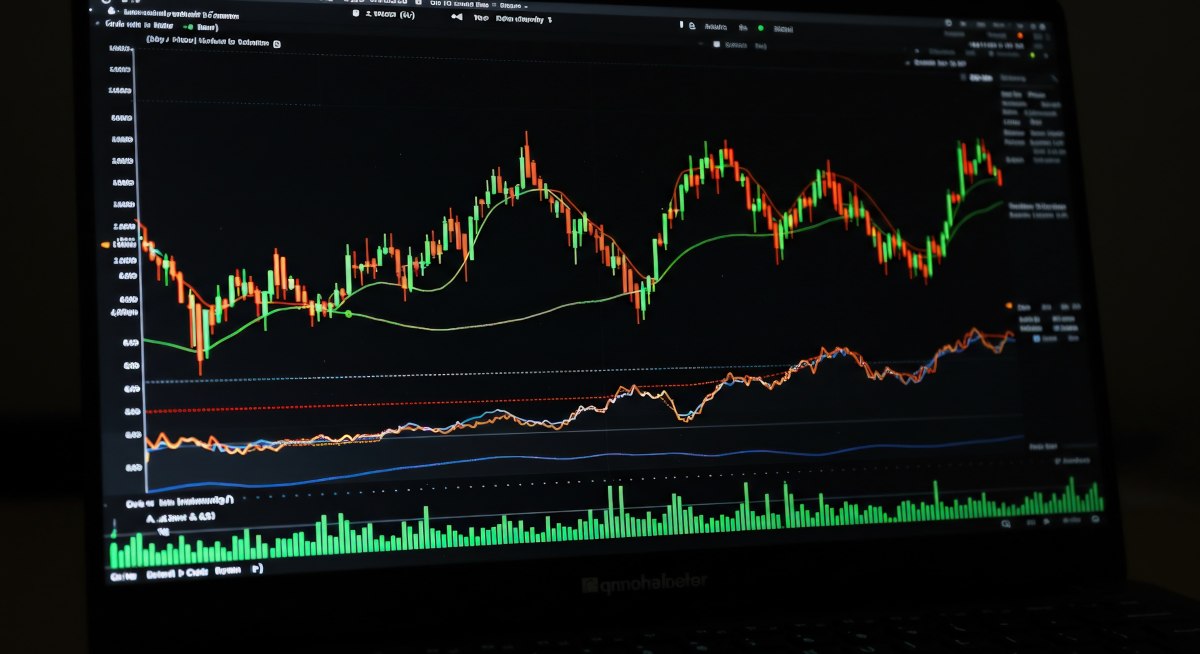
Even a well-constructed backtest can leave a significant gap between historical performance and live trading results. Backtesting assumes perfect execution at the exact price your rules specify. Live trading introduces slippage, requotes, partial fills, and the psychological pressure of real capital at risk, all of which affect actual results in ways that historical simulation cannot capture.
Forward testing bridges part of this gap. Running your strategy in real time, either on a demo account or with minimal position sizes, will force you to apply your rules under live market conditions without the clarity of hindsight.
It also exposes execution challenges that backtesting might have glossed over. A setup that was straightforward to identify on a historical chart may be genuinely ambiguous in real time, which is important information about how the strategy will perform at scale.
Key Metrics to Track
Beyond expectancy, there are several other metrics that can give you a more complete picture of whether a strategy actually works. Maximum drawdown tells you the largest peak-to-trough decline in account value the strategy has historically produced.
This matters because a strategy with a strong average return but a fifty percent maximum drawdown may be psychologically impossible to trade through, which means the theoretical returns are irrelevant in practice.
The Sharpe ratio, which measures return relative to volatility, gives you a sense of how efficiently the strategy can generate profit. A high Sharpe ratio means the returns are consistent and the drawdowns are manageable. A low Sharpe ratio means the returns are erratic, which makes position sizing and long-term execution more difficult.
Another useful metric that you should keep track of is the recovery factor, which is the ratio of net profit to maximum drawdown. A strategy that generates significant profit relative to its worst historical drawdown is a more practical and tradeable system than one where the drawdown is large relative to the returns.
Honest Self-Assessment
The most important and most difficult part of evaluating a trading strategy is applying genuine honesty to the process. It is very easy to find reasons why a losing trade was an exception to the rules, or why a winning trade that did not fully meet the criteria should still count as a valid signal. This kind of selective interpretation corrupts the evaluation process and produces results that flatter the strategy rather than accurately reflect it.
Every trade in your evaluation sample needs to be assessed against the rules as written, not the rules as you wish you had written them. If a trade does not meet the criteria, it does not count.
If it does meet the criteria and the trade was a losing one, it counts as a loss. Maintaining that standard consistently is what separates a genuine strategy evaluation from a self-serving exercise in confirmation bias.
AquaFunded: Built for Traders with a Proven Edge
If you have done the work of properly testing and validating your strategy, you already think differently from the majority of retail traders. That kind of rigor deserves to be rewarded with access to real capital.
As a funded trading firm for retail traders, AquaFunded provides the infrastructure for traders who have established a genuine edge to operate at a scale that retail accounts cannot support.
With funded accounts from $2,500 to $400,000, one-step, two-step, three-step, and instant funding evaluation paths, up to 100% profit split, and on-demand payouts, AquaFunded is the logical next step for traders who have put in the work and are ready to prove it.
