




RSI Divergence Explained
Learn what RSI divergence is in trading and how to spot bullish and bearish signals. Improve trend analysis, identify reversals, and enhance your trade entries.
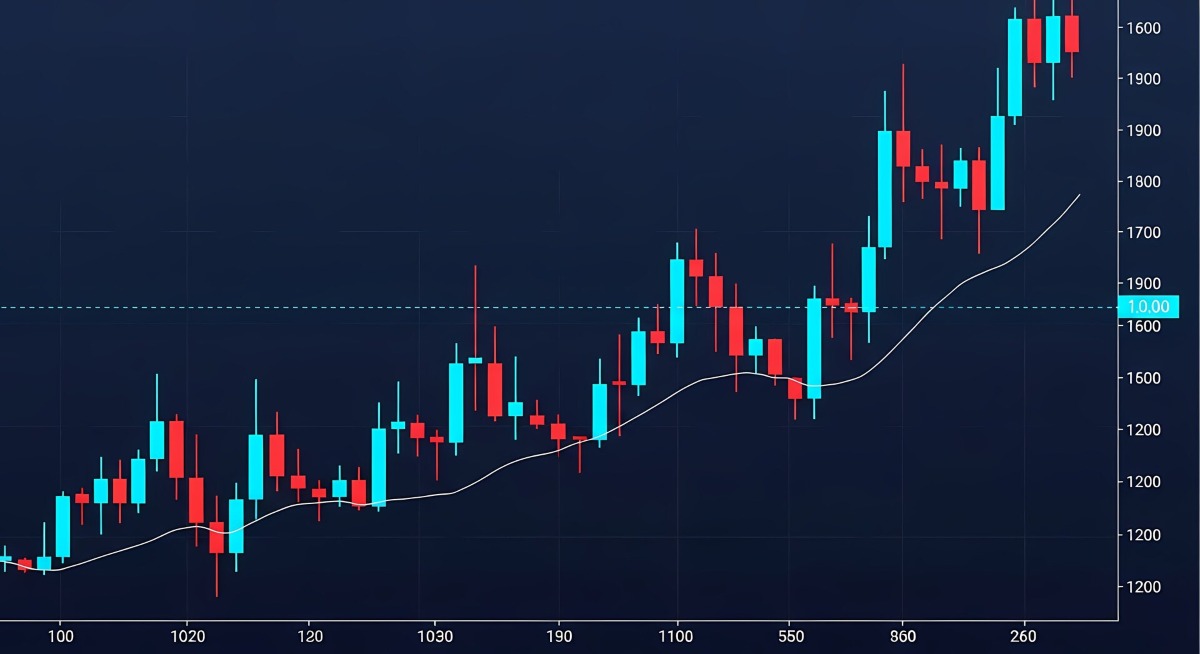
The Relative Strength Index is one of the most widely used technical indicators in trading, and RSI divergence is arguably its most powerful application.
While most traders learn to use the RSI as an overbought and oversold signal, treating a reading above 70 as a sell signal and below 30 as a buy signal, divergence takes a fundamentally different approach.
It uses the relationship between price movement and indicator movement to identify potential shifts in momentum before they show up in price.
Understanding RSI divergence properly requires understanding both what the indicator is actually measuring and what it means when the indicator and price start telling different stories. And that’s exactly what this article will focus on today.
A Quick Review of How RSI Works
The RSI indicator measures the speed and magnitude of recent price changes. It compares average gains to average losses over a set period of time (typically 14 bars) and plots the result on a scale from 0 to 100. A high RSI reading means recent gains have been significantly larger than recent losses. A low reading means the opposite.
The key thing to understand about the RSI for divergence purposes is that it's measuring the velocity of price movement, not the price itself. The price can keep going up while the RSI starts to turn down if each successive move upward happens with less force than the one before it. That's the core of divergence.
What Is RSI Divergence?
Divergence occurs when price and the RSI move in opposite directions. There are two main types.
Regular Bearish Divergence
Regular Bearish Divergence occurs when the price prints a higher high, but the RSI prints a lower high. The price is moving upward, but the momentum behind that move is weakening. The second push higher wasn't as strong as the first, even though it reached a higher price level.
This is often interpreted as a warning sign that the uptrend may be losing steam and a reversal or significant pullback could follow.
Regular Bullish Divergence
Regular Bullish Divergence is the opposite. The price prints a lower low, but the RSI prints a higher low. The market is still making new lows, but each successive push downward is happening with less momentum. The selling pressure is exhausting itself. This is often read as a potential setup for a bullish reversal or significant bounce.
There are also two less commonly discussed types that are worth knowing. They include:
Hidden Bullish Divergence
Hidden Bullish Divergence occurs when the price makes a higher low, but the RSI makes a lower low. This pattern typically appears during uptrends and suggests that the pullback is shallow relative to the momentum behind the trend. It's often used as a continuation signal rather than a reversal signal.
Hidden Bearish Divergence
Hidden Bearish Divergence occurs when the price makes a lower high, but the RSI makes a higher high. This tends to appear during downtrends and signals that the pullback higher lacks the momentum to reverse the trend, suggesting that the downtrend may continue.
How to Draw RSI Divergence Correctly
The most common mistake in identifying divergence is connecting the wrong peaks or troughs on either the price chart or the RSI. There are a few rules that can make this more reliable.
First, compare price highs to RSI highs, and price lows to RSI lows. Don't mix them. For bearish divergence, you're comparing two price highs and the corresponding two RSI readings at those highs. For bullish divergence, you're comparing two price lows and the RSI readings at those lows.
Second, the two points you're comparing should be significant swing points, not just minor fluctuations within a candle or two. A valid divergence setup typically involves two clear swing highs or lows with some separation between them, not noise within a tight range.
Third, the RSI peaks or troughs you're connecting should ideally be clear pivot points on the indicator itself, not arbitrary readings taken from any two candles. You're looking for a swing high on the RSI compared to another swing high, not just the RSI value at the same bar where the price printed its high.
Finally, confirm that the two price points are genuinely higher high / lower high, or lower low / higher low. Approximate equivalence doesn't qualify. The divergence needs to be real.
The Limitations of RSI Divergence
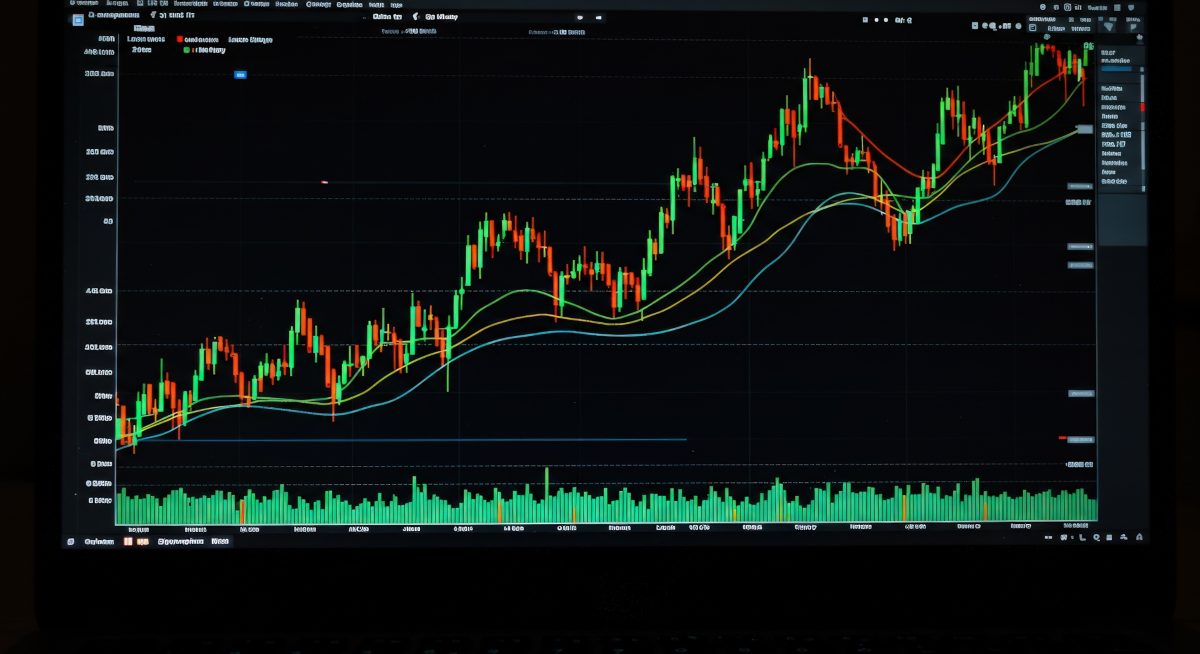
RSI divergence is a legitimate analytical tool. It's not a mechanical entry trigger that works every time it appears. Like any technical signal, it fails regularly, and understanding the conditions under which it fails is as important as understanding when it works.
The most common failure mode is in strongly trending markets. During a powerful uptrend, bearish divergence can appear repeatedly and persistently before the price ever actually turns. Traders who short every divergence signal in a trending market can take a long string of losses before the eventual reversal justifies the approach. Divergence in a trending environment is a caution signal, not a guaranteed reversal.
Divergence is also more reliable on higher timeframes than lower ones. On a 1-minute chart, RSI divergence can form and fail within minutes because noise dominates the signal. On a daily or weekly chart, divergence tends to carry more weight because it reflects a more sustained shift in underlying momentum.
Another limitation is that the RSI is a lagging derivative of the price. By the time divergence is clearly visible and confirmed, some of the move that the divergence was signaling may have already occurred.
Using RSI Divergence in a Trading Framework
The most effective use of RSI divergence is as one input within a broader analysis framework, not as a standalone signal.
Divergence spotted at a key structural level, such as a major support or resistance zone, a prior swing high, or a Fibonacci retracement level, carries significantly more weight than divergence that appears in the middle of empty price space with no structural context.
Entry timing should typically be confirmed by price action: a rejection candle, a break of a short-term trendline, or a close back inside a range following the sweep of a key level. The divergence identifies a potential opportunity. Price action confirms the turn is beginning.
Stop placement should be logical relative to the structure around the trade, not just a fixed distance. And position sizing should account for the fact that divergence-based trades, like all counter-trend setups, carry a meaningful rate of failure.
Put Your Technical Skills to Work With AquaFunded
RSI divergence is one of the tools that separates technically grounded traders from those reacting to surface-level price movement. If your analytical framework is built and tested, the next step is applying it with capital that matches your skills.
The AquaFunded trading evaluation program provides traders the ability to prove themselves and access funded accounts that vary in size from $2,500 to $400,000.
In addition to the above, our evaluation plans are also super flexible. You can complete our challenge in one, two, or three steps. If you want to skip the evaluation challenge entirely, you can also do that and get straight into funded trading - just make sure to choose our “Instant Funding” model instead.
