




Demo Trading vs Live Trading: What’s the Difference?
Discover the key differences between demo trading vs live trading. Learn about risks, trading psychology, execution, and when to transition to real markets.

If you’re getting into trading, one of the first decisions you’ll face is whether to start with a demo account or jump straight into live markets. On the surface, both look similar. You place trades, analyze charts, and test strategies in real time.
But once you spend some time in both environments, the differences become obvious, and they matter more than most traders realize. To help you make the most informed decision, in this article, we will go over the main differences between demo trading and live trading. But before we do that, let’s first find out what each one actually involves.
What Is Demo Trading?
Demo trading allows you to trade in real market conditions using virtual funds. You’re using the same platform, the same charts, and often the same pricing data as live markets, but without any of the financial risk involved.
For many traders, this is the starting point. It’s where you learn how to place trades, understand order types, and get comfortable with market movements. However, while demo trading is useful, it has limitations that can affect how prepared you are for real trading.
What Is Live Trading?
Live trading is exactly what it sounds like - you’re trading with real money in real market conditions. Every decision has a financial outcome, which changes how you approach risk, discipline, and execution.
Even if your strategy is the same as in demo trading, your behavior often isn’t. This is where psychology comes into play. Fear, hesitation, overconfidence, and impatience all become factors once real money is involved.
These are elements you simply cannot replicate in a demo environment. Live trading introduces consequences, and those consequences shape how you perform.
The Core Differences Between Demo and Live Trading
The gap between demo and live trading isn’t just about money. It affects how you execute trades, your mindset, and your overall performance.
In a demo account, you’re operating in a controlled environment. There’s no pressure to protect capital, no hesitation when entering trades, and no emotional response to losses. This often leads to more aggressive or unrealistic trading behavior.
In contrast, live trading forces you to deal with uncertainty. You might hesitate before entering a trade, close positions too early, or hold onto losses longer than planned. These reactions are natural, but they can impact your results significantly.
Another key difference is execution. In live markets, factors like slippage, spreads, and order fills can vary depending on market conditions. Demo accounts often simulate ideal conditions, which can create a gap between expected and actual performance.
Over time, this gap becomes one of the biggest challenges for traders transitioning from demo to live trading.
Why Demo Trading Still Matters
Despite its limitations, demo trading plays an important role in your development. That’s why almost every piece of advice out there on forex trading for beginners recommends new traders to start out with a demo account.
It allows you to build a foundation without financial pressure. You can learn how markets behave, understand how your platform works, and test strategies in real time.
More importantly, it helps you develop a structured approach. You can create rules, refine your setups, and begin tracking your trades. This is where demo trading is most effective.
Where Demo Trading Falls Short
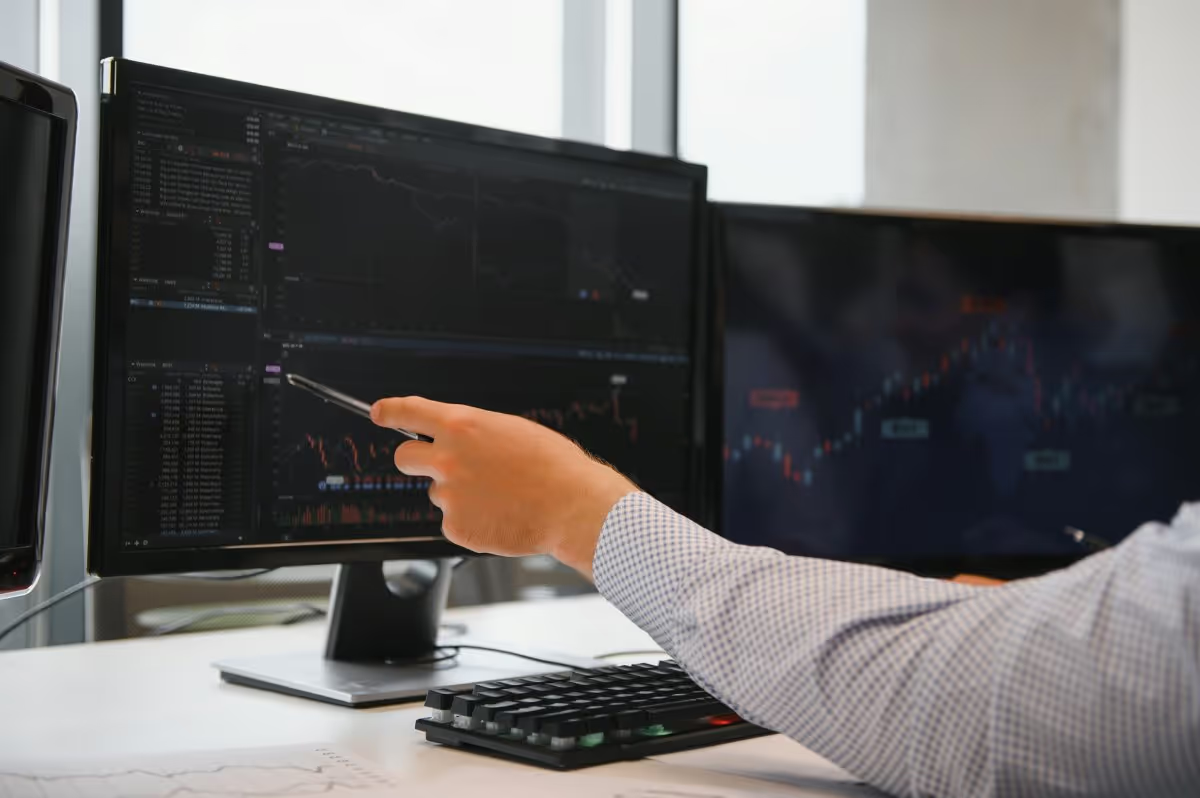
The biggest drawback of demo trading is the lack of emotional involvement. When there’s no real money on the line, your decisions don’t carry weight. You might make trades you wouldn’t normally make, ignore your rules, or overtrade without consequence.
This creates a false sense of confidence. You might feel consistent in a demo account, only to struggle when you switch to live trading. The transition can be frustrating. What worked in a risk-free environment suddenly feels difficult under real conditions.
That’s why relying too heavily on demo trading can slow your progress if you don’t recognize its limitations.
The Psychological Shift in Live Trading
The moment you move to live trading, everything changes. You start thinking differently about risk. Losses feel more significant, even if they’re small. Wins can create overconfidence, leading to inconsistent decision-making.
This psychological pressure is what separates beginners from experienced traders. Managing emotions becomes just as important as understanding the market. Discipline, patience, and consistency are tested on every trade.
This is also where your preparation starts to matter. If you’ve built a solid process during demo trading, complete with a journal and structured rules, you’ll be better equipped to handle the transition.
When Should You Move to Live Trading?
There’s no perfect moment to switch, but there are clear signs that you’re ready. If you can follow your trading rules consistently, understand your strategy, and manage risk properly in a demo account, it’s usually a good time to consider going live.
The key is to start small. You don’t need to risk large amounts of capital at first. In fact, keeping your position sizes low will help you focus on execution rather than outcomes.
It gives you space to adjust to the psychological side of trading without unnecessary pressure. Over time, as you become more comfortable, you can scale gradually.
Bridging the Gap Between Demo and Live With AquaFunded
The transition from demo to live trading is where many traders struggle, but it doesn’t have to be abrupt. One effective approach is to treat your demo account as if it were real. Follow strict rules, manage risk carefully, and track every trade in your journal. This will help you build habits that will carry over into live trading.
Another option is to trade in a structured environment that reinforces discipline. Trading through a professional funded trading account provider like AquaFunded can help bridge this gap, as it introduces real accountability without requiring you to risk your own capital at scale.
This kind of setup encourages consistency and helps you apply what you’ve learned in a more realistic setting.
