




Machine Learning in Trading: How It Works
Discover how machine learning helps traders analyze financial markets, build predictive models, test strategies, and manage trading risk more effectively.
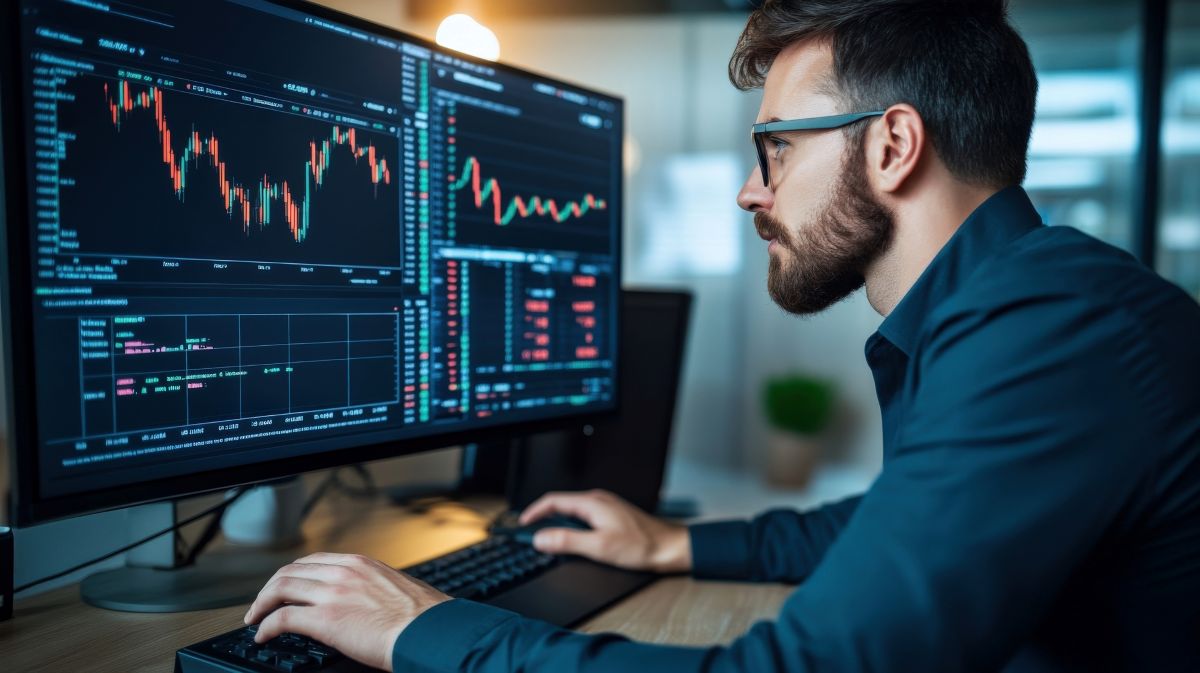
Machine learning gets discussed at two extremes in trading. At one end, it's sold as a magical solution that will identify patterns invisible to humans and produce consistent profits without effort. At the other, it's dismissed as repackaged statistics that doesn't beat simpler approaches. The reality sits between the two, and the question isn't whether ML works in trading. It's where, how, and under what conditions it actually adds value to what you're already doing.
If you're a retail trader thinking about adding ML to your toolkit, the practical issues are different from the ones the marketing focuses on. Most of what gets written about it dwells on the mathematical sophistication. The real barriers are data quality, overfitting, and the difficulty of pulling signal from a noisy environment.
What Does Machine Learning Actually Do in Trading?
At a basic level, ML is a set of statistical methods for finding patterns in data. You feed the system historical data, define what counts as success, and train it to identify the inputs that preceded that outcome. Once trained, the model gets pointed at new data and produces predictions.
In trading, the typical application is forecasting price movement based on historical patterns. The model gets fed market data (prices, volumes, indicators, sometimes alternative data like news sentiment), shown what happened next, and trained to identify combinations of inputs that preceded specific moves. The output is a probabilistic estimate of future price action.
This sounds straightforward, and in domains with stable patterns and clean data, it works. Financial markets are neither. Patterns shift as conditions change, and the data is full of noise that ML systems mistake for signal. The history of ML in trading is largely a history of strategies that looked beautiful on backtests and failed in live application, often spectacularly.
Which ML Applications Actually Work for Traders?
A handful of applications using machine learning in trading systems have produced genuinely useful results, and they're worth distinguishing from the ones that don't.
Pattern recognition across large universes of instruments is one. ML systems can scan thousands of stocks or currencies simultaneously, surfacing setups that match defined criteria far faster than you could review manually. The use case isn't predicting which patterns will work, it's identifying which patterns are present so you can apply your own judgement.
Anomaly detection is another. Spotting unusual order flow, statistical outliers in price action, or correlations breaking down between historically related instruments are tasks where ML genuinely outperforms manual analysis.
Regime classification, where the system identifies the type of market environment (trending, ranging, high volatility) and adjusts strategy parameters accordingly, also produces consistent value when done carefully. It doesn't predict the future. It adapts behaviour to current conditions in a way that improves on static rules.
These applications all enhance human decision-making rather than replacing it. The ML system surfaces information or organises data, and you make the actual decision.
Why Do ML Trading Strategies Fail So Often?
The strategies that fail more than they work share predictable characteristics.
Direct price prediction, where the system tries to forecast specific levels or moves, fails because the signal is buried in noise the training process can't reliably distinguish from real patterns. Models look great on backtests and fail in live because they were fitting noise rather than capturing edge.
Sentiment analysis on news or social media often produces less edge than the marketing suggests. The signals exist but decay fast as more participants build models around the same data, and whatever's left tends to get captured by the fastest institutional systems before you can act on it.
Strategy optimization through pure statistical methods, without strong economic reasoning about why a strategy should work, frequently produces curve-fitted results that don't generalise. The model finds patterns that worked historically but reflect no durable market mechanic, and they disappear in live trading.
The common thread is the high noise-to-signal ratio in financial data combined with the human tendency to mistake noise for signal when an algorithm presents it confidently.
How Do You Avoid Overfitting in ML Trading?
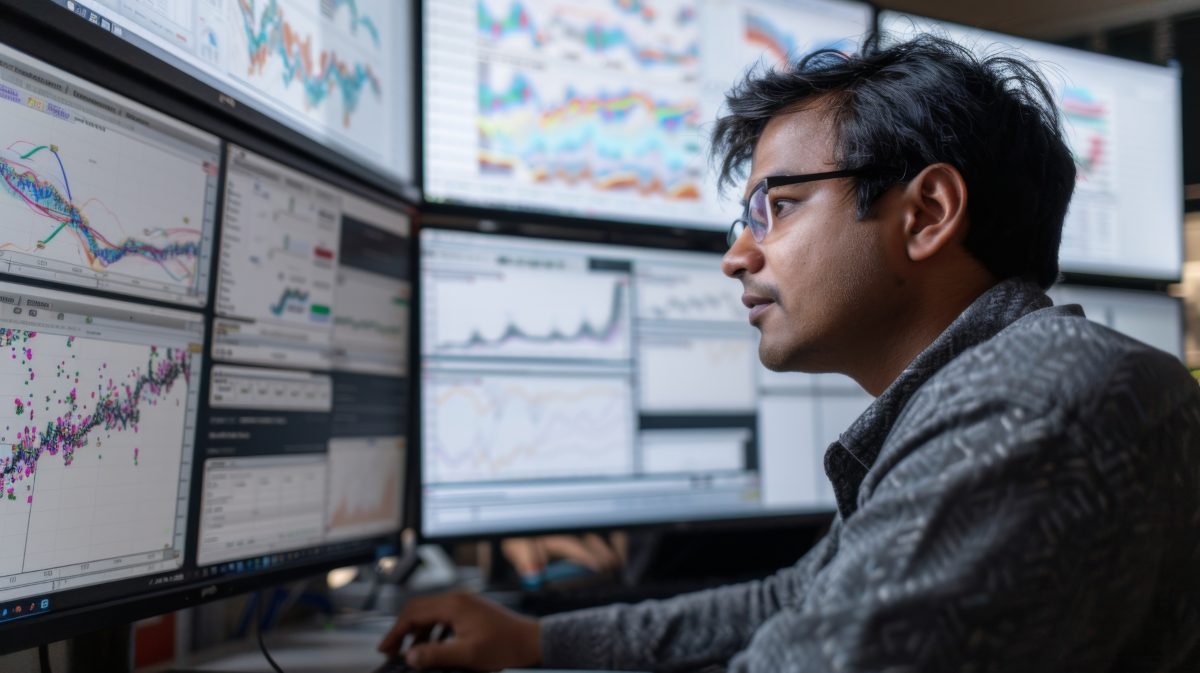
Most of the difficulty with ML in trading comes down to overfitting. The model finds patterns in training data that don't reflect any real mechanic. It's identifying coincidences rather than causes, and when the coincidences stop coinciding in live trading, the strategy breaks.
The technical countermeasures, out-of-sample testing, walk-forward analysis, various forms of cross-validation, help. They don't eliminate the problem because financial markets have non-stationary statistical properties. A pattern that holds across both your training data and your held-out test set can still fail in live trading because the underlying regime has shifted.
The practical implication: ML in trading needs more discipline about strategy validation than ML in other domains. A pattern that survives every conceivable test might still be spurious. The economic reasoning for why the pattern should exist matters as much as the statistical evidence that it does. If you can't explain why your model should work in plain language, treat the backtest results with significant suspicion.
What ML Tools Are Realistic for Retail Traders?
If you want to fold ML into your existing approach without rebuilding everything, the realistic options are tools rather than strategies.
ML-enhanced charting, where indicators or signals come from learned models rather than fixed formulas, supplements your discretionary work without replacing it. You still make the decision, but your inputs include some that traditional analysis couldn't easily produce.
Backtesting platforms with ML capabilities offer more sophisticated strategy validation, including methods that flag overfitting before you deploy.
Pre-built ML strategies on broker platforms can sit inside a broader portfolio rather than running as standalone solutions. Performance varies enormously, so treat them as one component of a wider strategy rather than a single answer.
We at AquaFunded run advanced funding solutions for currency trading that support both algorithmic and discretionary approaches, so if you're integrating ML into your work you can do that without restrictions on automated systems.
What's the Realistic Picture for ML in Retail Trading?
The honest picture is that ML in retail trading is a useful supplementary tool, not a replacement for human trading. The people who get value from it use it for specific, well-scoped tasks. They understand the limitations, apply judgement to the outputs, and don't trust backtest results uncritically.
The ones who get burned tend to fall into two camps. They commit heavily to a single ML strategy that overfits to historical conditions, or they use ML as a black box, which makes it impossible to evaluate when it's working and when it isn't.
Looking forward, ML capabilities will keep improving, but the gains are increasingly going to specialised institutional applications. The simple statistical approaches that worked twenty years ago have been arbitraged away. The current frontier needs compute, data access, and expertise most retail traders don't have.
That leaves the human-plus-ML hybrid as the realistic path. Use ML for what it handles well, reserve judgement for what it doesn't, stay the person making actual decisions. Get that balance right and you're better placed than either the trader who avoids ML entirely or the one who treats it as the answer to what's really a question about human discipline.
