




Complete Guide to Stop Runs in Trading
Discover what stop runs in trading are and how they impact price. Learn to identify liquidity grabs, avoid traps, and improve your timing and trade entries.

Any trader who has spent a meaningful amount of time watching intraday price action has almost certainly been on the wrong side of a stop run. Price ticks through a key level, triggers a wave of orders, and then immediately reverses. It looks and feels deliberate. In many markets, particularly in futures and forex, it is.
Stop runs are one of the most frequently discussed and least well-understood phenomena in short-term trading. To help you make a better sense of stop runs in trading, in this article, we’re going to cover what they are, why they happen, how to identify them, and how to position yourself on the right side of them.
What Is a Stop Run?
A stop run occurs when the price moves to a level where a cluster of stop-loss orders is known or expected to sit, triggers those orders, and then reverses direction sharply. The reversal happens because the triggered stops create a burst of market orders in one direction, which larger participants can use as liquidity to enter or exit positions in the opposite direction.
Stop runs are sometimes called stop hunts or liquidity grabs. The terminology varies, but the underlying mechanics are consistent: price sweeps a high or low, absorbs the stop-related order flow, and then moves away from that level.
This happens at predictable locations. Stops tend to cluster just below recent swing lows, just above recent swing highs, beneath round numbers, below breakout levels that failed to hold, and around previous session highs and lows.
Why Stop Runs Happen
To understand stop runs, it helps to think about the problem facing a large institutional participant. If you need to buy a significant number of contracts or lots, you can't simply place a market order.
The act of buying that volume will move the price against you before you're filled. You need willing sellers. Retail stop orders, which are triggered sell orders sitting below key lows, are a convenient source of that selling pressure.
The price is pushed down to trigger those stops, the resulting sell orders provide liquidity, the institutional buyer absorbs them, and then the price moves back up. This isn't necessarily illegal.
In liquid markets, it's a feature of how large-scale order flow interacts with retail positioning. Understanding it doesn't require a conspiracy theory. It just requires an honest look at where orders live and who has the means to move the price to collect them.
How to Identify a Stop Run
There are several characteristics that can help you distinguish a genuine breakout from a stop run. They include
Speed and Abruptness
Stop runs tend to move through a level quickly and then stall or reverse. Genuine breakouts often show follow-through: price holds above a broken resistance, consolidates, and then continues. A stop run, by contrast, will often print a wick through the level rather than a clean close.
Volume Context
On platforms that provide volume data, a stop run will often show a spike in volume at the moment of the sweep, as stop orders are triggered. If that volume spike isn't followed by continued directional movement, it suggests the selling pressure has been absorbed rather than genuinely shifting sentiment.
Return to the Range
One of the clearest signs of a stop run is when the price sweeps a significant level and then closes back inside the prior range within the same candle or the next few candles. The level was breached, but the price didn't sustain.
False Breakout Structure
A stop run above resistance will often produce a sequence that looks like: test of highs, brief breach of highs, immediate rejection, lower low printed. Traders familiar with price action will recognize this as a "fake out" structure that signals the opposite direction.
Understanding Order Types in This Context
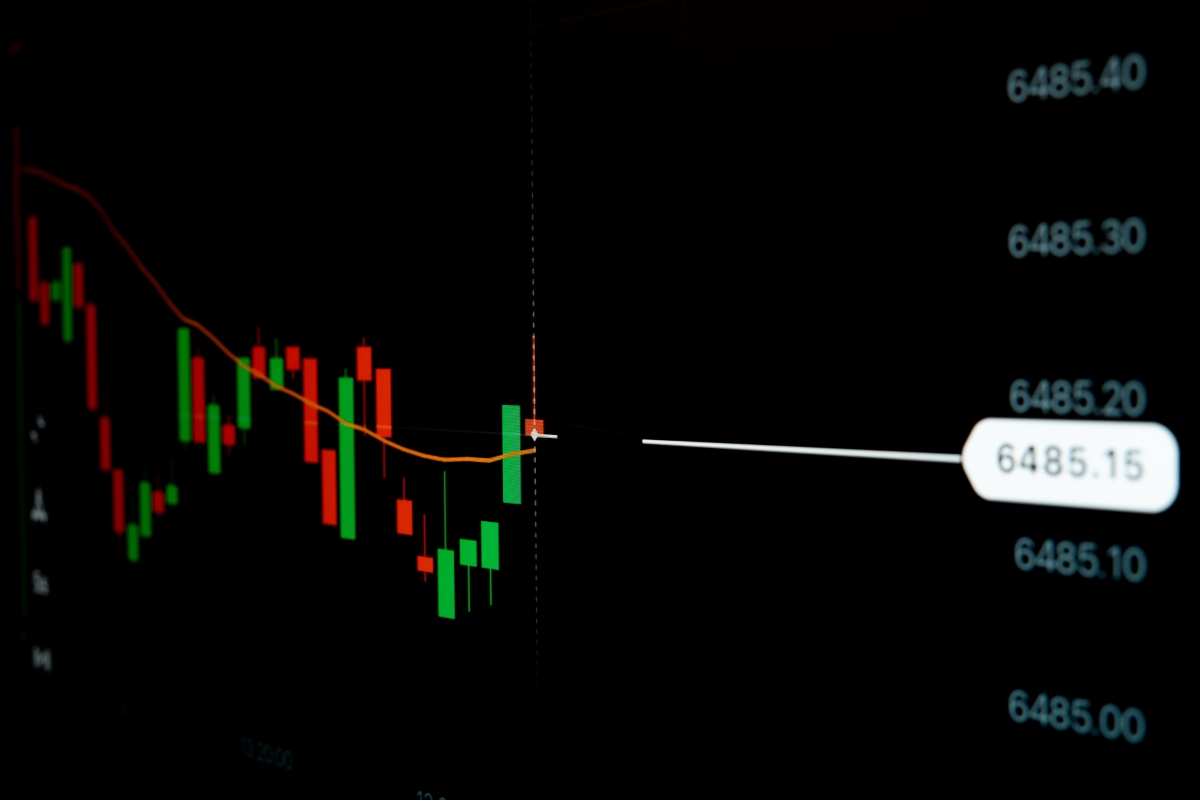
Knowing the difference between stop loss vs stop limit orders is relevant here, so we want to touch on it. A stop-loss order becomes a market order the moment the price touches the trigger level. In a fast-moving stop run, that means your exit can occur at a significantly worse price than intended, particularly in less liquid markets.
A stop-limit order sets a floor on the exit price but carries the risk of not being filled at all if the price moves too fast through the limit. Both have legitimate uses, but understanding how each interacts with stop run mechanics will help you make smarter decisions when it comes to order placement and execution.
Trading Around Stop Runs
There are two primary ways traders incorporate stop run awareness into their approach.
The first is defensive: placing your own stops at locations that are less predictable. Rather than placing a stop exactly at the low of a key candle, for instance, you might place it several ticks beyond the low, accounting for the typical stop run distance.
Alternatively, some traders use mental stops and manage exits manually, which removes their orders from the pool of accessible liquidity entirely.
The second is offensive. This involves actively looking to trade in the direction of the reversal that follows a stop run. This means identifying high-probability stop clusters in advance, watching for a sweep of that level with the right volume and price action characteristics, and entering in the opposite direction as price returns to the range.
This is a legitimate trading strategy, but it requires patience, precision, and a clear set of invalidation rules for when the supposed stop run turns into a genuine breakout.
Avoiding the Most Common Mistakes
The biggest mistake traders make when learning about stop runs is seeing them everywhere. Not every break of a swing low is a stop run. Sometimes, the price breaks down and keeps going.
Learning to distinguish between genuine directional moves and manufactured liquidity sweeps takes screen time, pattern recognition, and honest review of past trades.
The second mistake is placing stops at the most obvious locations without any cushion. Textbook stop placement is known by everyone in the market. If you're placing your stop at the exact low of the previous candle because that's what every trading course teaches, you're placing it in the same location as thousands of other retail traders. That makes your stop a target.
The third mistake is treating stop runs as proof of market manipulation in a way that breeds paranoia rather than adaptability. The market structure that produces stop runs is real and recurring. Traders who understand it gain an edge. Traders who feel victimized by it tend to make increasingly poor decisions as their level of frustration builds.
Fund Your Edge With AquaFunded
If you feel like you have what it takes to succeed as a trader, through AquaFunded, you can access funded accounts that range in size from $2,500 to $400,000. They allow you to execute your trading strategy without risking your personal capital (as you’ll be using our own).
In addition to the above, we also offer our funded traders the ability to keep up to 100% of the profit they generate by trading using our firm’s capital and request payouts on demand. So, if you’ve done the work and are ready to trade on a larger scale, click the blue “Get Starter” button below.
