




12 Best Pairs to Trade Forex Commonly
Discover the 12 best pairs to trade forex with confidence. Learn which currencies offer the most stability, volume, and profit potential.
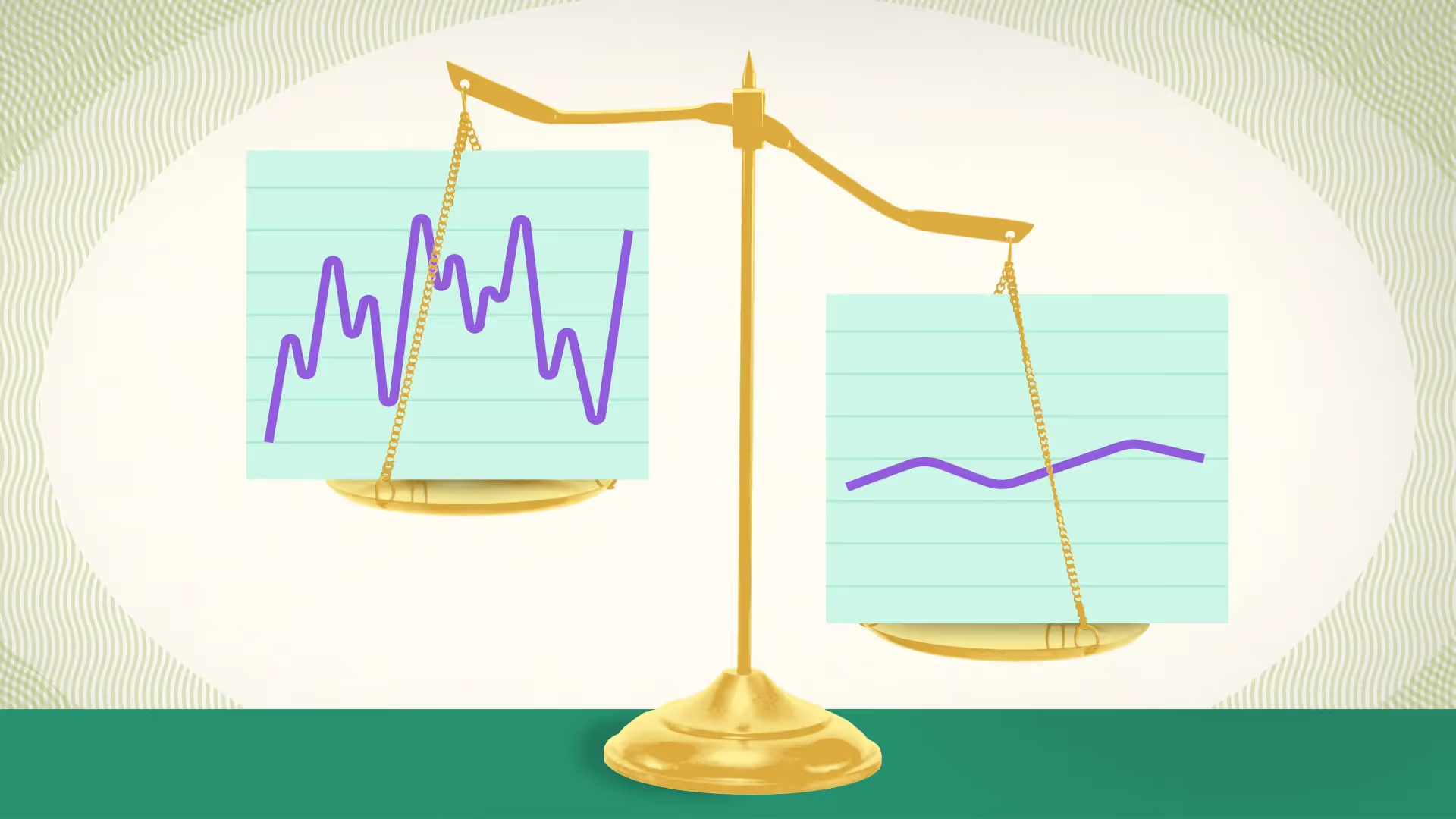
Choosing the right currency pairs can make the difference between consistent profits and frustrating losses in forex trading. Most traders struggle with this decision because they're unsure which pairs offer the best liquidity, volatility, and trading opportunities that match their strategy. Understanding what a funded account is adds another layer to this choice, since prop firms often evaluate traders based on their pair selection and risk management across major, minor, and exotic currencies.
This guide breaks down the best pairs to trade forex, helping you identify which combinations align with your trading style and goals, particularly if you want to trade with a funded account. If you're ready to trade with a funded account but need the capital to prove your skills, AquaFunded's program provides the solution.
Their funded trading program gives you access to substantial trading capital once you demonstrate your ability to manage risk and trade profitably across your chosen currency pairs. You keep a significant portion of the profits while trading with their funds, allowing you to focus on executing your strategy without risking your own money.
Summary
- The foreign exchange market generates $7.5 trillion in daily trading volume, according to FXPrimus, with major currency pairs accounting for the vast majority of that activity. This massive liquidity concentration creates the tightest spreads and virtually instant execution, which directly affects your per-trade costs and your ability to enter or exit positions at your intended prices. Understanding where volume concentrates helps you avoid pairs in which execution quality deteriorates precisely when you need it most.
- EUR/USD accounts for approximately 24-28% of daily forex trading volume, making it the most liquid currency pair. This dominance translates into spreads as tight as 0.5-1 pip during active sessions and the ability to execute even large position sizes without slippage. The pair's predictable response to Federal Reserve and European Central Bank policy decisions creates clear cause-and-effect relationships that technical analysis can often anticipate.
- Between 70% and 80% of retail forex traders lose money according to industry studies conducted in 2025, creating an environment where broker selection and fraud awareness become survival skills rather than optional considerations. Scammers specifically target emotional decision-making and financial desperation through fake platforms, signal-seller scams, and robot schemes that promise automated profits. Verifying regulatory status and conducting independent reviews better protects capital than relying on optimism in this high-risk environment.
- The Swiss franc shock on January 15, 2015, demonstrates how quickly stable currency relationships can shatter when central banks make unexpected policy shifts. EUR/CHF plummeted nearly 30% within minutes, moving from around 1.20 to below 0.85 at its lowest point as the Swiss National Bank unexpectedly removed the franc's peg to the euro. Stop-loss orders intended to limit damage were triggered at prices well below set levels due to liquidity gaps, turning protective measures into sources of catastrophic loss.
- Commodity currency correlations create tradable relationships between forex pairs and underlying asset prices that persist across market cycles. The Canadian dollar's correlation with oil prices means USD/CAD typically falls when crude rallies as export revenues strengthen the loonie, while the Australian dollar's linkage to iron ore and coal makes AUD/USD sensitive to Chinese industrial production and global infrastructure spending. Understanding these correlations helps you anticipate how positions might move during market stress when normal patterns break down.
- The Average True Range indicator quantifies volatility objectively, showing exactly how much a pair typically moves across recent periods and allowing you to adjust position sizing when market character shifts. When ATR doubles relative to historical norms, your usual position sizing will expose you to twice the dollar risk you intended, making fixed lot sizes dangerous during volatile periods. This addresses the capital structure problem where Aqua Funded's program provides access to accounts up to $400,000, allowing traders to properly size positions across multiple pairs without the psychological pressure of depleting personal savings during strategy development.
Benefits of Trading Forex
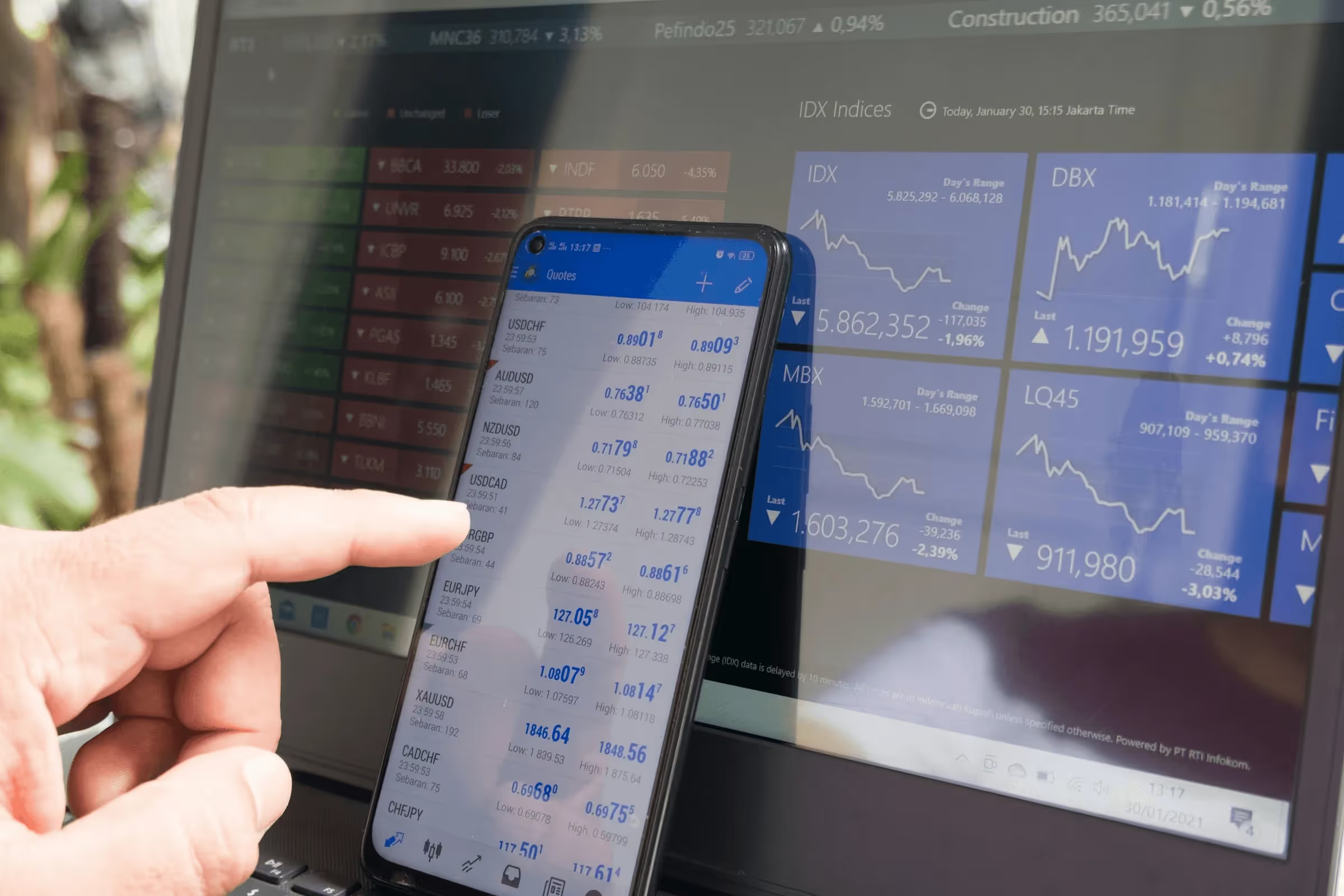
Forex trading offers something fundamentally different from traditional investing: access to a global market that operates on your schedule, not Wall Street's. The foreign exchange market offers continuous trading, exceptional liquidity, and the ability to profit whether currencies appreciate or depreciate. Unlike stock markets that require significant capital and operate on rigid hours, forex welcomes traders with modest accounts and offers the flexibility to trade around life's demands, rather than rearranging life around market hours.
Trading Around the Clock
Traditional markets force you to choose between your career and market participation. Stock exchanges close at 4 PM Eastern, exactly when most professionals finally have time to analyze positions and execute trades. Forex operates differently. According to Seacrest Markets, the forex market operates 24 hours a day, 5 days a week, creating a continuous trading environment that adapts to your life rather than dictating it. When economic data is released at 8:30 AM or geopolitical news breaks at midnight, you can respond immediately. The market doesn't pause for your time zone or work schedule. This continuous availability is particularly valuable for traders who work demanding day jobs or prefer to analyze markets during quiet evening hours when distractions fade and focus sharpens.
Exceptional Market Depth
The scale of forex creates unique advantages that smaller markets simply cannot match. With trillions exchanged daily, this massive volume translates into a practical benefit: you can enter and exit positions almost instantly without your trades causing noticeable price disruptions. The market absorbs your transactions smoothly, whether you're trading with $500 or $50,000. This depth directly impacts your trading costs. Tighter spreads and minimal slippage mean more of your profits stay in your account rather than being eaten up by transaction costs. The competitive pricing environment benefits every participant, from newcomers testing strategies with small positions to experienced traders managing substantial capital across multiple currency pairs.
Accessible Entry Requirements
Financial markets once felt reserved for people with trust funds and six-figure accounts. That barrier has collapsed. Modern forex brokers welcome new traders with initial deposits starting around $100, sometimes less. The strategic use of leverage allows you to control larger positions with limited capital, though this amplification works both ways and demands careful risk management. This accessibility matters beyond just lowering financial barriers. It creates an environment where skill development becomes possible without risking life savings. You can learn currency dynamics, test trading strategies, and develop discipline with real market exposure while keeping your financial commitment manageable. The democratization of forex means your trading education doesn't require wealth, just dedication and smart risk management.
Adaptable Trading Approaches
Your trading style should match your personality and schedule, not conform to arbitrary constraints. Forex accommodates this reality better than most markets. If you thrive on rapid decision-making and can dedicate focused hours during market sessions, day trading offers opportunities to capitalize on intraday price movements. If you prefer deeper analysis and can't monitor charts constantly, swing trading lets you hold positions across days or weeks, capturing broader trends without minute-by-minute attention. Some traders find their edge in long-term positions that span months, riding major economic shifts and central bank policy cycles. Others prefer scalping, executing dozens of quick trades for small profits that accumulate throughout a session. The market doesn't care which approach you choose. This flexibility ensures your trading method aligns with both your natural decision-making rhythm and practical life constraints.
Bidirectional Profit Potential
Stock investors traditionally need rising prices to profit, leaving them sidelined during market downturns and economic uncertainty. Currency trading operates differently. Every forex trade involves simultaneously buying one currency while selling another, creating equal profit opportunities whether your chosen pair trends upward or downward.
When you anticipate the euro strengthening against the dollar, you buy EUR/USD. When you expect weakness, you sell the pair at a comparable profit target. This bidirectional capability transforms market volatility from a threat into an opportunity. Economic turbulence that devastates stock portfolios can present lucrative setups for prepared forex traders who understand how to position themselves on the right side of currency movements. Many traders discover their most profitable periods during market stress when volatility spikes and clear trends emerge. The ability to profit from falling currencies means you're never forced to sit on the sidelines waiting for better conditions. Every market environment offers potential if you can read the dynamics correctly.
Clear and Open Pricing
Price manipulation haunts many financial markets, but forex's structure makes such manipulation virtually impossible. Currency values emerge from the collective activity of countless participants: individual traders, multinational corporations, central banks, hedge funds, and governments worldwide. This decentralized structure ensures that quoted rates genuinely reflect global market consensus rather than artificial manipulation by any single entity. You can trade with confidence knowing that pricing represents authentic supply and demand dynamics. The transparency extends beyond just fair pricing. Real-time data, instant execution, and visible order flow create an environment where information advantages diminish, and skill becomes the primary differentiator. The market rewards preparation and discipline rather than privileged access or insider knowledge.
Rich Trading Variety
From major pairs like EUR/USD, which trade with massive volume and tight spreads, to exotic combinations featuring emerging-market currencies, forex offers extensive opportunities to specialize or diversify. This variety enables you to focus on markets where you have specific expertise or that align with your preferred trading hours. Perhaps your professional background gives you unique insights into European economic policy, making EUR-based pairs a natural focus. Maybe you've identified profitable patterns in how commodity currencies respond to energy price movements. The breadth of available pairs allows you to leverage specialized knowledge while maintaining diversification across different economic regions and trading sessions.
The variety extends beyond just currency selection. Different pairs exhibit distinct volatility profiles, trending characteristics, and correlation patterns. You can construct a portfolio approach that balances high-volatility opportunities with steadier, more predictable pairs, managing your overall risk exposure while maintaining profit potential across multiple positions.
Cutting-Edge Tools and Education
Contemporary forex traders have access to technological resources that previous generations couldn't have. Real-time charting with hundreds of technical indicators, algorithmic trading capabilities that execute strategies automatically, mobile platforms enabling trade management from anywhere, and comprehensive educational materials have become standard offerings rather than premium features. Broker competition has driven remarkable innovation in platform functionality. You can backtest strategies against years of historical data, receive instant alerts when specific market conditions emerge, and execute complex multi-leg trades with a single click. The supporting technology combines sophisticated analytics with intuitive design, making advanced capabilities accessible without programming expertise or a technical background.
The educational resources available today transform the learning curve. Video tutorials, webinars with professional traders, demo accounts with real-time market data, and detailed strategy guides provide structured paths from beginner concepts to advanced techniques. This infrastructure supports continuous skill development, ensuring your trading education can progress as rapidly as your commitment allows.
For traders ready to prove their skills without risking personal capital, programs like AquaFunded remove the traditional barrier between learning and professional-scale trading. Their instant-funding approach lets you demonstrate proficiency and access substantial trading capital based solely on performance, not personal wealth. The "your skill, our risk" philosophy means your focus stays on executing strategy and managing positions, rather than on depleting your account during the inevitable learning curve every trader experiences. But understanding these advantages only tells half the story—the other half involves what can go wrong when traders underestimate how quickly market conditions can turn against them.
Risks of Forex Trading

Market conditions can shift violently, erasing weeks of careful gains in minutes. Currency trading rewardspreparation and discipline, but it punishes complacency with ruthless efficiency. Understanding these risks isn't about fear; it's about building the situational awareness that separates traders who survive volatility from those who become cautionary tales.
Broker Selection and Fraud Exposure
Your broker controls the gateway between your decisions and actual market execution. Choose poorly, and you're building your trading career on unstable ground. Delayed order fills mean you enter positions at worse prices than anticipated. Hidden fee structures quietly erode profitability through spreads that widen during volatile periods or withdrawal charges buried in terms of service documents. Poor customer service leaves you stranded during technical issues or account disputes when every minute matters.
The forex market's reputation for high returns attracts fraudulent schemes that exploit newcomers. According to industry studies conducted in 2025, between 70% and 80% of retail forex traders lose money, creating an environment where scammers thrive by targeting desperate traders seeking recovery strategies or guaranteed systems. Fake trading platforms mirror legitimate interfaces while funneling deposits directly to criminals. Signal seller scams charge fees for trade recommendations based on fabricated track records. Robot scams promise automated profits through algorithms that exist only in marketing materials.
The pattern repeats: unrealistic promises, pressure to deposit quickly, resistance to withdrawal requests. Verify regulatory status before transferring funds. Check multiple independent reviews. If profit guarantees sound too perfect, they're designed to sound that way. Skepticism protects capital better than optimism in an industry where fraud operators specifically target emotional decision-making and financial desperation.
Platform Reliability and Security
Technical failures during critical market moments can transform winning positions into losses. System crashes prevent you from closing trades as prices move against you. Delayed order execution causes your stop-loss to trigger late, resulting in larger losses than your risk management plan allows. Inaccurate price feeds create false signals, prompting entries based on data that doesn't reflect actual market conditions.
These aren't theoretical concerns. When major economic data releases or geopolitical events trigger rapid price movements, platform stability is the difference between executing your strategy and watching helplessly as opportunities or protections slip away. Security vulnerabilities create different but equally serious exposures. Platforms that lack adequate encryption and authentication expose your personal information, financial data, and trading activity to potential theft or unauthorized access. The platform you choose isn't just a tool; it's the infrastructure supporting every decision you make. Prioritize stability, security, and transparent execution over flashy features or aggressive marketing.
Leverage Amplification
Leverage functions like performance enhancement in trading; it magnifies everything. Small market movements generate substantial profits when positions move in your favor. Those same small movements create devastating losses when the market turns against you. A 1% adverse price swing on a highly leveraged position can eliminate 10%, 20%, or more of your account balance in minutes.
Margin calls are triggered when your account equity falls below the broker's required maintenance level. You face an immediate choice: deposit additional funds to maintain positions, or watch the broker liquidate your trades at current market prices, locking in losses. During extreme volatility, liquidations can happen so rapidly that your account balance drops below zero, creating debt to the broker that exceeds your initial deposit. Many traders discover too late that leverage doesn't just amplify profit potential, it accelerates the timeline between decision and consequence. Use leverage within ranges you can genuinely manage, based on your account size and risk tolerance, not at the maximum available ratios offered by brokers.
Market Volatility and Sudden Movements
Currency prices respond to economic data releases, central bank announcements, and geopolitical developments with speed that catches unprepared traders off guard. The January 15, 2015, Swiss Franc shock demonstrates how quickly assumptions about stable currency relationships can shatter. The Swiss National Bank unexpectedly removed the franc's peg to the euro, causing EUR/CHF to plummet nearly 30% within minutes, moving from around 1.20 to below 0.85 at its lowest point.
Traders holding positions based on the assumption that the peg would continue faced catastrophic losses. Stop-loss orders that should have limited damage triggered at prices far worse than set levels due to the gap in available liquidity. Spreads widened dramatically as market makers struggled to match buyers and sellers during the chaos, turning normal trading costs into account-depleting expenses.
Volatility doesn't just create loss potential through directional moves. Trading costs spike during turbulent periods as spreads expand and slippage increases. The market becomes less liquid exactly when you most need to enter or exit positions. Building strategies that account for volatility rather than hoping for calm conditions creates resilience when market character shifts suddenly.
Political Events and Policy Shifts
Elections, policy announcements, and geopolitical tensions move currency markets with force that technical analysis alone cannot predict. The Brexit referendum in 2016 sent the British pound from around 1.50 against the dollar to 1.33 the following day, one of the largest single-day declines in pound history. Traders positioned for a Remain vote, or simply unprepared for such dramatic movement, incurred losses that exceeded their stop-loss protections due to overnight gaps.
Political risk emerges from unexpected outcomes and sudden policy reversals. A central bank governor's offhand comment during a press conference can trigger immediate currency reactions. Trade negotiations that appear stable can collapse in hours, sending related currencies into sharp moves. These events don't respect technical support levels or historical volatility patterns.
The challenge isn't predicting specific political outcomes; it's developing position-sizing and risk-management capabilities that can withstand sudden shocks. Reducing leverage before major political events, avoiding positions during high-risk announcement periods, and maintaining cash reserves for unexpected opportunities or defensive actions all help navigate the reality that markets respond to political developments faster than most traders can react.
Psychological Pressure and Decision Quality
The emotional weight of watching real money fluctuate creates stress that undermines rational decision-making. Overtrading emerges from the need to "do something" rather than waiting for genuine opportunities. Emotional reactions to losses drive revenge trading, where you increase position sizes in an attempt to recover quickly rather than following your strategy. Lack of discipline shows up as ignoring stop-losses, holding losing positions too long, hoping for reversals, or taking profits too early from fear that gains will disappear. Confirmation bias leads you to seek information that supports existing positions while dismissing contradictory signals. Anchoring bias causes you to fixate on entry prices or previous highs, making the current market reality harder to see clearly. These psychological patterns don't reflect weakness or lack of intelligence; they're human responses to uncertainty and financial pressure that every trader experiences.
The difference between consistently profitable traders and those who struggle often comes down to emotional management rather than technical knowledge. Developing routines that reduce impulsive decisions, maintaining detailed trading journals that reveal behavioral patterns, and accepting losses as normal parts of the process all contribute to psychological resilience. The market doesn't care about your emotions, but your emotions dramatically influence how you interpret and respond to market information.
Programs like AquaFunded address one significant psychological barrier by removing the fear of depleting personal capital during the learning process. When you're trading firm capital rather than your own savings, the emotional weight of individual losses decreases, allowing you to focus on strategy execution and skill development rather than account preservation anxiety. This shift in psychological pressure helps traders develop discipline and consistency without the paralyzing fear that often accompanies investing personal funds. But knowing which specific currency pairs to trade matters just as much as understanding these risks, because not all pairs behave the same way when volatility strikes.
Related Reading
- How to Grow a Small Trading Account
- What is Trading Commodities
- Long Term Trading Strategy
- Capital Growth Strategy
- What is a Cash Account in Trading
- What is Compound Trading
- How Much Money Do You Need to Start Trading Stocks
- Scale Trading
- Small Account Trading
- How to Evaluate Investment Opportunities
- Blown Trading Account
- What is PNL in Trading
- Do Prop Firms Use Real Money
- Prop Firm Account Management
- Borrowing on Margin
- Trading Leverage
- Best Automated Crypto Trading Platform
- How to Pass a Prop Firm Challenge
12 Best Pairs to Trade Forex Commonly

The pairs you choose shape everything about your trading experience, from execution speed to overnight costs to how predictably price moves are predicted during your active hours. According to Trade Nation, 88% of all forex trades involve the US dollar, which tells you where global liquidity concentrates, but doesn't tell you which specific pairs match your strategy, risk tolerance, or trading session. What works brilliantly for a London-based scalper often frustrates a Sydney swing trader, not because either approach is wrong, but because currency pairs behave fundamentally differently based on their underlying economies, trading volumes, and participant profiles.
1. EUR/USD (The Fiber)
EUR/USD dominates global forex activity for practical reasons that directly affect your trading costs and execution quality. GoatFundedTrader reports that EUR/USD accounts for approximately 28% of daily forex trading volume, resulting in the tightest spreads in the currency market, often just 0.5-1 pip during active sessions. This massive liquidity means your orders fill instantly at displayed prices without slippage, even when you're trading larger position sizes.
The pair responds primarily to monetary policy divergence between the Federal Reserve and European Central Bank, making it relatively predictable compared to pairs influenced by commodity prices or geopolitical tensions. When the Fed signals interest rate changes or the ECB adjusts quantitative easing programs, EUR/USD moves with clear directional momentum that technical analysis can often anticipate. Beginners find abundant educational resources focused on this pair because many traders track it, creating a self-reinforcing cycle in which pattern recognition becomes easier through collective attention.
Political events affecting either the United States or the Eurozone decisively move this pair. Federal Reserve interventions to strengthen the dollar through rate hikes typically push EUR/USD lower as capital flows toward higher-yielding dollar assets. European political uncertainty, whether from elections, budget disputes, or banking sector stress, weakens the euro against the dollar as investors seek safety. The relationship between these two massive economic zones creates trading opportunities during both calm periods and volatile events.
2. USD/JPY (The Gopher)
USD/JPY offers something different from pure market-driven volatility. The Bank of Japan actively manages the yen's exchange rate to protect Japan's export-dependent economy, creating a "dirty float" regime in which the currency fluctuates within ranges the central bank considers acceptable. When USD/JPY approaches levels that threaten Japanese exporters' competitiveness, intervention becomes likely, creating support and resistance zones that persist across months.
This predictability attracts traders who prefer range-bound strategies over pure trend following. You can identify where institutional buying or selling pressure will likely emerge based on historical intervention levels, then position accordingly. The pair also serves as a proxy for global risk sentiment. When uncertainty rises, and investors seek safety, the yen strengthens regardless of economic fundamentals, pushing USD/JPY lower. When confidence returns and capital flows toward growth assets, the yen weakens, and USD/JPY rises.
The relationship betweenthe United States and Asian economic regions plays out through this pair. Technology competition, trade negotiations, and geopolitical tensions all influence how investors view dollar-yen exposure. During Asian trading sessions, USD/JPY provides the highest liquidity and tightest spreads of any major pair, making it ideal if your active trading hours align with Tokyo market activity.
3. GBP/USD (Cable)
GBP/USD has earned its reputation for volatility through repeated economic and political disruptions, sending the pound into dramatic swings. The 2008 financial crisis, the aftermath of the Brexit referendum, and the September 2022 mini-budget crisis, which sent the pound to 1985 lows, created significant trading opportunities for those positioned correctly and devastating losses for those caught unprepared. This volatility isn't random chaos; it reflects the UK economy's sensitivity to policy decisions, trade relationships, and financial sector stability.
Greater volatility means wider profit potential per pip of movement, but it equally means larger losses when positions move against you. The pair demands wider stop losses than EUR/USD to avoid getting stopped out by normal intraday noise, which increases the capital required per position if you maintain consistent risk percentages. Traders drawn to GBP/USD typically accept this higher risk in exchange for the explosive moves that can deliver weeks of typical gains in a single session when major news breaks.
The Bank of England's monetary policy decisions, UK economic data releases, and political developments all move cable with force. Brexit's ongoing impact on UK trade relationships continues to create uncertainty, translating into tradable volatility. When inflation data surprises or employment figures shift expectations for interest rate changes, GBP/USD responds more dramatically than most major pairs.
4. AUD/USD (The Aussie)
AUD/USD functions as a proxy for commodity currencies, moving in close correlation with global commodity prices, particularly iron ore and coal exports, which dominate Australia's economy. When commodity demand strengthens during global economic expansion, the Australian dollar appreciates as export revenues flow into the country. When commodity prices slump during slowdowns or recessions, the AUD weakens as Australia's terms of trade deteriorate.
This commodity linkage creates a unique trading dynamic. You're not just analyzing Australian versus American economic data; you're monitoring Chinese industrial production (Australia's largest export customer), global infrastructure spending, and energy market trends. A slump in Chinese steel demand directly affects Australian iron ore prices, with the impact flowing through to the AUD exchange rate within days. This makes AUD/USD ideal for traders who enjoy analyzing multiple markets simultaneously and can synthesize information across asset classes.
The Reserve Bank of Australia's policy decisions interact with Federal Reserve actions to create interest rate differentials that drive medium-term trends. When Australian rates rise relative to US rates, carry trade flows strengthen AUD as investors borrow dollars to buy higher-yielding Australian assets. When that differential narrows or reverses, those flows unwind, and AUD weakens. Understanding these capital flow dynamics helps you position for multi-week trends rather than just intraday moves.
5. USD/CAD (The Loonie)
The Canadian dollar's correlation with oil prices creates a trading relationship that is visible in real time. Canada exports large volumes of oil to the United States and globally, making crude prices the dominant driver of CAD strength beyond interest rate differentials. When oil rallies, USD/CAD typically falls as the Canadian dollar appreciates on export revenue gains. When oil crashes, USD/CAD rises as the loonie weakens.
This creates a practical trading approach. If you're monitoring energy markets and develop a view on oil's direction, USD/CAD offers a liquid way to express that view through currency exposure. The pair also benefits from the close economic integration between Canada and the United States as major trading partners. Cross-border trade flows, NAFTA developments, and relative economic growth rates all influence the exchange rate in ways that fundamental analysis can track.
The relationship works both ways. Oil is priced in US dollars globally, so when oil prices rise, more dollars get converted to other currencies to purchase energy, which typically weakens the dollar. Simultaneously, Canada earns more dollar revenue from oil exports, strengthening the loonie. This dual dynamic amplifies USD/CAD moves during major oil price trends, creating clear directional opportunities when energy markets enter strong trends.
Programs like AquaFunded remove the capital constraint that often prevents traders from properly diversifying across multiple pairs or holding positions through short-term volatility. When you're trading firm capital rather than your limited personal funds, you can maintain positions in commodity-linked pairs like USD/CAD through temporary drawdowns without the anxiety that comes from watching your own savings fluctuate. This psychological freedom helps you execute strategies based on analysis rather than fear of account preservation.
6. USD/CHF (The Swissie)
USD/CHF combines two safe-haven currencies, creating unique behavior during market stress. Both the dollar and the Swiss franc attract capital during periods of uncertainty, which reduces volatility relative to pairs in which one currency serves as a risk asset. This makes USD/CHF relatively stable during geopolitical tensions or financial crises when other pairs experience dramatic swings.
The pair accounts for roughly 5% of daily trading volume, providing adequate liquidity for most trading strategies without the extreme tightness of EUR/USD spreads. During European and US trading sessions, volatility is high enough to create intraday opportunities, but the safe-haven characteristics of both currencies prevent the explosive moves that characterize GBP/USD or other exotic pairs.
Swiss economic data, particularly employment figures and GDP releases, move the franc alongside US economic surprises. Switzerland's banking sector stability and political neutrality reinforce the franc's safe-haven status, making it strengthen during periods when investors question the stability of other currencies. For traders who prefer steadier price action without sacrificing major pair liquidity, USD/CHF offers a middle ground between the extreme tightness of EUR/USD and the volatility of sterling or commodity currencies.
7. USD/CNY (The Yuan)
USD/CNY represents the exchange rate between the world's two largest economies and leading exporters. The pair's behavior differs fundamentally from freely floating currencies because China manages the yuan's value to maintain export competitiveness. The People's Bank of China sets daily reference rates and intervenes when market forces push the exchange rate beyond acceptable ranges.
This managed float creates a different trading environment. Rather than pure technical analysis or fundamental economic data driving prices, policy decisions and geopolitical developments often matter more. US-China trade tensions, technology competition, and diplomatic relations all influence how authorities manage the yuan's exchange rate. When tensions escalate, as during the August 2022 period following Nancy Pelosi's visit to Taiwan, policy responses can override typical market dynamics.
The pair's trading volume has grown substantially as China's economy expanded and the yuan's internationalization progressed. Traders interested in positioning around major geopolitical themes or long-term economic shifts between Western and Asian economies find that USD/CNY offers direct exposure to these dynamics. The time zone difference means active trading occurs during Asian sessions, which suits traders in that region or those willing to adjust schedules.
8. NZD/USD (The Kiwi)
NZD/USD shares characteristics with AUD/USD as a commodity-linked currency but with even stronger agricultural exposure, particularly dairy exports. New Zealand's economy depends heavily on agricultural trade, making the kiwi sensitive to global food demand, weather patterns that affect production, and trade relationships with major importers such as China.
The pair sees steady trading during Asia-Pacific hours but lower liquidity than major pairs during European and US sessions. This liquidity difference creates wider spreads outside Asian trading hours, which increases costs for strategies that require frequent entries and exits. Traders active during Asian sessions or holding positions across multiple days find the liquidity adequate for their needs.
Economic data from New Zealand, particularly trade balance figures and dairy auction results, move NZD more dramatically than similar data releases affect larger economies. A smaller economy means individual data points carry more weight in shaping expectations for Reserve Bank of New Zealand policy decisions. Interest rate differentials between New Zealand and the United States drive medium-term trends as carry trade flows respond to yield opportunities.
9. USD/HKD (The Hong Kong Dollar)
The USD/HKD exchange rate operates under a unique pegged exchange rate system, with the Hong Kong dollar maintained within a fixed band of 7.75-7.85 against the US dollar. This linked exchange rate creates dramatically different trading dynamics than freely floating pairs. The pair cannot move outside this range without triggering the Hong Kong Monetary Authority's intervention to defend the peg.
This structure appeals primarily to swing traders who profit from the pair's oscillation within the established band. You're essentially trading mean reversion between the upper and lower bounds, knowing that extreme moves will face institutional resistance. The strategy requires patience and capital efficiency because profit per trade is constrained by the narrow range, but predictability reduces directional risk.
Trading volume doubled between 2016 and 2019 as investors increasingly used USD/HKD for strategies that benefit from the pegged exchange rate. The pair's stability makes it unsuitable for traders seeking volatile breakout opportunities but ideal for those who prefer defined risk parameters and systematic mean reversion approaches.
10. EUR/GBP (Euro-Sterling)
EUR/GBP captures the exchange rate between two major European economies with deeply intertwined but uncertain relationships. The pair excludes the US dollar, making it a minor pair despite the two economies being major. Brexit fundamentally altered the trading dynamic by introducing persistent uncertainty about UK-EU economic integration, trade arrangements, and regulatory alignment.
The pair ranks among the most difficult exchange rates to predict because of the close economic ties that create correlation alongside the political divergence that creates volatility. When UK economic data surprises positively relative to Eurozone performance, sterling strengthens, and EUR/GBP falls. When Brexit complications arise or UK political instability increases, the pound weakens and EUR/GBP rallies.
Interest rate differentials between the Bank of England and the European Central Bank drive medium-term trends. The UK's greater recession risk relative to the Eurozone suggests further pound weakness, but market positioning and sentiment shifts can override fundamental outlooks for extended periods. Trading EUR/GBP requires monitoring data releases from both economies, central bank communications, and ongoing political developments affecting their relationship.
11. AUD/JPY (The Aussie-Yen Cross)
AUD/JPY combines Australia's commodity-driven economy with Japan's safe-haven currency, making it a risk-sentiment indicator. When global economic confidence rises and investors pursue growth assets, capital flows from low-yielding yen into higher-yielding Australian dollars, pushing AUD/JPY higher. When uncertainty increases and risk aversion dominates, that flow reverses dramatically as investors flee back to yen safety.
This risk-on/risk-off dynamic makes AUD/JPY highly volatile during sentiment shifts. The pair can move 200-300 pips in a single session when major risk events trigger repositioning across global markets. Commodity price trends, particularly metals and energy that drive Australian export revenues, interact with Japanese monetary policy and risk sentiment to create complex but tradable patterns.
Liquidity concentrates during Asian and Pacific trading sessions, when both the Australian and Japanese markets are active. Spreads widen during European and US hours, increasing trading costs for strategies requiring tight execution. The volatility creates both significant profit potential and substantial risk, making position sizing and stop-loss discipline critical for managing the pair's explosive tendencies.
12. USD/KRW (The Won)
USD/KRW entered the top currency pairs list for the first time in 2019, reflecting South Korea's growing economic importance and the won's increasing international usage. The pair accounts for 1.9% of daily transactions, providing adequate liquidity while offering exposure to Asian economic dynamics beyond Japan and China.
South Korea's economy depends heavily on international trade, ranking among the world's top-10 largest exporters and importers. This trade sensitivity makes the won responsive to global demand conditions, supply chain developments, and trade policy changes. The country's 2022 trade deficit is approaching $50 billion, driven by soaring energy and commodity costs, creating significant won weakness as the gap marks South Korea's largest since 1964.
Rising interest rates, global recession fears, and weakening export demand pushed the won to its lowest level since 2009 during 2022. These fundamental pressures create trading opportunities for those tracking Korean economic data, regional trade flows, and the impact of global growth expectations on export-dependent economies. The pair suits traders interested in Asian markets who want exposure beyond the heavily traded yen and yuan. But knowing these pairs exist doesn't tell you which one actually matches your strategy, schedule, and risk tolerance.
How to Choose the Best Pair for Forex Trading

Currency pair selection determines whether your strategy can operate under the market conditions required for success. A scalping system built for tight spreads and instant fills dies in illiquid exotics. A swing-trading approach designed to capture multi-day trends incurs opportunity costs on range-bound majors. The match between your method and the pair's characteristics matters more than finding the "best" pair in some universal sense.
Understand Currency Pair Categories
Major pairs always include the US dollar paired with another heavily traded currency. EUR/USD, GBP/USD, and USD/JPY dominate this category. According to FXPrimus, the forex market generates $7.5 trillion in daily trading volume, with major currency pairs accounting for the vast majority of that activity. This concentration creates the tightest spreads, typically 0.5 to 2 pips during active sessions, and virtually instant execution regardless of position size.
Minor pairs exclude the dollar entirely and pair two major currencies, such as EUR/GBP or AUD/NZD. These crosses offer diversification from dollar-driven movements and can present clearer technical patterns when regional economic dynamics dominate. Spreads typically widen by 2-5 pips, which increases per-trade costs but remains manageable for most strategies beyond high-frequency scalping.
Exotic currency pairs match a major currency with an emerging-market currency, such as USD/TRY or EUR/ZAR. Volatility spikes dramatically here. A 200-pip daily range that would shock traders in EUR/USD barely registers as unusual movement in Turkish lira or South African rand pairs. Spreads can reach 20-50 pips, and execution becomes unpredictable during volatile periods when liquidity evaporates exactly when you need it most.
Match Pairs to Your Trading Timeframe
Scalpers and day traders need pairs that move enough to create profit opportunities within minutes or hours, but maintain sufficient liquidity to enter and exit without slippage eating gains. EUR/USD and GBP/USD fit this requirement during European and US sessions when volume peaks. The combination of movement and execution quality creates an environment where quick trades can compound profitably across dozens of positions daily.
Swing traders holding positions across multiple days or weeks benefit from pairs with stronger trending characteristics and less intraday noise. Commodity currencies such as AUD/USD and USD/CAD often exhibit clearer directional momentum driven by underlying fundamental factors. The correlation with gold prices or crude oil creates persistent trends that last for weeks, rather than reversing every few hours due to short-term sentiment shifts.
Position traders maintaining exposure for months need pairs influenced by long-term economic divergence rather than daily news flow. Interest rate differentials between central banks, structural economic changes, and multi-year policy cycles drive these extended trends. The timeframe allows you to ride major moves while ignoring the volatility that forces shorter-term traders out of positions prematurely.
Assess Volatility Against Risk Tolerance
Low-volatility pairs such as EUR/USD and USD/CHF typically move 50-80 pips per day, creating steady but modest profit potential per trade. This stability suits traders with limited capital who cannot withstand large adverse swings or those testing new strategies where consistent small gains build confidence and skill before graduating to more aggressive approaches.
High-volatility pairs like GBP/JPY regularly swing by 150-300 pips per day, amplifying both profit potential and drawdown risk. A position sized appropriately for EUR/USD becomes dangerously large when applied to sterling-yen volatility. The pair demands wider stops to avoid getting shaken out by normal price action, which means either accepting larger potential losses per trade or reducing position size to maintain consistent risk percentages.
The Average True Range indicator quantifies volatility objectively, showing how much a pair typically moves over a given period. When ATR doubles from historical norms, you know volatility has spiked, and your usual position sizing will expose you to twice the dollar risk you intended. Adjusting size based on current ATR rather than fixed lot amounts keeps risk consistent across changing market conditions.
Evaluate Liquidity and Spread Costs
Liquidity determines whether your orders execute at displayed prices or slip to worse levels, eroding profitability. According to Trade Nation, EUR/USD accounts for approximately 24% of daily forex trading volume, creating depth that absorbs even large institutional orders without noticeable price impact. This execution certainty is critical for strategies that require precise entry and exit prices.
Spread costs accumulate differently across trading frequencies. A 1-pip spread on EUR/USD costs you $10 per standard lot per trade. Execute 50 trades monthly, and spreads consume $500 before considering whether your directional calls were correct. Scale that to 200 trades monthly for active day trading, and spread costs reach $2,000, demanding much higher win rates or larger average gains to achieve profitability.
Exotic pairs charging 20-50 pip spreads make frequent trading mathematically difficult. You start each position 20-50 pips underwater, needing the price to move substantially in your favor just to break even. This structure forces longer holding periods and larger profit targets, fundamentally changing which strategies remain viable regardless of your preferred trading style.
Track Market Session Timing
Currency pairs are most active when the markets of their underlying economies operate simultaneously. EUR/USD sees peak volume during the London-New York overlap from 8 AM to noon Eastern time. Volatility concentrates in these hours, creating price movements that generate trading opportunities while maintaining liquidity to ensure clean execution.
Asian session traders find USD/JPY, AUD/USD, and NZD/USD provide the best combination of movement and spreads during their active hours. Attempting to trade EUR/USD at 2 AM London time means facing wider spreads, thinner liquidity, and muted price action, as European traders are asleep and U.S. markets have not yet opened.
Most traders underestimate how their available trading hours constrain pair selection. If your schedule only allows evening trading in US time zones, focusing on Asian pairs aligns your active hours with the markets that offer the best opportunities. Fighting against session timing by trading dormant pairs during off-hours creates unnecessary handicaps that skill cannot overcome.
Consider Correlation Patterns
Some pairs move together predictably, which affects diversification and risk management. EUR/USD and GBP/USD typically move in tandem because both represent European currencies against the dollar. Holding long positions in both simultaneously doesn't provide true diversification; you've essentially doubled your bet on dollar weakness rather than spreading risk across independent opportunities.
Commodity currencies like AUD/USD correlate with gold prices and broader risk sentiment. When global growth fears emerge and investors flee to safety, AUD typically weakens alongside falling commodity prices, regardless of Australian-specific economic data. Understanding these correlations helps you anticipate how positions might move during market stress when normal patterns break down.
USD/CAD and crude oil maintain a strong inverse correlation because Canada exports substantial oil volumes. When oil rallies, the Canadian dollar strengthens on export revenue gains, pushing USD/CAD lower. This relationship creates opportunities to trade oil price views via currency exposure or to hedge energy-sector positions with offsetting forex trades.
Test Strategies Before Live Trading
Demo accounts let you experience how different pairs behave under your strategy without risking capital during the learning curve. The EUR/USD system that performed well in backtests may struggle with GBP/USD volatility or fail due to exotic pair execution challenges. Testing reveals these mismatches before they cost real money.
The psychological difference between demo and live trading remains significant, but the demo experience still teaches you pair-specific characteristics. You learn that AUD/USD frequently gaps on Monday after weekend news from Asia. You discover that GBP pairs often reverse sharply after hitting round numbers as stop orders cluster at those psychological levels. This knowledge comes only from observing price action across different market conditions. Most traders skip adequate demo testing, rushing into live trading before understanding how their chosen pairs actually move. The cost of this impatience shows up in blown accounts and abandoned strategies that might have worked with proper pair selection and sufficient preparation time.
The old model forced traders to choose between limited capital that constrained position sizing or excessive risk that threatened entire accounts during inevitable learning curves. Programs like AquaFunded remove this false choice by providing access to substantial trading capital based on demonstrated skill rather than personal wealth. Their instant-funding approach lets you trade properly sized positions across multiple pairs, testing which combinations suit your strategy without the psychological pressure of depleting your savings during development. But knowing how to choose pairs matters only if you have the capital structure to trade them properly.
Related Reading
- Sources of Capital
- Cash Reserve Account
- Short Term Stock Trading
- Investment Performance Analysis
- Managed Account vs Brokerage Account
- Systematic Trading
- How to Analyze a Stock Before Buying
- Forex Capital Trading
- What is a Retracement in Trading
- How is Risk Involved in Calculating Profit?
- Convergence Trading
- Liquidity Trading
- Futures Trading Minimum Account Size
- What is Drawdown in Trading
Trade the Forex Pairs That Match Your Strategy—Without Risking Your Own Capital
Testing your currency pair selection against real market conditions requires capital that most traders don't have. You might identify that GBP/JPY volatility suits your breakout system perfectly, but trading it properly demands position sizes that would consume your entire account in two trades. Or you recognize that AUD/USD's commodity correlation creates the exact setup your fundamental analysis targets, but your $2,000 account limits you to micro lots that generate $15 profits on moves that should deliver $150.
The capital gap forces impossible choices. Risk too much per trade, and a normal losing streak eliminates your account before your edge can materialize. Risk appropriately small amounts and commissions plus spreads consume so much of each gain that profitability becomes mathematically improbable. Neither path leads to a productive outcome, yet traditional trading requires you to choose one. Most traders solve this by either abandoning pairs that suit their strategy or trading them with position sizes so small that success feels meaningless. You spend months developing expertise in how the Swiss franc responds to European Central Bank policy shifts, then discover you can only trade USD/CHF with positions that generate $8 per pip. The disconnect between knowledge and capital creates frustration unrelated to trading skill.
Programs like AquaFunded address this structural problem directly by providing access to accounts up to $400,000 based on demonstrated ability rather than personal wealth. When you trade firm capital, your position sizing finally matches your strategy's requirements. That GBP/JPY breakout system gets the volatility room it needs. Your AUD/USD fundamental approach can withstand temporary drawdowns without causing premature exits. The pairs you've studied extensively become tradable at scales where edge translates into meaningful returns.
Their instant funding model with no time limits lets you execute your currency-pair strategy at your pace, not the rushed timeline imposed by artificial evaluation periods. You keep up to 100% of profits from successful trades, so the work you invested in understanding how specific pairs behave during different market conditions directly rewards you financially. Over 42,000 traders already use this structure to trade the pairs that match their methods without the capital constraints that previously made proper execution impossible. The question shifts from which pairs you can afford to trade to which pairs your strategy actually needs. That shift matters more than any technical indicator or fundamental analysis framework because it removes the barrier between knowing what to do and having the resources to do it properly.
Related Reading
- How To Take Profits From Stocks
- Accumulation Distribution
- Short-Term Capital Gain Tax On Shares
- What Is Reit Dividends
- Cash Available To Trade Vs Settled Cash
- Can You Day Trade In A Roth Ira
- What Is A Conditional Order
- Orb Strategy Trading
- Stop Loss Vs Stop Limit
- Flag Pattern Trading
- Characteristics of Growth Stocks
- Forex Compounding Plan
