




How Traders Choose Prop Firms (6 Key Factors)
Compare prop firms with AquaFunded's guide on 6 key factors—reputation, fees, evaluation rules & platform quality—to secure your funded edge.

Turning trading expertise into real capital requires a clear understanding of what is a funded account is. Traders weigh evaluation processes, profit splits, drawdown limits, platform access, fees, and support when selecting a prop firm. Careful comparisons of evaluation criteria, risk rules, scaling plans, and reputation guide a smoother transition to live trading.
AquaFunded's funded trading program offers defined evaluation stages, fair profit splits, practical risk limits, and hands-on support that enable traders to concentrate on performance rather than paperwork. This streamlined approach helps traders progress from evaluation to growing their capital with confidence.
Summary
- Headline profit splits often hide real costs. Prop trading firms advertise up to 90% profit splits, but platform fees, data charges, and one-off penalties commonly reduce net returns.
- Evaluation rules are the primary gatekeepers: only 10% of traders pass the typical prop firm evaluation, making clearing the hurdle a major hurdle beyond raw skill.
- Sustained success and reliable payouts are rare; the average success rate in prop firms is around 5%, and many traders face delayed or denied withdrawals, turning gains into disputes.
- Platform and tooling compatibility matter; about 50% of traders evaluate the firm based on platform features and latency, so missing order types or API support can destroy a proven edge.
- Verifiable reputation beats slick marketing; over 70% of traders prioritize firm reliability and payout histories, making dated payout tables, audits, and versioned contracts essential verification items.
- Manual vendor vetting imposes hidden costs in time and opportunity, while standardized rule summaries and payout evidence can compress verification from days to hours and reduce the risk of selecting a mismatched program.
- This is where AquaFunded's funded trading program fits in; it addresses this by compiling standardized fee breakdowns, summarizing evaluation rules, and surfacing payout histories so traders can compare programs more quickly.
Is it Hard to Find a Good Prop Firm?

Yes. Finding a genuinely reliable prop firm is harder than most traders expect. This is because strong visibility and flashy marketing cannot replace fair rules and reliable payouts. The market offers many options and is lightly regulated in many areas. The biggest problems usually only appear after you invest your time and money. Consider reviewing our funded trading program to see if it aligns with your trading goals.
1. How transparent are their fees and rules?
This is where traders often feel surprised and frustrated. A common pattern among firms is to show low pricing and a brief overview of profit splits, while hiding platform fees, data charges, and one-time penalties in long legal documents. This creates a discovery problem: traders usually find out the real costs only after paying a challenge fee and trading under strict rules. The emotional impact can be exhausting, as every unexpected charge feels like a second loss added on top of a failed evaluation.
2. What do the funding and evaluation conditions actually demand?
Many firms advertise easy access to funded capital but define success in ways that make scaling impractical. Targets, per-trade risk caps, and trailing drawdown rules can be changed so that a trader who meets the main goal still fails the account. According to the FunderPro Blog, 2025, "Only 10% of traders pass the evaluation phase of most prop firms." These evaluation filters are the real gatekeepers, not just skill alone. This statistic highlights why surviving the evaluation is only the beginning of the struggle.
3. Can you trust their reputation, support, and payout record?
Trust is not built just on a clean website or quick chat replies. A common pattern shows that traders who successfully clear challenges often encounter vague rule violations when requesting withdrawals. They may also deal with long, unclear payout processes that seem to never end. According to FunderPro Blog (2025), "The average success rate for traders in prop firms is around 5%." Real success in funded programs is rare. This situation helps explain why delays or denials in payouts often lead to bitterness among experienced traders. Such frustration can turn months of good work into a long argument about contract language.
4. How do you compare dozens of firms without burning weeks?
The usual way to compare firms involves a manual process: open ten account pages, download five PDFs, and test two demo platforms. This method works well when there is enough time; however, it often fails when speed is important, and small details change the results. The hidden cost includes lost opportunities, not just the effort spent. Traders might spend weeks learning a firm’s quirks, only to find that their strategies do not align with the firm's risk model, which can lead to frustration and fatigue. Savvy traders have turned to platforms like The Trusted Prop to compare prop firms effectively.
5. Are their legal terms enforceable where you live?
Many companies operate under corporate structures and laws that make it difficult to resolve disputes. Some may also include unclear clauses that give them an advantage. The result is clear: when a dispute arises, the trader often faces an expensive, difficult process to recover their funds or contest a denial, while the company holds most of the power.
What are the hidden costs of quick options?
Most teams stick to the visible, familiar option because it seems quick and doesn’t need extra tools, which makes sense at first. However, hidden costs manifest as wasted capital and time when rules, payout practices, or gaps across regions create problems. Platforms like AquaFunded offer a different path; they gather clear fee breakdowns, compare evaluation rules, and list payout histories side by side. This way, traders can save time on screening and lower the chances of picking a program that doesn’t fit their needs.
How can you avoid major regrets in trading?
Choosing a prop firm is like buying a used car that you can’t check under the hood. The showroom may look nice, but the problems you might have to deal with are hidden beneath things you can’t examine. This gap between what you see and what you really get is the biggest reason for regret in funded trading. Identifying which warning signs can harm traders’ careers isn’t always easy. You need to dig deeper to find these important clues.
10 Red Flags to Look Out For in a Prop Firm
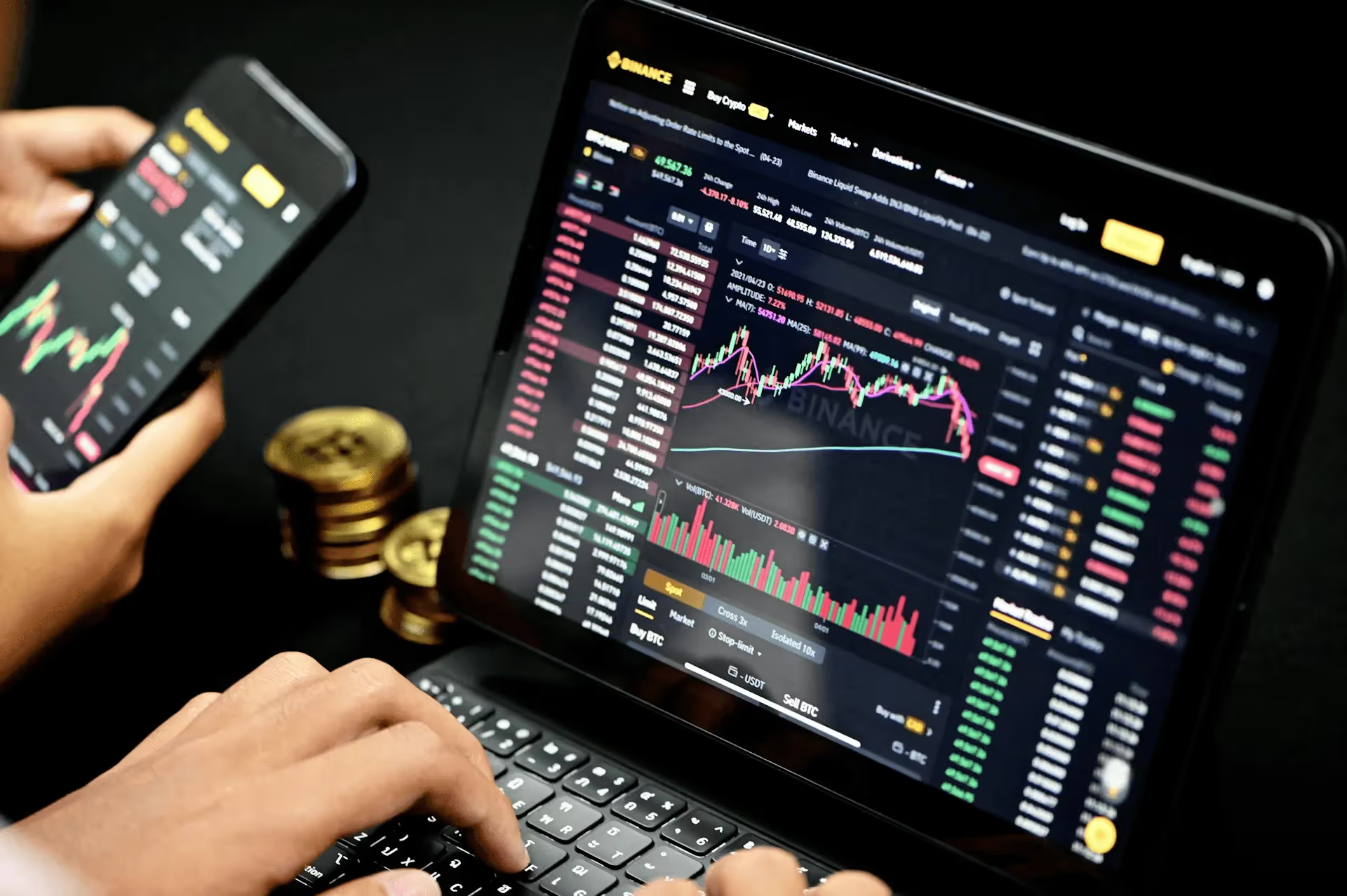
Red flags are more than just surface problems; they are practical tests to think about before you commit time or money. Here are ten specific warning signs, along with clear steps to check them and what usually happens if you ignore them. If you're interested in mitigating risks with your trading journey, consider exploring our funded trading program that offers the support you need.
1. Longevity and domain history.
Check more than the site footer. Use WHOIS and the Internet Archive to find out when the domain and content first appeared. Review the TLS certificate issue dates and compare them with the firm's claimed timeline. A newly created site that claims years of experience has a credibility mismatch. Companies that promote marketing before starting operations often fold or change terms quickly. Treat domain age as a sign of operational maturity, not just marketing polish.
2. Anonymous or fabricated leadership
Start by asking for verifiable bios, public records, and links to professional profiles; then, verify these sources. Perform a reverse image search on headshots, confirm speaking engagements or press mentions, and check company filings that list officers. If the leadership appears only as stock images or private social profiles created recently, it shows the firm was made for gaining attention, not for long-term capital management.
3. Questionable address or registration details.
Plug the listed address into a map and check the corporate registry details. If it leads to a PO box, a shared office provider, or a residential building, see that as a warning sign. Check if the company shares a license or registration number, and then confirm that number in the issuing area's public records. When it comes to legal matters, having a genuine physical presence, not just a virtual one, makes a big difference.
4. Weak or evasive support channels.
Test support before making a financial commitment. Open a live chat, submit a ticket with a specific compliance question, and call any listed phone numbers. Track both response time and the quality of the answers. Firms that use only temporary apps like WhatsApp or reply only with standard responses are often avoiding responsibility; this behavior rarely gets better when you need to resolve payouts.
5. Public hostility or defensive behavior.
Watch how the company responds when criticized. A single aggressive post serves as a red flag, while repeated defensiveness shows a pattern that usually reflects internal process failures. When staff publicly blame traders without providing solutions, it signals a cultural problem that is likely to affect how disputes are resolved. Such toxicity is not just a PR issue; it predicts messy, expensive fights in the future.
6. Rules that shift or hide behind legalese
Companies often change rules, but the pattern matters. When a company changes important terms without giving updated notices or using confusing language in the FAQ, dashboard, and contract, there is no reliable base for trading decisions. According to the Propvator Blog, over 50% of traders fail to pass the evaluation phase in prop firms; inconsistent or unclear rulebooks are a big reason skilled traders have trouble with evaluations. You cannot improve your behavior when requirements keep changing. A practical step: take dated screenshots of every rule you must follow, and timestamp any policy notices you receive.
How do traders currently vet prop firms?
Most traders check firms by looking at a few pages and reading headline claims because it is quick and easy. This method works well until the nuances grow, causing a situation where the time spent finding answers is more than the value of the challenge fee. Platforms like AquaFunded gather domain history, standardize rule summaries, and show payout histories. This helps traders to compare firms all in one place, cutting the vetting process from days to hours while keeping important documents safe.
7. Payout practices that don’t add up should raise red flags.
Request concrete payout evidence instead of relying on influencer screenshots. Ask for the firm’s published average payout timeline and consider testing a small withdrawal, if possible. Confirm the exact fees and payment channels upfront. According to the Propvator Blog, "Only 10% of traders receive payouts from prop firms." Many firms manipulate rules to avoid payouts. A consistent pattern of denials or vague explanations for delayed payouts indicates an operational failure, not just an isolated complaint. Treat ultra-fast influencer payouts with skepticism and look for documented, verifiable withdrawal records from independent traders.
8. Reviews that look manufactured
Spotting manufactured reviews requires careful pattern analysis. Look for signs like overly brief posts, repeated phrases, reviewer accounts created all at once, sudden increases in five-star ratings, or the same photos used by different reviewers. To check your suspicions, cross-check complaints and compliments on different platforms. Pay attention to how the company responds to criticism; a professional response should recognize the issue and suggest a way to fix it, even if the company disagrees with the facts.
9. Sloppy or mechanically generated web presence
Beyond grammar and style, look for signs that the website didn’t require much effort to create. These signs may include mismatched contact details, inconsistent legal names, missing privacy and refund policies, or code that displays the same content across different domains. Also, check how the business handles payments and invoices. A well-made homepage can sometimes hide weak operations; however, a website that works well and consistently displays the names of the entities, their registrations, and contact information shows a stronger commitment to professionalism.
10. Use independent judgment and pattern literacy.
This means putting together different signs when looking at companies. A clear pattern emerges from reviewing many companies: those that focus on aggressive marketing rather than proper operations often receive the most complaints. Create a short checklist for quick verification. Gather evidence as you assess each company, and consider one major warning sign as sufficient reason to pause and reconsider your choice. It can be tiring for traders to encounter issues only after they request a withdrawal, and this frustrating situation often occurs because they skip basic verification. Considering a funded trading program can also help streamline your trading process.
What analogy illustrates the risks of choosing a prop firm?
Analogy to make it stick: think of choosing a prop firm like signing a short-term lease that has hidden clauses scribbled on the back of the contract. You may have a place to trade for a week, but you will be surprised to learn that the keys do not fit.
What can traders learn from their experiences?
That frustration is real and personal. The choices traders make next show a stubborn gap between hope and hard evidence. The next part will show the surprising priorities traders really use when choosing a firm, explaining why those priorities often lead to mistakes.
Related Reading
- How to Grow a Small Trading Account
- What is Trading Commodities
- Long Term Trading Strategy
- Capital Growth Strategy
- What is a Cash Account in Trading
- What is Compound Trading
- How Much Money Do You Need to Start Trading Stocks
- Scale Trading
- Small Account Trading
- How to Evaluate Investment Opportunities
- Blown Trading Account
- What is PNL in Trading
- Do Prop Firms Use Real Money
- Prop Firm Account Management
- Borrowing on Margin
- Trading Leverage
How to Research Prop Firms Effectively
Before committing money to any prop firm, traders benefit from using independent comparison platforms that aggregate reviews, payout histories, and rule breakdowns in one place. One resource many traders turn to is The Trusted Prop, which ranks and verifies prop firms based on factors like payout speed, challenge fairness, and community feedback.
Using a dedicated comparison site can compress days of manual research into a few hours. Instead of opening dozens of browser tabs and downloading scattered PDFs, traders can filter firms by account size, evaluation type, trading platform, and asset class. This approach helps identify red flags early and reduces the risk of selecting a program that doesn't match your trading style or risk tolerance.
The key is to verify claims independently before paying any challenge fee. Cross-reference what a firm advertises with what third-party reviewers report about actual trader experiences.
How Traders Choose Prop Firms (6 Key Factors)

Traders should choose prop firms by matching three important factors and quickly getting rid of unsuitable candidates. First, check their reputation. Next, pick a funding model that suits your trading style. Also, make sure the platform keeps your trading edge. After you decide on these criteria, look at support services, understand global mechanics, and check all fees. This careful evaluation helps avoid operational friction when moving to live trading.
1. Reputation and reliability
Pattern recognition shows that reputation is more important than flashy marketing. Always ask for objective proof instead of just trusting testimonials. Request dated payout tables, anonymized funded trader profit and loss snapshots over several months, and any third-party audits of capital flows or escrow arrangements. Follow the money, not the slogan: figure out which bank or custodian holds client funds and see if public records show consistent reserve behavior. If contracts have change-of-terms clauses, ask for a version history and get a written promise about notice periods. This way, you have a clear record if rules change after you join.
Why Does Reputation Matter?
Why this matters emotionally and practically. This pattern can be seen in active traders: losing a funded account ruins momentum and self-confidence quickly, and worrying about payouts turns careful work into stress. Treat your reputation as a way to control risk, not just a brand feature. According to FunderPro Blog, 2025, "Over 70% of traders prioritize the firm's reputation and reliability when choosing a prop firm." Reputation often matters more than the main financial details when traders decide where to invest their time and money.
2. Types of challenges and funding models
Understanding the types of challenges and funding models is important. Constraint-based advice suggests that you should map your strategy to the evaluation type before making any financial commitments. Start by creating a simple matrix with two axes: time-to-fund and trade frequency. If you scalp for a living, focus on one-step or instant funding programs that allow fast trading during the day and have minimal cooldown periods. On the other hand, if you use swing or systematic strategies, choose longer evaluations that support overnight holdings and larger position sizing. For each firm, check how well it fits your needs based on factors like allowed instruments, maximum trade size compared to the account, overnight permission, and how trailing drawdowns are calculated. This scoring system will help you quickly rule out mismatches.
How to stress-test a challenge?
To test a challenge, begin with a problem-first approach. Try a mock week by trading on a demo account using the firm’s rules for five sessions. Write down the times when the rules stop your usual setups and note how often you would trigger a rule. If your actual trading needs change on more than two setups per week, the program might cost you both edge and confidence. Also, make sure to discuss profit split triggers and payment dates before you start, so you understand the math involved in scaling.
3. Platform and tools provided by the firm.
Specific experience is important; test the platform in real situations instead of just relying on a fancy demo. Open an account and log latency numbers during your usual trading hours. Use your common order types, check stop behaviors, and review any algorithmic logic you trust. See if the platform provides fill logs, slippage reporting, and the exact version of standard terminals like MT5 when you need them. According to the FunderPro Blog, 2025, "50% of traders look at the trading platform and tools provided by the firm." Platform capabilities are a key factor that determines if your strategy will succeed when you move to live capital.
What are practical tech checks?
Practical tech checks include several important steps. First, ask for server locations and run simple pings along with order-execution simulations during your busiest hour. If you use automated strategies, confirm support for your scripting language and check backtest reproducibility. Also, see if the firm allows expert advisors or copying across accounts. If any of these features need separate fees or approvals, make sure to include those costs in your decision.
4. Customer support and global presence.
Problem-first: Call, message, and file a compliance question while you do your research. Track how long it takes to get responses, the technical details in the replies, and whether they solve your issue or just delay it. Ask for an example of a recent withdrawal ticket and pay attention to the timestamps from when you ask to when it is settled. For global traders, check for multilingual support and payment options in your country, and consider testing a small withdrawal to verify in real time.
Why do regional fits change outcomes?
Regional fit can greatly affect trading results. Constraint-based thinking is important; support windows and time-zone alignment can help during critical periods, such as margin calls or platform outages. If trading occurs outside the firm's main area, it is important to have a documented Service Level Agreement (SLA) specifying response times that align with your trading hours. Also, using local payment processors can help prevent long holds or surprise fees.
5. Additional evaluation criteria for global traders.
Pattern recognition shows that cross-border issues are often about procedures, not strategies. Make sure to check KYC requirements before making a payment, confirm which currencies you can use for payouts, and ask about tax documents for non-residents. Also, check whether data routing and execution servers can be accessed from your country without using a VPN. It's important to know whether the firm offers regional liquidity feeds or routes that match your instrument set. These operational details play a vital role in making sure your edge can handle latency and compliance issues.
What small tests can prove or disprove fit?
Small tests can help show whether the process works well. Start by asking for a checklist that fits your country to help new users. Next, check how long each step takes. If most applicants from your area cannot finish the whole process in a week, this indicates there might be ongoing problems that could come up later.
6. Fees and transparency in operations.
Here’s what to do: make a one-page cost projection before starting any challenge. Write down one-time costs, regular fees for the platform or data, expected reset costs if you assume a 30% fail rate, and realistic payout fees depending on your bank or processor. Then, create three scenarios for three months: conservative trading, expected performance, and worst-case churn. This analysis shows if a low headline fee really reduces your net edge.
What checks can save time?
Two checks can save you time. First, if a firm won't explain the total expected withdrawal timeline and hard fees in writing, it's a good idea to walk away. Also, make sure that any conditional refunds or resets are documented clearly, including the exact triggers and dates. These simple documents help reduce conflicts later and protect your rights.
What hidden costs affect research time?
Middle-status-quo moment: why most verification workflows break and what helps. Most traders visit websites and take a few screenshots because it is easy and quick. This method works until each rule's details need a new email thread and more screenshots. As a result, research time can increase from hours to days. This hidden cost slows things down and increases the likelihood of joining a firm that erodes your edge. Platforms like the funded trading program consolidate contract clauses in one place, display standardized payout histories, and show measurable server latency. This lets traders compare programs in a single, consolidated report, reducing verification from many hours per firm to a single, useful document.
What Might Change Your Focus on Firms?
Curiosity loop: What you'll see next will change which firms truly deserve your attention and which ones are just good at marketing.
Related Reading
- Sources of Capital
- Cash Reserve Account
- Short Term Stock Trading
- Investment Performance Analysis
- Managed Account vs Brokerage Account
- Systematic Trading
- How to Analyze a Stock Before Buying
- Forex Capital Trading
- What is a Retracement in Trading
- What is Automated Trading
- Convergence Trading
- Liquidity Trading
- Futures Trading Minimum Account Size
- What is Drawdown in Trading
- How is Risk Involved in Calculating Profit?
7 Best Prop Firms for Beginners
Choose the firm that fits your trading style, rather than the one with the most eye-catching claims. Each of the seven firms listed below is suited for a different approach, from instant-funded scalpers to futures experts. This overview will explain who benefits, what the firm asks from you, and the practical trade-offs you can expect. The big picture matters: over 70% of new traders fail within their first year, according to MarketMates. This serves as a serious reminder that fit and execution are more important than hype. Also, prop trading firms can provide up to 90% profit splits, based on information from MarketMates. This is an important factor to keep in mind when comparing options, but it's also crucial to consider the net result after fees and various rules.
1. AquaFunded

AquaFunded positions itself for traders who want large, flexible backing and minimal time pressure. Accounts can scale up to $400,000, with challenge paths that allow you to progress at your own pace and optional instant funding for traders who meet entrance requirements. Their public payout schedule and 48-hour guarantee aim to reduce worries about withdrawals.
- High capital ceiling and flexible evaluation paths that fit both swing and discretionary traders.
- Transparent payout timelines and a focus on quick settlements.
- No artificial hurry in many challenge types, making decision-making easier under pressure.
2. FTMO

FTMO is a well-known choice for traders who appreciate a clear, two-step evaluation: challenge then verification. Their accounts range from small starter capital to mid-six-figure sizes. The program combines educational tools with a structured risk framework that promotes discipline.
- A well-documented evaluation process and helpful coaching materials.
- Platform tools, such as calculators, help traders size trades based on the firm’s risk model.
- A strong community and helpful support team answer common questions.
- Rules can seem strict, especially if a trader’s style involves holding through market ups and downs.
- The start-up costs and fees for specific symbols, which you can find more information about here, can sometimes reduce the advantages for small traders.
- The focus on being consistent may punish short-term changes, which can be frustrating for traders who prefer an aggressive approach.
3. The Funded Trader

The Funded Trader attracts many people with different challenge options, from quick auditions to slower routes. Its design turns progress into a game, making it more engaging. Plus, the chance for profit splits is high, and the interface helps connect the community.
- Multiple audition formats let participants pick paths that match their preferred frequency and risk level.
- Strong social and educational channels help traders who learn best in community settings.
- Generous advertised splits are available for top performers.
- The animated, gamified user experience might hide the fact that accounts are simulated during evaluation.
- Mixed reviews stress the importance of verifying specific payout and rule practices before making a commitment.
- There are gaps in transparency regarding long-term scaling terms.
4. TopstepTrader

TopstepTrader focuses on futures trading and has created a model that includes a realistic trading evaluation aimed at promoting discipline. They reward traders who are successful with funded accounts after they show consistent performance. Also, TopstepTrader provides educational coaching designed for new futures traders.
- The evaluation process is similar to real futures market conditions and helps develop consistent process habits.
- Traders have access to several platform options and structured coaching programs.
- Predictable profit-sharing mechanics protect initial gains.
- The focus is only on futures, which excludes forex and many equity strategies.
- Minimum payout thresholds and certain wire-only processes might cause issues for some users.
- Fees for certain tools on the platform or product can add up for high-frequency users.
5. The5ers

The5ers offers instant funding ladders and low entry thresholds for traders. This is great for those who want to grow gradually without going through a long, step-by-step verification. They support flexible trading windows, and their scaling plans can help funded accounts reach millions of dollars for traders who perform well over time.
- Low initial entry with instant funding options for many accounts.
- A scaling roadmap that rewards consistent profitability.
- Rules that allow news trading and overnight holds in many account types.
- The rule sets are not the same across products, so it's important to read the fine print.
- Some advertised instant features need specific conditions that are easy to overlook.
- Not every account truly provides instant live capital in all locations.
6. SurgeTrader
SurgeTrader attracts users with a quick audition process and a simple fee system, aiming to cut down on the time between making a commitment and receiving funded capital. It permits news and weekend trading in most products and provides optional add-ons to boost profit splits.
- Shorter audition windows lower the time and cost to access live funds.
- Clear single-payment audition model with no ongoing audition fees for many plans.
- Flexible holding rules that are better for swing strategies compared to stricter, intraday-only programs.
- A relatively young history compared to older firms.
- Some rule requirements, like having to place stops on each trade, can create challenges for discretionary traders.
- Add-on economics might make straightforward profit calculations more complicated.
7. BluFx

BluFx offers a clear way for forex traders to get started with low-cost entry and simple rules. It gives instant funding options up to mid-six figures on qualifying plans while keeping challenge parameters easy to understand.
- Pros include a low barrier to entry and simple loss rules, which make it easier for beginners.
- There is also support for automated systems, making it great for traders who use algorithms.
- Plus, many accounts do not have time-limited challenges, which reduces pressure.
- On the downside, the growth of the competitive market has revealed gaps in how different it is and how fast it serves customers.
- Subscription-style fees for some account types can hurt long-term profits.
- There is also less variety in asset classes compared to multi-asset prop firms.
How to understand the status quo?
Many traders start by comparing headline numbers because it is a quick and simple way to make decisions. However, this method can be misleading, as headline math often hides daily problems that can weaken trading advantages. Problems like uneven payout timing and changes in rules can require adjustments in trading strategies. Solutions like AquaFunded bring together evaluation methods, standardize payout proof, and cut down on verification time.
This helps traders move from research to trading faster while keeping a clear record.
How to match a firm to your routine?
Matching a firm to your daily routine means understanding what it needs to operate well. For example, pattern recognition shows that scalpers need low latency, low intraday commissions, and a tolerance for quick rule checks. In contrast, swing traders need overnight permissions and looser trailing-drawdown rules. It's important to rate each firm based on these operational needs before paying them. Also, doing a week of live demo trading using the firm’s rules can help uncover any hidden limitations.
What practical test can you run?
A practical test can be done in one week. Start with your usual five setups and trade them on a demo account following the firm's rules. Keep track of every time a rule makes you change your position size, exit early, or quit a trade. If your regular trading plan needs more than two changes each week, that firm may take away your edge and confidence when trading with real money.
What analogy explains the process?
A quick analogy to clarify the process: choosing a prop firm is like buying running shoes for a race you plan to win. It's important to pick shoes that are made for your speed and the type of ground you'll run on, not just the ones with the biggest ads.
What is the secret operational guarantee?
The following discussion will reveal the one operational guarantee that traders secretly crave. Many firms promise this guarantee, yet few consistently deliver on it.
Trade with confidence: AquaFunded offers flexible, reliable funding up to $400K, so you can keep 100% of your profits.
Choosing a prop firm can hurt your time and morale. To stop worrying about rules and start growing your edge, consider AquaFunded's funded trading program. Before you commit, try out what joining really offers in your daily activities. Pick the option that gives you the most mental bandwidth for trading. The right funded account should help you trade with clarity, not chase after disputes. funded trading program
Related Reading
- How To Take Profits From Stocks
- Accumulation Distribution
- Short-Term Capital Gain Tax On Shares
- What Is Reit Dividends
- Cash Available To Trade Vs Settled Cash
- Best Pairs To Trade Forex
- Can You Day Trade In A Roth Ira
- What Is A Conditional Order
- Orb Strategy Trading
- Stop Loss Vs Stop Limit
- Flag Pattern Trading
- Characteristics of Growth Stocks
- Forex Compounding Plan
