




Managed Account vs Brokerage Account Detailed Comparison
Compare managed vs brokerage accounts on fees, control, and risk. AquaFunded provides clear guidance on choosing the right trading strategy for your needs.

Deciding between managed and brokerage accounts affects trade control, fee structures, tax treatment, and the source of trading capital. Traders also face the question of what a funded account is, which helps clarify whether trades rely on firm-provided capital or self-funding. The choice affects whether asset allocation, risk management, and reporting are handled externally or individually. Strategic goals, available capital, and personal expertise ultimately drive the decision between these account types.
A clear grasp of account distinctions enables informed choices in balancing self-direction with professional management. Factors such as fees, custodial roles, and execution control play significant roles in aligning trading practices with investment objectives. Thorough analysis of these elements supports a tailored approach to market participation. AquaFunded’s funded trading program offers firm capital, clear guidelines, and streamlined onboarding so traders can focus on refining their strategy and execution.
Summary
- Behavioral mistakes materially reduce returns, with self-directed investors underperforming by about 3 to 5 percentage points annually, so discipline and automated rebalancing often improve net outcomes over multi-decade horizons.
- Investor demand is bifurcating, with managed accounts growing about 25% year over year while brokerage account usage rose roughly 10%, showing a persistent appetite for both oversight and direct control.
- Fee composition matters more than headline rates, since advisory fees around 1% plus platform costs typically in the 0.2% to 0.5% range change net-of-fees performance and should be weighed against behavior-driven losses.
- Managed solutions bring trade-offs beyond cost, with many providers illustrating fee examples for accounts of $250,000 and routine withdrawal or settlement timelines that can take several business days, which affects liquidity planning.
- Operational frictions compound as scale increases, and across dozens of client transitions over 24 months, the pattern was clear: clients who stopped short-term tinkering captured rebounds, while those who retained full control often paid an invisible timing tax.
- Macro and household trends shift priorities; for example, real gross disposable income rose about 0.3% in Q1 2025, expanding marginal capital and altering investors' priorities between low fees, research depth, and speed of access.
- This is where AquaFunded's funded trading program fits in, addressing capital access and onboarding friction by supplying third-party capital, clear rules, and streamlined funded pathways so traders can focus on strategy and execution.
Managed Account vs Brokerage Account Detailed Comparison

Managed accounts often lead to better outcomes for many investors because professional discipline helps reduce the behavioral issues that hurt returns in self-directed brokerage accounts, even after paying advisory fees.
The main trade-off is giving up some control for greater consistency: you lose hands-on decision-making with a managed solution in exchange for someone else helping you avoid emotional mistakes that can cost youabout 3 to 5 percentage points a year. Many investors benefit from a funded trading program to enhance their trading experience.
1. Why does the “fees destroy returns” myth keep going?
The usual complaint is emotional and simple, not technical. Many long-term studies show that self-directed investors usually lag by about 3 to 5 percent each year because they sell in a panic or chase the latest big winners. That behavior gap adds up a lot over decades. In reality, an average 1 percent advisory fee may seem high in the short term, but disciplined managed portfolios that avoid panic selling and rebalance regularly often lead to higher wealth over multi-decade timeframes.
2. Who calls the shots, and how much control do you keep?
Do you want the final say on each trade, or do you prefer someone to run the plan you approve? With a managed account, you set objectives, risk tolerance, and constraints. The manager executes and adjusts on your behalf, maintaining the strategy's integrity. In contrast, a brokerage account gives every trade to you, providing full autonomy but also placing full responsibility on you for timing, sizing, and deciding when to pull the plug.
3. What role does ongoing advice actually play?
Is advice a one-time recommendation or continuous stewardship? Managed accounts come with active supervision, periodic portfolio tuning, and fiduciary alignment with long-term goals. In contrast, brokerage accounts serve mainly as execution platforms. While you may get research or occasional guidance, continuous, goal-aligned monitoring is uncommon unless you buy advisory services separately.
4. How do fee structures change the outcome?
Fees in managed accounts are usually a predictable percentage of assets. These fees cover construction, monitoring, rebalancing, and advice. This setup makes financial planning easier. On the other hand, brokerage costs often come from per-trade fees or low/no commissions for common trades.
This makes them attractive for low-turnover DIY investors. The key factor to consider is the total cost of ownership. This includes trading friction, tax consequences, and, very importantly, the performance lost because of poor timing.
5. How much time and attention will this demand from you?
If you prefer a set-and-forget approach, managed accounts help you avoid market monitoring, making late-night decisions, and rebalancing tasks. On the other hand, if you like to do research, take tactical risks, and work directly on your portfolio, a brokerage account offers rewards for that kind of engagement. However, it needs careful processes to prevent emotional mistakes and drift.
6. How many strategies and instruments can you access?
Managed accounts use rules and smart decisions to keep your investments aligned with your risk profile. They sell winning investments and buy weaker ones on a set schedule. In a brokerage account, you have to do this all by yourself.
If you don't make rebalancing a priority, your risk profile can change slowly without you noticing. This can lead to unexpected surprises when the markets shift.
7. How many strategies and instruments can you access?
Managed solutions often work within a carefully planned framework aimed at predictability. This can limit exotic or very risky investments.
On the other hand, brokerage accounts offer a lot of flexibility to trade anything available on the platform. This flexibility can be helpful for experienced investors, but it also increases the risk of making emotionally driven, concentrated mistakes.
What common investor behavior patterns do we see?
Many investors often find themselves following a familiar pattern: they choose a DIY approach because the upfront fees seem avoidable. However, during a year with lots of ups and downs, they may panic-sell or trade too much, which can hurt their long-term returns. This common path continues until emotional cycles compound losses, resulting in bigger problems over time.
Platforms like AquaFunded offer automated rebalancing, risk controls, and centralized reporting. These features help teams reduce losses caused by emotions while keeping investors within their set limits.
What do recent trends show in account popularity?
Market demand indicates that both approaches remain popular. According to the Investment Trends Managed Accounts Report, managed accounts have grown by 25% over the past year. This signals a rising desire for professional oversight.
The same Investment Trends Managed Accounts Report also notes that brokerage accounts have seen a 10% increase in usage. This confirms that DIY options still attract users who value control.
What do investor transitions reveal about control and outcomes?
Mapping investor outcomes across dozens of client transitions over 24 months shows a clear pattern. Clients who gave up short-term tinkering and let disciplined processes work managed to capture rebounds and avoid losing value. In contrast, those who kept full control often faced a hidden cost in missed compounding and bad timing.
This conclusion seems simple, but surprising trade-offs emerge when we look more closely.
Related Reading
- How to Grow a Small Trading Account
- What is Trading Commodities
- Long Term Trading Strategy
- Capital Growth Strategy
- What is a Cash Account in Trading
- What is Compound Trading
- How Much Money Do You Need to Start Trading Stocks
- Scale Trading
- Small Account Trading
- How to Evaluate Investment Opportunities
- Blown Trading Account
- What is PNL in Trading
- Do Prop Firms Use Real Money
- Prop Firm Account Management
- Borrowing on Margin
- Trading Leverage
Pros and Cons of Both Accounts

The choice comes down to control versus delegation, and clarity about costs, taxes, and access. Brokerage accounts give you full autonomy and broad access.
Managed accounts trade some control for professional help, convenience, and built-in processes that solve problems most DIY investors create for themselves. If you're interested in exploring our funded trading program, it can be a great way to gain support while trading.
1. What practical advantages do brokerage accounts offer?
- Flexibility to build any mix you want. Investors can buy stocks, bonds, ETFs, options, and alternative assets across markets. This ability allows for tailoring investments to specific goals or beliefs without needing permission. Such open access lets individuals express unique views or engage in dollar-cost averaging during unstable markets.
- Cash access on your timetable. Investors can sell investments and transfer the proceeds to a bank account without incurring early-withdrawal penalties that retirement plans impose. This flexibility makes brokerage balances useful when choices are needed.
- Fast account setup and low barriers to entry. Many platforms make it easy to open accounts online in just a few minutes, allowing individuals to start trading with little or no initial deposits. This accessibility makes investing possible for those who are just starting their journey.
- No contribution caps or mandatory distributions. Investors are not limited by annual contribution limits or forced withdrawals at a certain age, which allows for continuous compounding on their own timetable.
- Practical context, not theory: as household spending power increases, more people have marginal capital to invest, as supported by research from Morgan Stanley.
Data from Istat also shows that "real gross disposable income of consumer households increased by 0.3% over Q1 2025," creating a larger pool of investors who can use brokerage accounts to reach specific goals.
2. What are the real downsides of self-directed brokerage accounts?
- Visible but varied fee lines. Brokerage platforms still charge trading fees, account maintenance, or premium service charges, and those costs can eat into your expected returns if you do not manage them actively.
- Tax timing and complexity. Earnings are taxable when earned, and short-term gains or frequent dividend collection can lead to large, unexpected tax bills in a single year.
- Investment risk without deposit protection. Brokerage holdings are not protected against market loss; SIPC only covers broker failure up to certain limits and does not protect your portfolio's value.
- Potential minimums and friction. Some custodians require an initial funding amount or minimum balance to avoid maintenance fees, which can keep smaller investors from accessing certain managed features.
- Emotional friction shows up often. This challenge appears in rollover and retirement planning situations, where investors focus on visible charges and the timing of taxable events, and that concern often influences whether they choose to manage their own investments or seek help.
3. Why do investors choose managed accounts?
- Investors gain expertise in building portfolios and access to high-quality systems. Managers handle trading, use lot-level accounting, and can employ tax-aware methods such as tax-loss harvesting and personalized lot selection to improve after-tax results.
- With one relationship, investors get simplified reporting and fewer operational tasks. They receive combined statements, performance breakdowns, and organized cash management, which make bookkeeping easier and help manage multi-asset plans.
- Behavioral coaching is included in the service. Managed solutions often blend automated rules with human oversight, helping clients avoid impulsive trading and offering decision frameworks that promote discipline during unpredictable market conditions.
- Solutions can be customized to meet specific needs and preferences. Managers can use filters, income goals, glide paths, or liability-matching strategies that are hard to manage on their own in a DIY brokerage.
- Understanding macro conditions is important for designing strategies. For example, the fiscal information shown by Istat, "General Government net borrowing to GDP was -2%," can affect managers' decisions on duration, currency exposure, or sovereign weights in a fixed income section.
4. Where managed accounts can disappoint
- High entry thresholds. Many managed programs require significant minimums, which limit access for smaller investors who gain the most from professional guidance.
- Slower access to capital. Transactions and withdrawals can take several business days. This can be frustrating when you need your money quickly.
- Ongoing advisory fees. Predictable fees pay for monitoring and execution, but they also lower your overall return and feel more noticeable than a missed opportunity.
- Possible limits on expressivity. Managers often avoid making big, high-risk bets to maintain balance and comply with regulations, which can frustrate investors who want to focus on specific stocks or tactical plays.
- This tradeoff is well-known: trading speed and full control for managed processes and reporting. That issue becomes real when cash needs rise or when an investor prefers a hands-on approach.
How can platforms improve portfolio management?
Most teams manage their portfolio tasks using spreadsheets and email. These methods are easy to use and do not require any new vendor. However, as the work becomes more complex, this mixed approach can fragment data, create extra work, and lead to more mistakes. Platforms like AquaFunded bring together reporting, automate rebalancing rules, and add risk overlays. This functionality provides teams with consistent execution and faster visibility without the need to hire additional staff.
What is the main difference between account types?
A brokerage account is like having a fully stocked tool chest; you pick the tool for each job. On the other hand, a managed account is like hiring a licensed contractor who comes with a plan and ensures the work gets done. This difference is more important than just cost alone.
The real trade-offs become personal. The next choice is where most people still make mistakes.
10 Practical Tips for Choosing a Managed Account

Choose a managed account by following a strict checklist. This checklist should focus on transparency, actual people who run your money, and the total cost of ownership, not just the headline fee. Each item below tells you what to ask, what documents to demand, and what red flags to avoid.
1. Brokerage costs and who gets paid
It's important to ask for a detailed, line-by-line brokerage schedule for an account of your size, not just a general rate card. Also, request recent trade blotters or combined execution-cost reports. These documents should show commissions, markups, and routing fees for the last 12 months.
If the broker's fees are higher than those of online retail brokers, ask why there are differences. In particular, check whether any part of those costs is returned to the planner as a referral or soft-dollar payment. If the broker refuses to provide this information, treat it as a strong warning.
2. Platform fees, capped and clarified
Platform fees should be capped and clarified. Make sure platform or custody fees are capped and shown as a separate line item on statements, as these fees add up each year.
Try to keep platform fees lower than what most people charge; according to Firstlinks, platform costs are usually around 0.2%-0.5%. Any fees above this level require a clear explanation and a written cost-benefit analysis. Also, ask if reporting, lot-level tax accounting, and rebalancing are included or treated as extra services.
3. Who is actually managing the portfolio
Ask for the names, CVs, and direct contact information for the lead portfolio manager and any analysts working on your portfolio. Also, request a statement about how much time they spend on managing your investments.
If the person managing your model mostly does sales or has other unrelated jobs, you may not get the focused service you paid for. Look for full-time portfolio managers with clear responsibilities and documented decision-making authority.
4. The investment process in practice
The investment process in practice needs a written investment policy that clearly shows how the strategy connects to the rules. This includes idea generation, security selection, position sizing, rebalancing triggers, and stop-loss or risk limits. It's important to avoid unclear language that promises style neutrality without specific rules, because this often suggests discretion without guidelines.
Ask for one recent trade decision memo. This memo should explain the research, the rationale for the trade, the alternatives considered, and how the trade fits into the model. Real managers keep this record.
5. Hard constraints and guardrails
Explicit constraints in the mandate are very important, especially regarding maximum single-stock exposure, maximum sector tilt, and limits on leverage or derivatives. A range that says "Cash: 0-100%" and "Australian Equities: 0-100%" is not helpful.
Instead, ask for narrower, more meaningful bands that fit your risk profile. Make sure these constraints are clearly outlined in the service agreement so they can't be changed without your approval.
6. Underlying manager fees and fee stacking
Understanding underlying manager fees and fee stacking is very important. Ask if the advisory fee includes everything or if you need to pay extra for underlying fund manager fees. The adviser usually charges about 1% (based on Firstlinks), so check whether that 1% covers third-party model fees or if those costs are extra. Request an example: find out the total expense ratio for a $250,000 account with all underlying fees included, and have them show you the net-of-fees return assumptions.
7. Performance fees, benchmarks, and high water marks
Performance fees, benchmarks, and high-water marks are important components of fee structures. If performance fees are used, it's vital to request a lower base fee, a clear benchmark aligned with the strategy, and a straightforward high-water mark rule.
This helps make sure you do not pay twice for the same outperformance. Ask for the performance fee formula in plain English, with examples for three hypothetical years, and confirm whether the fees are based on realized or unrealized gains.
8. Verifiable model performance and third-party checks
You need to see real proof of a model's performance, and it should be checked by a third party. This means it's best if the model's performance is audited or platform-verified, and ideally confirmed by the custody or platform provider rather than relying solely on selected client examples.
Request the complete history of the model’s holdings and an attribution report covering the last 36 months. Make sure that the platform reports show all cash, fees, and realized gains. If the performance is backed only by curated account snapshots, be cautious and consider the evidence suspect.
9. Risk measurement and governance metrics
Risk measurement and governance metrics require a detailed, ongoing risk-reporting package. This should include volatility, drawdown history, tracking error, Sharpe ratios, information ratios, and position concentration metrics.
A manager who cannot provide these figures or brushes them off as "not useful" is probably managing based on feelings instead of data.
It is also important to ask how risk limits are enforced in practice, who has the power to change them, and what steps are taken if a limit is broken.
10. Related-party flows and total compensation map
Related-party flows and total compensation map give us a look at who gets paid across the ecosystem. This includes information about accounting, brokerage rebates, insurance commissions, referral fees, and other service charges.
To show the effect, run a simple scenario comparing the total yearly cost, including related-party commissions, for a $400,000 account across two options. Evaluate the results after taxes and fees. If an adviser’s low apparent fee is compensated by other income sources within the same firm, it is important to measure those amounts and include them in your decision-making process.
How to streamline onboarding and reconciliation?
Most teams manage onboarding and reconciliation through email and spreadsheets, which feels simple at first. However, as accounts grow, hidden fees and scattered records create significant extra work. This common method may work well at first, but as trades, tax lots, and the number of managers increase, statements can become inconsistent, and audit trails can break down.
Platforms like AquaFunded centralize reporting, automate lot-level accounting, and reduce reconciliation from days to hours. This lowers buried costs while keeping full transparency.
What should you ask before signing?
This checklist is practical, but it often leads to familiar frustration. Clients frequently leave meetings feeling shaken because a single hidden line item can change their annual fee by thousands. This loss of trust is hard to repair. To ensure transparency, ask for example contracts, the last two quarterly compliance reports, and a sample client statement before signing anything.
What question changes everything about providers?
There is one question people rarely ask that changes everything about how they compare providers. The answer may be surprising.
9 Best Brokerage Accounts for Beginners
Choose a broker that matches your needs: look for low costs if you trade often, advanced tools if you're a serious strategist, or simplicity if you prefer to buy and hold.
Below are nine respected accounts, each with a short description and rephrased pros and cons. This setup helps you quickly compare options to find the one that suits your style.
1. AquaFunded
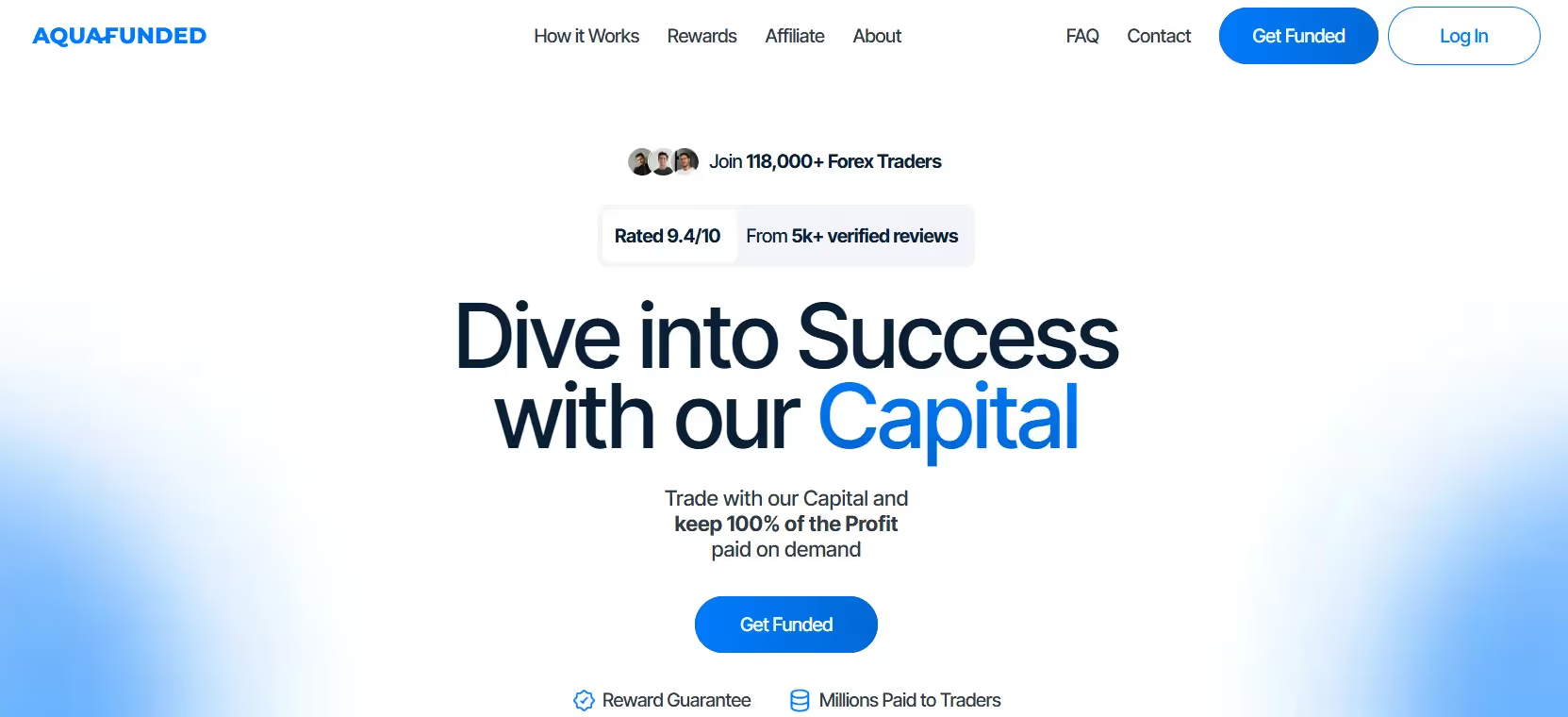
AquaFunded gives traders the chance to scale using third-party capital, with challenge or instant-funded pathways that remove the need to post personal risk. It appeals to self-directed traders who want larger buying power without the liability of trading their own cash.
Pros
- Immediate funded account options for quicker market access
- Generous profit splits, letting traders keep most gains
- Trading rules that are less restrictive than those of some competitors
- Payouts are processed quickly, improving cash flow for active traders
2. Webull

Webull combines a clean mobile experience with advanced charting and order types, aimed at active retail traders who want powerful tools without clutter. It pairs an intuitive interface with fast execution and simulated accounts for practice.
Pros
- Commission-free stock, options, and ETF trades
- Robust advanced charts and order features for tactical traders
- Paper trading with sizable simulated capital for strategy testing
Cons
- No access to mutual funds for diversified mutual-fund exposure
- Research depth is lighter than that of full-service firms
3. Fidelity
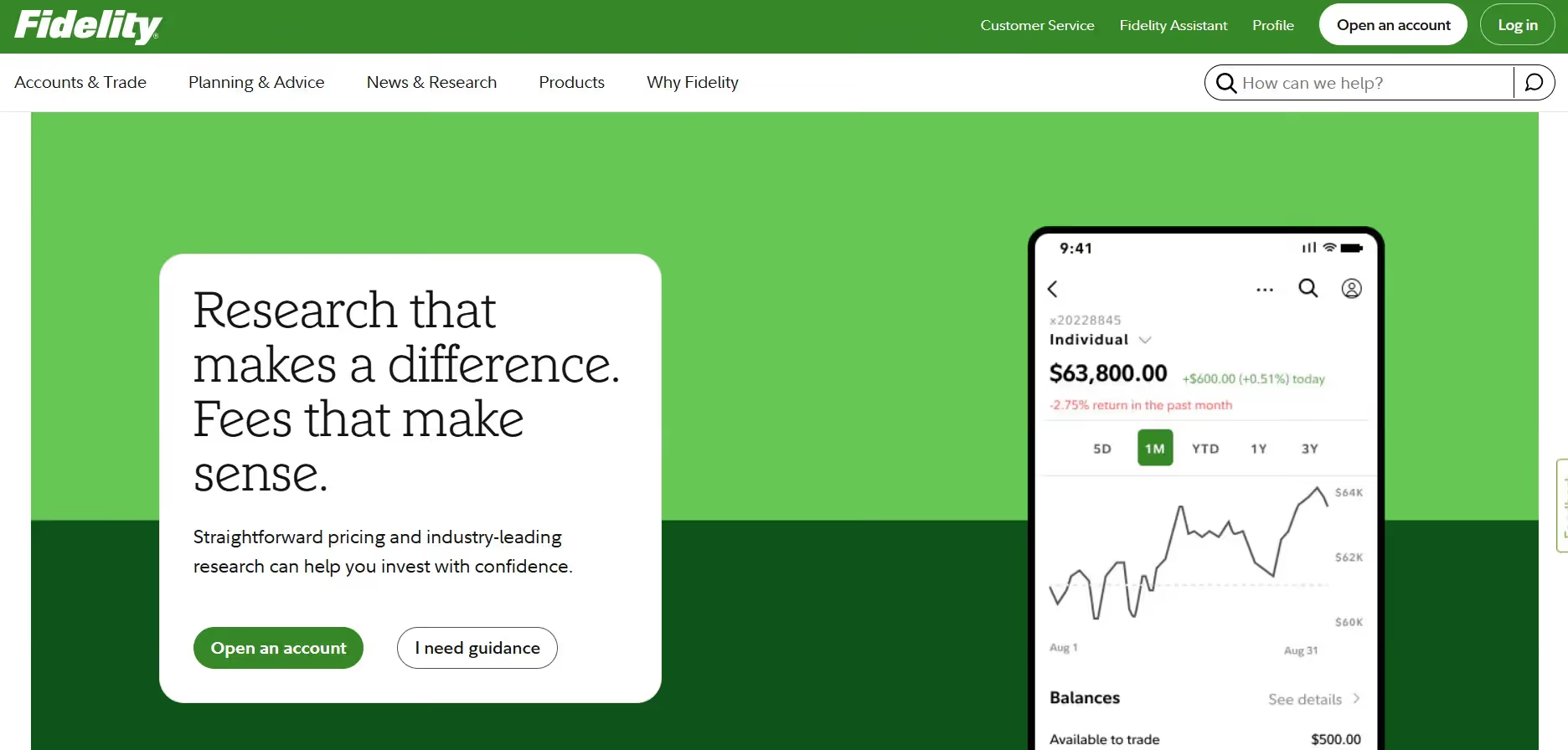
Fidelity blends institutional-grade research, broad product access, and polished customer support, making it a strong all-around choice for investors who want both DIY control and deep resources.
Pros
- Comprehensive research and robust mobile and desktop platforms
- Wide fund lineup including low-cost index options
- Strong client support and planning tools
Cons
- Broker-assisted trades carry higher fees than online execution
- Advanced features can overwhelm very new investors
Fidelity offers $0 commission for online U.S. stock, ETF, and options trades. (NerdWallet, 2023)
4. Public
Public centers on social investing, a straightforward signup flow, and a minimalist app that emphasizes fractional shares and community discovery rather than heavy analytics. It’s friendly for newcomers who want to learn through exposure and shared ideas.
Pros
- Commission-free trading and options rebates on certain flows
- Simple, welcoming app experience that lowers the barrier to start
- Fractional shares for small-dollar investing
Cons
- Limited screening and fewer professional tools for active strategies
- No mutual fund offerings for buy-and-hold diversification
5. Robinhood

Robinhood prioritizes simplicity and speed, with a streamlined app that demystifies trading for first-timers and casual investors, while also offering crypto access and basic education.
Pros
- Commission-free trades across stocks, ETFs, and options
- Clean, frictionless interface that reduces onboarding friction
- Simple retirement products and educational content for new investors
Cons
- Limited third-party research and fewer advanced trading tools
- Less robust for investors who need deep screening or fund choices
Robinhood offers $0 commission for trades. (NerdWallet, 2023)
6. Interactive Brokers
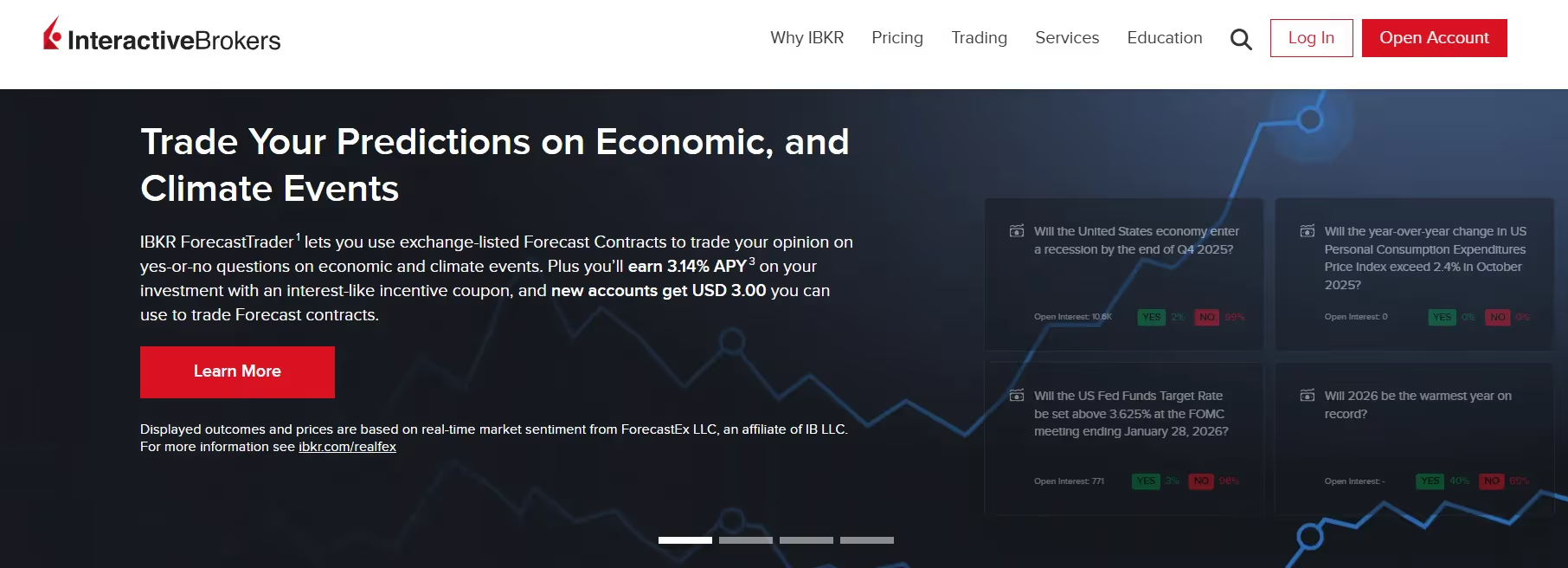
Interactive Brokers suits experienced traders and professionals who need market breadth, low margin rates, and institutional-grade order routing. The platform provides access to global markets and complex instruments for serious users.
Pros
- Access to many markets and products, including OTC and international securities
- Strong execution quality and advanced order controls
- An extensive selection of no-transaction-fee mutual funds
Cons
- Interface complexity can slow beginners down
- Higher balance requirements to earn interest on idle cash
7. Charles Schwab
Charles Schwab focuses on customer service, platform choice, and a large fund universe, offering a balance that appeals to both DIY investors and those seeking guidance from human advisors.
Pros
- Multiple trading platforms with few or no account minimums
- Large selection of funds and research tools for portfolio builders
- Robust support and educational resources for ongoing learning
Cons
- Interest rates on uninvested cash tend to lag some competitors
- Some advanced traders find routing and custom orders less flexible
Charles Schwab offers $0 commission for online stock and ETF trades. (NerdWallet, 2023)
8. SoFi Active Investing

SoFi packages commission-free trading with member perks like free advisor access for basic guidance, and occasional IPO participation for retail accounts, making it attractive to those who value convenience and advice.
Pros
- No commissions and access to limited IPO allocations
- Free introductory advisory sessions for members
- Easy onboarding that links to broader personal finance services
Cons
- Lower interest on idle cash compared with higher-yield cash platforms
- Platform tools are simpler than specialist trading providers
9. E*TRADE

Description
E*TRADE offers a mature trading ecosystem with robust education and a paper-trading environment, suitable for investors who want both learning resources and a dependable trading desk.
Pros
- Commission-free trades and strong customer support channels
- Educational programs, including webinars and daily market briefings
- Volume discounts available for heavy options traders
Cons
- Website navigation can feel clunky for some users
- Fractional share options and interest on cash are less competitive
How should you approach broker selection?
The ongoing confusion about what brokers actually offer is not random; it stems from the system itself. Traders often mix up instruments and account features, leading to execution errors and missed opportunities when switching between platforms. This confusion leads to frustration and a lack of trust, especially for people trying to access limited instruments or specific account services without clear guidance.
Most teams handle account setup and one-time reconciliations using spreadsheets and messages since it is familiar and requires no new tools. While this method works at first, as trade volume and compliance checks grow, records become scattered and response times get slower, creating problems during audits.
Platforms like funded trading programs bring together approvals, automate status tracking, and maintain an auditable trail, greatly reducing reconciliation work while maintaining oversight.
How should you decide what to prioritize? Start with the one limit you cannot change. If low cost is the most important factor, focus on execution quality and fee structure first.
If research and long-term planning are more important, pick a provider that offers institutional research and personal support. For those who need speed and easy access to options and crypto, go for streamlined apps with a simple setup. This approach, based on constraints, keeps you from getting overwhelmed by features and helps you match the tool to the job rather than following trends.
Choosing a broker is like picking a vehicle for a long journey, not just a quick ride around the block.
It's vital to match the cargo, fuel efficiency, and service needs to the distance you plan to travel.
That familiar decision seems complete until you realize the risks of moving off your balance sheet, especially when someone else is funding the trades.
Related Reading
- Sources of Capital
- Cash Reserve Account
- Short Term Stock Trading
- Investment Performance Analysis
- Systematic Trading
- How to Analyze a Stock Before Buying
- Forex Capital Trading
- What is a Retracement in Trading
- What is Automated Trading
- Convergence Trading
- Liquidity Trading
- Futures Trading Minimum Account Size
- What is Drawdown in Trading
- How is Risk Involved in Calculating Profit?
Skip the Risk of Self-Funded Brokerage Accounts, Trade with Professional Capital on AquaFunded
Risking personal capital can be stressful, often reducing the trades a trader is willing to take. AquaFunded offers a solution by allowing traders to operate with up to $400,000 in fully funded accounts. Users keep brokerage-like control, set flexible profit targets with no time limits, and can keep up to 100% of their profits.
This setup enables traders to improve their skills in real market conditions while reducing personal financial risk. Explore our funded trading program.
Related Reading
- How To Take Profits From Stocks
- Accumulation Distribution
- Short-Term Capital Gain Tax On Shares
- What Is Reit Dividends
- Cash Available To Trade Vs Settled Cash
- Best Pairs To Trade Forex
- Can You Day Trade In A Roth Ira
- What Is A Conditional Order
- Orb Strategy Trading
- Stop Loss Vs Stop Limit
- Flag Pattern Trading
- Characteristics of Growth Stocks
- Forex Compounding Plan
