




What is a Funded Account + How to Choose the Best Funded Platform
Learn what a funded account is and choose a reliable trading platform. AquaFunded explains evaluation steps, risk controls, and profit splits.
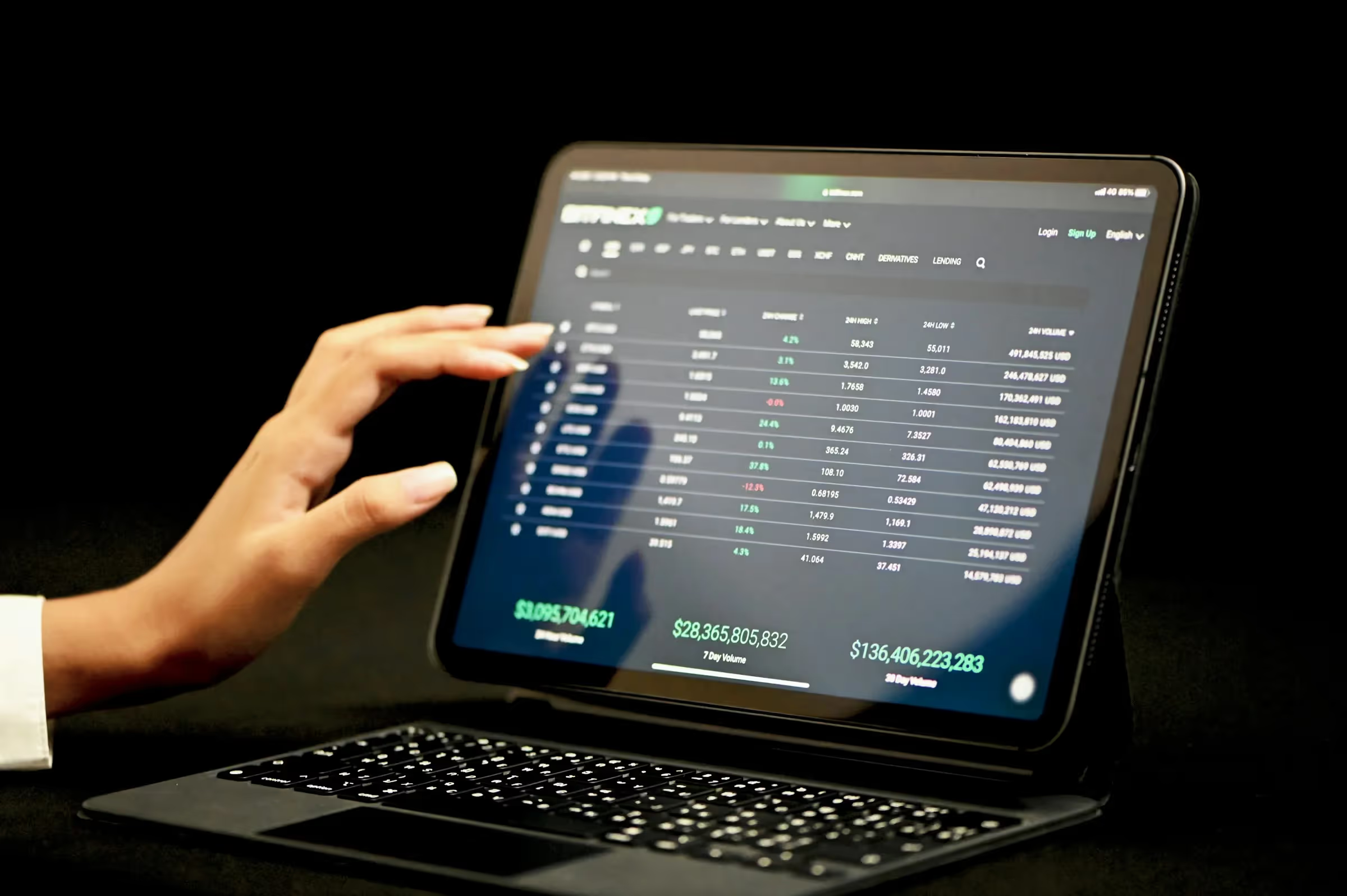
Many traders often hesitate because limited capital and the fear of personal losses can hold back promising strategies. The natural question, "What is a funded account?" reflects an approach in which capital is provided after specific performance criteria are met, allowing traders to leverage their skills without risking their own funds. Evaluation stages, profit splits, and risk management protocols enable a smoother transition from personal trading to professionally supported endeavors.
Structured entry requirements and sensible profit sharing allow traders to advance confidently in competitive markets. This clear framework bridges the gap between trading skill and available capital while reinforcing disciplined risk management. AquaFunded’s funded trading program provides essential support and streamlined tools that help traders build momentum and refine their edge.
Summary
- Funded accounts are master allocations controlled by prop firms, and the average funded account size is about $50,000, a number that directly shapes realistic position sizing and compounding plans under firm rules.
- Access depends on passing timed evaluations that emphasize consistency and risk control. Over 50% of traders fail to qualify on their first attempt, underscoring that discipline matters more than isolated big wins.
- Clearing the evaluation does not guarantee longevity; only about 10% of traders maintain their funded accounts for more than a year, indicating behavioral fatigue and rule friction are significant long-term barriers.
- Structural risk controls such as maximum drawdowns, daily loss caps, and position-size ceilings are central to program design, and 85% of successful traders use platforms with advanced risk-management tools to stay within those limits.
- Net take-home pay hinges on fee and payout mechanics, not just the headline split, with prop firms typically taking between 10% and 50% of profits and reliable platforms reporting payout rates around 95%.
- Scaling rules and execution capability change what strategies are viable, because many programs allocate between $25,000 and $150,000, and differences in execution stack and data latency affect slippage, fills, and whether systematic or orderflow approaches can scale.
- AquaFunded's funded trading program addresses this by standardizing risk rules, consolidating fee and payout transparency, and offering configurable scaling options to reduce administrative friction for traders.
What is a Funded Account

A funded account is a pool of trading money owned by a proprietary Trading Firm. Once you pass an evaluation, you can trade with this money, allowing you to make profits using the firm’s funds. While the firm retains most of the money, it shares profits with you. To help you get started, consider our funded trading program, which is designed to support your trading journey.
1. What exactly is the account I trade?
The funded account is a master allocation controlled by the prop firm, not an individual retail account. You receive trading access to that master account or an assigned sub-allocation. Your performance is recorded under the firm’s capital, while legal ownership and custody remain with the firm.
This arrangement frees you from funding the trades yourself. Your ability to scale, therefore, depends on the firm’s capital rules rather than your personal balance.
2. How do you earn the right to trade it?
Firms control access with an evaluation process, usually a timed challenge that measures consistency, risk control, and execution. You need to demonstrate your ability to identify a repeatable edge in line with the firm’s rules, rather than relying on a lucky one-off winner. The evaluation assesses key areas such as position sizing, drawdown discipline, and adherence to banned behaviors. If you complete this challenge successfully, you earn live-funded privileges.
3. What changes after you pass the evaluation?
Passing moves you from a test environment to live, funded trading. You will start receiving payouts based on a profit split.
The firm keeps the capital and most control, while you get a pre-agreed percentage of the profits you make. How often you get paid, the minimum amounts, and how taxes are handled depend on the firm’s contract. Exploring our funded trading programs can help you optimize your approach, so the split is just one part of what you take home.
4. Who bears the financial risk?
The prop firm bears the cash risk on positions opened under its account. This means the firm absorbs losses up to the contract limits, while risk controls and rules are in place to prevent excessive erosion of the firm's capital.
For traders, the immediate financial downside is usually limited to fees, lost time, and the emotional cost of failed attempts, rather than a direct loss of their own trading capital.
5. What rules and risk controls should I expect?
You should expect limits on how much you can lose, caps on daily losses, ceilings on position sizes, and sometimes rules against holding positions during major news events. These rules are not arbitrary penalties; they are designed to protect the firm’s capital and guide traders toward consistent practices.
If traders violate these rules, they may not pass the evaluation or may have their accounts reset while trading live. For those seeking a supportive trading environment, our funded trading program is designed to help traders adhere to these vital guidelines.
6. How does the typical workflow for a funded program operate?
The typical workflow for a funded program begins with registration and verification of eligibility. Participants then enter a challenge phase, trading using a simulated or monitored account in accordance with the firm's rules. If they show consistent, rule-following performance during this challenge period, they move on to live funded access and begin sharing profits as outlined in the contract.
Throughout this process, the firm monitors performance, and its built-in risk management remains active during live trading to protect the shared capital.
7. What are the real odds and the emotional experience?
When coaching traders through evaluation programs over several months, a clear pattern emerged: many hopefuls underestimate the discipline required. Frequent account resets hurt both cash and confidence. According to the FunderPro Blog, "Over 50% of traders fail to qualify for a funded account on their first attempt." This statistic underscores why the evaluation exists and why persistence and following the process are more important than luck.
Additionally, the FunderPro Blog states, "Only 10% of traders manage to maintain their funded accounts for more than a year." This statistic emphasizes the difference between passing a challenge and creating a durable, funded career. It shows how behavioral fatigue, rule friction, and payout mechanics quietly reduce the number of traders who remain funded in the long run.
What are the hidden costs of funded programs?
Status quo disruption occurs when many traders start programs, believing they can easily access capital and share profits. This way seems familiar for some people, but it causes hidden costs. These costs include recurring evaluation fees, inconsistent rules across firms, and the stress of restarting after resets.
Platforms like AquaFunded help address these issues by standardizing risk rules, enabling scalable progress, and automating payout and compliance tasks. This helps traders retain more of what they learn and manage less paperwork.
What is the real question about reliability?
It’s tiring to finally secure live funding, only to find that operational frictions and behavioral tests have just begun.
While that surface clarity is helpful, the real question about reliability is more complex than it seems.
Related Reading
- How to Grow a Small Trading Account
- What is Trading Commodities
- Long Term Trading Strategy
- Capital Growth Strategy
- What is a Cash Account in Trading
- What is Compound Trading
- How Much Money Do You Need to Start Trading Stocks
- Scale Trading
- Small Account Trading
- How to Evaluate Investment Opportunities
- Blown Trading Account
- What is PNL in Trading
- Do Prop Firms Use Real Money
- Prop Firm Account Management
- Borrowing on Margin
- Trading Leverage
- FTMO vs The5ers Comparison
- My Forex Funds vs FTMO
- Best Automated Crypto Trading Platform
- How to Pass a Prop Firm Challenge
Are Funded Trading Accounts Reliable?

Funded trading accounts can be reliable when the firm managing them shows consistent behavior, clear rules, and accountable oversight. They are not a magic shortcut to easy profits; instead, they represent a business relationship that rewards discipline and predictable processes. To explore options, consider our funded trading program.
1. Can I trust the firm’s track record and how they pay traders?
Reputation matters more than marketing. Look for a firm with a long history of on-time, documented payouts, repeated third-party reviews, and visible corrections when mistakes occur.
In examining complaint patterns across multiple onboarding cohorts over a six-month review, one constant emerged: traders lose confidence fastest when payout stories are inconsistent, and dispute paths are unclear. This emotional fallout is not just a theory; it reshapes how people trade, turning careful risk management into defensive behavior.
2. How transparent are the evaluation rules, fees, and profit splits?
Demand a complete understanding at the start. A trustworthy firm shares exact challenge conditions, fee schedules, profit-sharing mechanics, and information on what causes an account reset. Uncertainty about trade attribution, banned strategies, or penalty triggers can result in broken promises and lost trust. Think of the contract like a service-level agreement: if parts are unclear, be ready for issues when things get tough.
3. Does the firm operate under any regulatory or oversight framework?
Regulation is not black and white; it exists on a scale. Firms that choose to have external audits, maintain separate operational controls, or undergo dispute-resolution processes provide measurable protection.
Not having oversight doesn't always mean fraud, but it does make it harder to recover if something goes wrong. When risk becomes clear, the difference between a firm with basic compliance practices and one without oversight shows up in the time and money needed to fix problems.
4. What signals show a firm truly protects traders, not just its capital?
Essential signs include real-time trade reporting, clear order-routing disclosures (showing whether orders go to the market or are handled internally), and an easy way to report payout issues. A good operations plan should have automated audit logs and clear reconciliation periods, not just a promise of fairness.
It's like buying a used car: you need service records and an independent inspection, not just a nice picture. Our funded trading program emphasizes trader protection and transparency at every level.
5. How does the firm’s capital scale affect my opportunity?
Capital allocation size affects how strategies can be scaled and what advantages are possible. Typically, capital is allocated to mid-sized allocations rather than large pools. For context, according to the FunderPro Blog (2025), "The average funded account size is $50,000." This number is crucial because it sets realistic expectations for position sizing, margin usage, and how quickly returns can grow within the program's rules.
6. What practical checks should you run before committing time or fees?
Before investing your time or money, conduct practical checks. First, verify payout proofs against records with dates. Request a sample contract that reflects your exact situation and includes clear examples of how typical edge cases are handled, such as partial fills or losses due to news events.
If a company is unwilling to discuss these details, see that as a red flag. A quick checklist now can help you avoid a long recovery process later.
7. How do human factors affect reliability?
Reliability collapses when people feel powerless. The fear of scams and the feeling of helplessness among victims trying to get their money back are real and damaging. These emotions can make traders very cautious or even lead them to avoid funded models entirely.
Companies that want to earn trust work hard to reduce these feelings. They do this by sharing clear dispute timelines, providing helpful human support, and demonstrating how they correct mistakes after they occur.
8. What tradeoffs should you expect between access and protection?
Faster access and looser rules can raise the chances of moral hazard and operational risk. On the other hand, stricter oversight and clearer guardrails slow onboarding but help protect long-term value. When making a decision, consider whether you prioritize rapid trial-and-error or steady, career-focused, funded access.
What hidden checklist affects who you trust next?
There is a hidden checklist that most people overlook. This checklist can profoundly change who you decide to trust next.
How to Choose a Reliable Funded Trading Platform

Treat this like due diligence. Choose a firm whose paperwork, payouts, and technology align with your trading style, rather than just how attractive its marketing is.
Make sure to check key factors such as how long the company has been operating, clear compliance relationships, fully itemized fees, and a technology setup that meets your execution needs before you invest your money or time.
1. How can I verify a trader's reputation, regulatory compliance, and honest trader feedback?
Requesting proof of operational history, specifically public records showing at least two years of continuous service and documentation of dated payouts, rather than merely relying on marketing blurbs. It's crucial for the firm to name its clearing or broker partner and produce paperwork that demonstrates a relationship with a CFTC-registered broker, ensuring a traceable compliance chain.
Conducting three independent checks: reviewing Trustpilot and other independent review sites, examining archived complaint records or dispute timelines, and analyzing patterns of community feedback. An audit of onboarding cohorts over six months revealed that the worst breakdowns came from firms that either avoided sharing specific payout samples or declined to clarify their dispute resolution processes. Such behaviors provide clearer insight into whether a firm can endure stress, more so than any marketing slogan.
Establishing simple thresholds as red flags. For instance, trader satisfaction scores below 4.2 out of 5, evasive responses regarding KYC or payout timelines, and a history of aggressively edited reviews should raise concerns. It's also essential to verify order-routing disclosures and the existence of audit logs for trade attribution; their absence can indicate significant operational risks.
Finally, prioritize firms reporting a high effective payout rate, as this directly impacts livelihood. Platforms with a 95% payout rate are considered the most reliable by traders, according to the World Business Outlook. Ensure to ask how the firm calculates and publishes its payout metric.
2. What Should I Test About Profit Splits and Fee Transparency?
First, build the math, then focus on marketing. Obtain an itemized cost sheet that details the evaluation fee, any recurring platform or data charges, exchange fees passed through, and the exact profit-share formula. This formula should include caps, tiered percentages, and clawback triggers. Compare net take-home using a simple scenario: projected gross profit minus all fees, multiplied by the profit split.
That net number represents the expected return, not just the headline split. Be careful of vendor-style traps, like mandatory data feeds, monthly platform subscriptions, or chargebacks for "compliance reviews." These items can quietly reduce lifetime yield.
Prefer firms whose business model aligns incentives. For example, firms that focus on risk controls and trader longevity rather than just pushing evaluations are better choices. This matters a lot, as most top traders prefer platforms with robust risk management tools.
According to a FunderPro Blog study, 85% of successful traders use platforms with advanced risk management tools. Watch for exceptions and opportunities, like firms that offer unusually generous splits or fee structures. If a program advertises a 100 percent lifetime profit split and a single upfront fee, compare that to a 60-80 percent entry split with monthly charges. Confirm such claims with contract language that stops future cuts or hidden costs.
How are execution platforms and tech stacks important?
Status quo disruption: Most traders accept opaque fee pages because signing up is quick and familiar. This speed often masks underlying costs, as hidden subscriptions and stopgap clauses can accumulate over time.
Platforms like AquaFunded offer more obvious alternatives with simple fee statements, automated payout reviews, and clear audit trails. These features convert weeks of dispute resolution into just a few clicks, ensuring more net profits stay in traders’ accounts.
3. How do funding sizes, capital limits, and scaling rules change what strategies are viable?
Ask for the firm’s allocation spectrum and scaling mechanics up front. This includes the minimum and maximum account sizes and whether increases are automatic, performance-based, or manually reviewed. Many futures prop programs range from $25,000 to $150,000 in allocation. How the firm increases your allocation can show if your plan to grow your capital is realistic.
Understand capital cliffs and gating rules. For example, there may be extended delays between scaling steps, required profit streaks, or higher review thresholds for larger allocations. These steps may require you to adjust your position sizes or switch strategies as your capital grows. Treat scaling rules like runway limits: they determine how quickly you can safely leverage your advantage without violating firm policy.
Check whether the firm credits unrealized PnL for scaling decisions or only realized profits. Also, find out if they allow reinvesting earned payouts back into allocated capital. This distinction affects tax timing, your mindset, and your ability to grow your capital.
4. What execution platforms and tech stacks should I demand?
What execution platforms and tech stacks should I demand? First, match the stack to your edge. If you trade order flow and footprint analysis, prioritize low-latency gateways and data depth. For systematic strategies, focus on APIs, simulated order types, and reliable fill reports.
Firmly request a list of supported engines and an explanation of where order execution actually occurs. Verify specific providers and integrations, including the availability of Tradovate and NinjaTrader.
If your approach involves TradingView for execution, ensure there is direct routing. Check access to specialized tools such as Rithmic, ATAS, or ProjectX. Request a trial or demo account to benchmark slippage, fill quality, and historical execution logs before committing.
Confirm who pays for market data and which exchanges are included. Additionally, determine whether the firm allows personal platform licenses or mandates a hosted, firm-controlled environment. This distinction significantly affects both cost and operational control: a hosted environment can reduce overhead but introduces vendor dependency that requires careful evaluation.
What checklist should I follow for clarity?
A practical checklist can save time and prevent confusion. Key items to request include dated payout proofs, a signed sample contract with your trading profile, a complete fee schedule, the broker or clearing partner's name, and an execution demo showcasing real fills. Completing this checklist just once can save months of guesswork and emotional turmoil.
Related Reading
- Sources of Capital
- Cash Reserve Account
- Short Term Stock Trading
- Investment Performance Analysis
- Managed Account vs Brokerage Account
- Systematic Trading
- How to Analyze a Stock Before Buying
- Forex Capital Trading
- What is a Retracement in Trading
- What is Automated Trading
- Convergence Trading
- Liquidity Trading
- Futures Trading Minimum Account Size
- What is Drawdown in Trading
- Best Prop Firms in UAE
- Forex Prop Firms With Instant Funding
- Regulated Prop Firms
- Prop Challenge
- How is Risk Involved in Calculating Profit?
12 Best Funded Trading Platforms for Beginners
The safest bets for beginners are platforms that have clear challenge paths, affordable entry costs, and precise scaling mechanics.
Below are 12 funded programs, summarized and rephrased to help you quickly compare the key points.
1. AquaFunded
AquaFunded lets you trade the firm’s capital across accounts up to $400,000. It has flexible rules to streamline trading. You can choose instant funding or demonstrate your skills through various challenge routes. The program offers high profit-sharing, allowing successful traders to keep a significant share of their earnings.
AquaFunded also highlights fast payouts, a significant global trader base, and no strict time limits on most evaluation tracks, which works well for learners who like a steady, process-driven approach.
2. TopStep
TopStep focuses only on futures, making it a good choice if your strengths are in indices, commodities, or futures spreads. It offers three funded sizes with clear daily and trailing-loss limits. This helps keep your risks clear.
The smallest option has the lowest limits for daily and trailing losses. At the same time, the middle tier raises those limits, and the largest account increases them even more, giving you room to grow your position size carefully.
3. FTMO
FTMO has long been a leader in evaluations. It offers capital allocations that range from modest to large and a high profit share for those who transition successfully.
Their two-step verification checks for steady performance and risk management. Plus, they help beginners with educational content and a planning calculator that links trade size to drawdown rules and goals.
4. DNA Funded
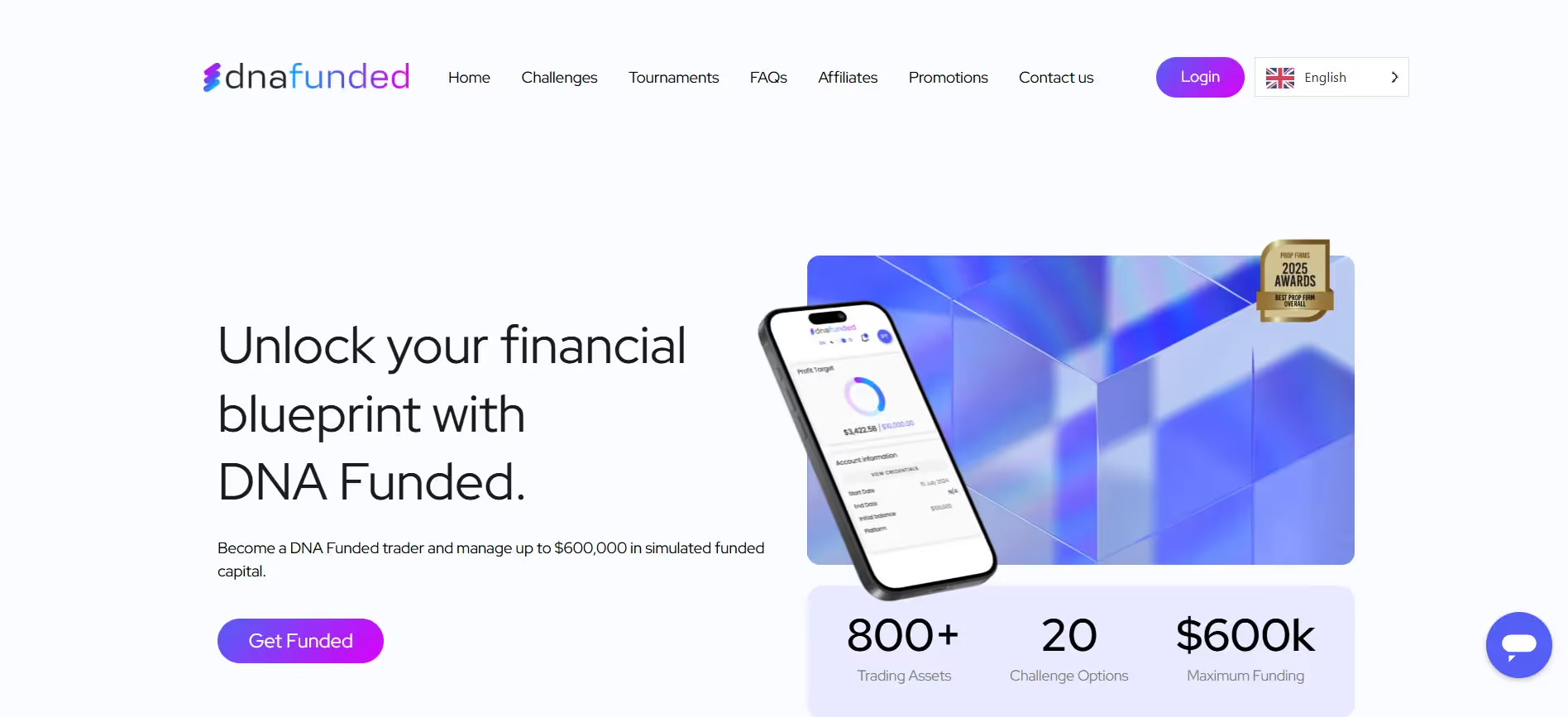
DNA Funded starts traders with an appealing profit split and adds optional boosts to increase your share or speed up payouts. It also offers a shorter minimum trading period if you choose to take part.
Early payouts have a cautious cap on the first few withdrawals, but it lifts after that. This design aims to limit early volatility while building trust between the trader and the firm.
5. The Funded Trader

The Funded Trader offers different challenge tracks, such as fast and premium lanes, so traders can choose the evaluation intensity that fits their style.
It is usually competitively priced, returns a high percentage of profits to traders, maintains a modest maximum drawdown, and features a fun, gamified interface to help new traders stay motivated even when they need to reset.
6. FundedNext
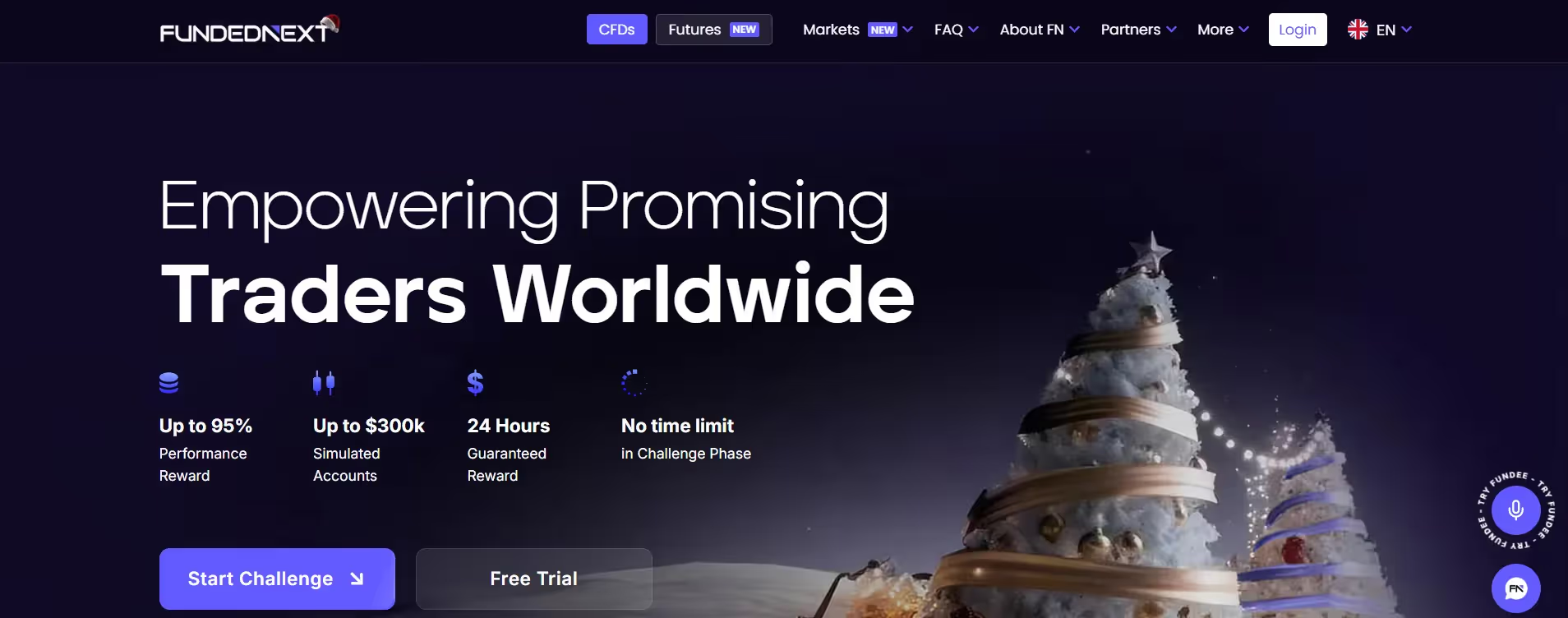
FundedNext supports various trading platforms, including MetaTrader 4 and 5, Match-Trader, and cTrader, with TradingView available for analysis, but not for placing orders.
The available platforms may vary by allocation size, so check which platforms support resets, top-ups, or other account controls at each capital tier before you choose.
7. The5ers

The5ers makes it easier to start with smaller initial allocations and allows trading around news and holding positions overnight.
This flexibility reduces timing pressure for traders who do not want to set minimum holding periods. It also offers scaling plans that let traders increase their allocations as they hit steady profit goals, which rewards steady traders more than those aiming for big wins in a single day.
8. FundedTradingPlus
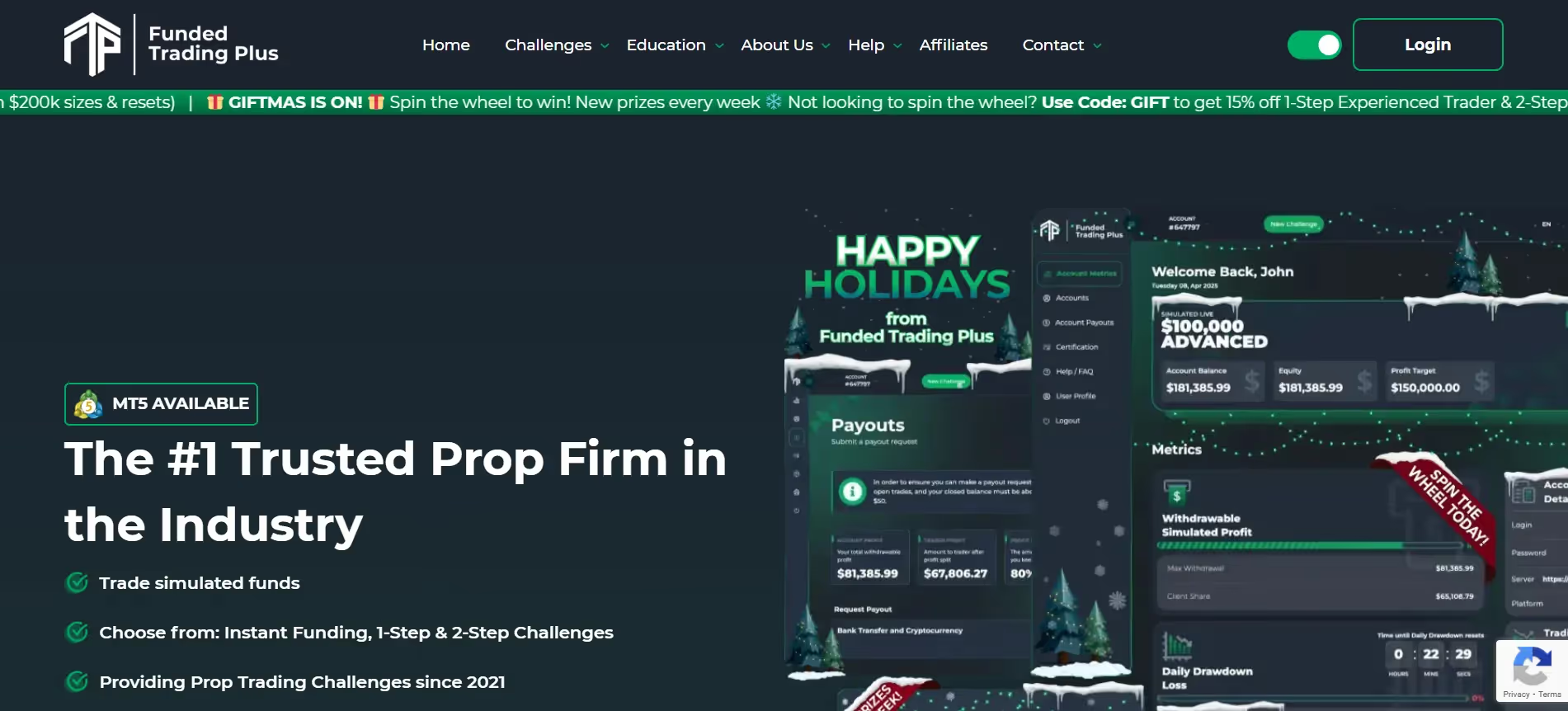
FundedTradingPlus has a multi-phase evaluation that rewards steady results and careful risk management. It allows you to access larger capital tiers as you demonstrate consistency.
Payouts follow a regular schedule and support standard withdrawal methods, helping you manage your cash flow without surprises.
9. SurgeTrader
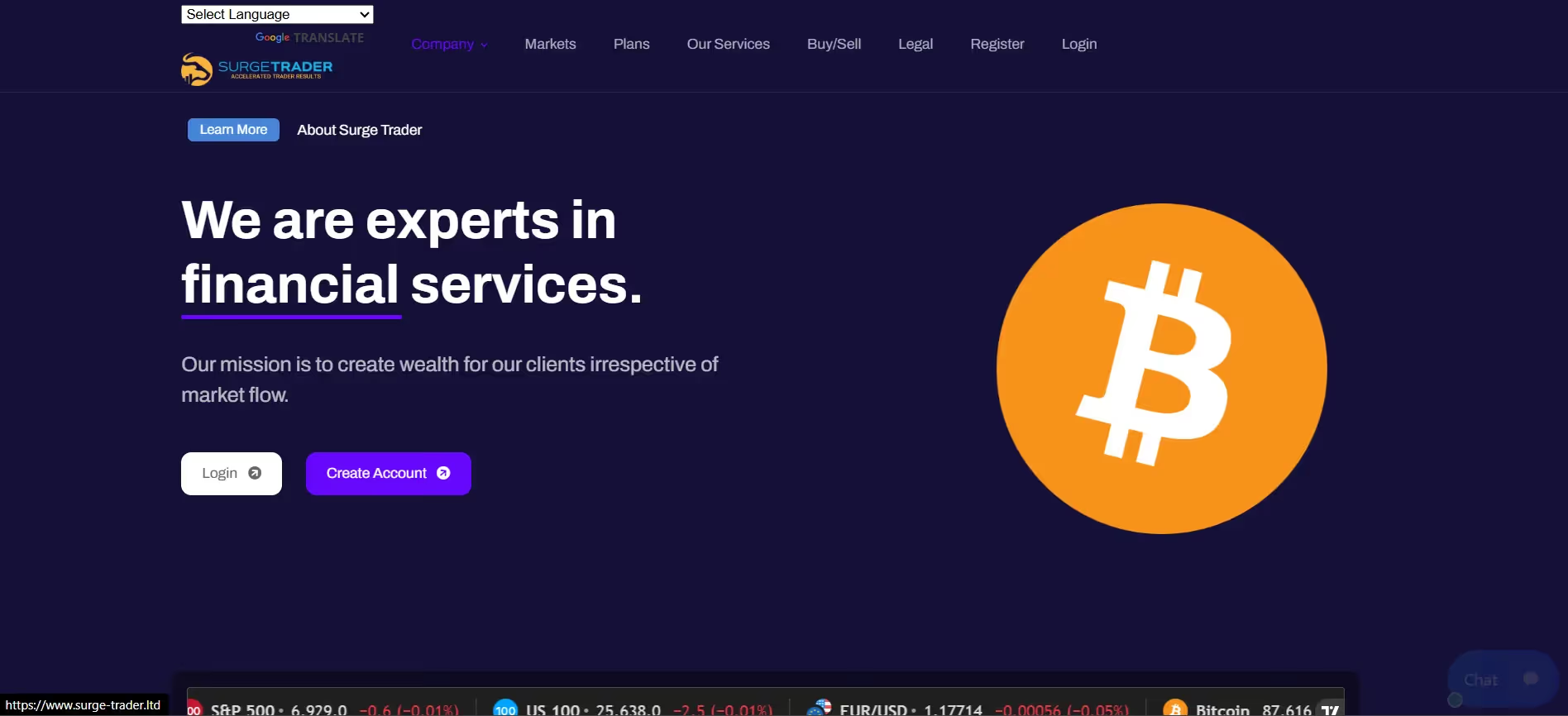
SurgeTrader offers a faster path to funding with a short evaluation window and instant funding options.
It supports capital sizes up to the mid-six figures and has a friendly trading policy that allows news exposure and weekend holds.
While this speed is appealing, you should assess the quality of execution and dispute resolution, as shorter evaluations can increase stress over fewer days.
10. Apex Trader Funding

Apex Trader Funding offers a wide range of technology options, including an exclusive WealthCharts feature, free NinjaTrader 8 licenses, Tradovate, professional-level Rithmic connectivity, and connections to many third-party analytical tools.
If your edge relies on fast fills or specialized order-flow platforms, Apex helps you match your execution environment to your trading method.
11. BluFX
BluFX focuses on forex, offering up to six-figure allocations at a relatively low start-up cost and supportive rules for automated strategies. Its challenges generally have no strict time limits, allowing traders to create algorithmic systems without the stress of tight deadlines.
12. FundedFast

FundedFast emphasizes self-paced evaluation, offering one- and two-step challenges with no time limits and starting at low account sizes for a small fee.
Their design encourages consistent small wins rather than relying on significant, single gains. If you hit your targets responsibly, they even offer at least one free retry to help protect against bad luck.
What should beginners watch for in funded platforms?
When coaching groups over several months, a clear pattern emerged: beginners often lose motivation due to hidden fees and unclear rule triggers, rather than market advantages.
It's essential to choose a program with transparent fees and an easy-to-understand rulebook that uses a simple net-profit model.
Also, remember that, as Benzinga notes, prop trading firms typically take between 10% and 50% of each trader’s profits, depending on the profit split. This range underscores the importance of calculating your net take-home amount rather than relying on the headline split.
Lastly, some funded programs promote high-margin options, such as For Traders, which offers 20x trading leverage. It's crucial to match leverage with your drawdown limits and execution plan.
What challenges do beginners face with funded platforms?
Many traders choose firms that seem easy to join because this approach feels efficient and familiar. While this method may work at first, issues such as recurring resets, unclear payout delays, and unexpected fees can quickly erode capital and confidence.
Platforms like AquaFunded offer a better choice. They provide clearer challenge customization, faster payout options, and visible funding lanes. This helps traders focus on trading rather than dealing with unexpected administrative issues.
How does choosing a funded program impact traders?
A short analogy can clarify this concept. Choosing a funded program is like renting a performance car: some shops just give you the keys without checking the car, while others explain things like wear points and fuel policies.
The second option can help you avoid significant repair costs later.
This simple decision can change how a trader builds their career. The next funding decision is often more important than many people realize.
Join Our Funded Trading Program Today - Trade with our Capital and Keep up to 100% of the Profit.
If you're ready to scale your trading without risking your own money, consider AquaFunded. They provide access to allocations of up to $400,000 with instant funding or customizable challenge routes. A 48-hour payment guarantee backs their clear profit targets and payouts of up to 100%.
This lets you treat their capital like a well-tuned engine, focusing on execution while keeping more of what you earn. Explore our funded trading program.
Related Reading
- How To Take Profits From Stocks
- Accumulation Distribution
- Short-Term Capital Gain Tax On Shares
- What Is Reit Dividends
- Cash Available To Trade Vs Settled Cash
- Best Pairs To Trade Forex
- Can You Day Trade In A Roth Ira
- What Is A Conditional Order
- Orb Strategy Trading
- Stop Loss Vs Stop Limit
- Flag Pattern Trading
- Characteristics of Growth Stocks
- Forex Compounding Plan
