




Instant Funding Rules, Benefits & Best Instant Funding Prop Firms
Learn the Instant Funding Rules traders must follow and explore top prop firms offering fast access to capital.
Consider having access to substantial trading capital without risking your own money. That's the promise behind understanding what a funded account is and how instant funding rules can transform your trading journey. Most traders face the same obstacle: limited capital restricts their potential, even when they possess solid strategies and discipline. This guide breaks down the instant-funding rules governing prop firm accounts, evaluation requirements, and withdrawal policies, helping you trade with a funded account while avoiding common pitfalls that derail aspiring traders.
That's where AquaFunded's funded trading program becomes a game-changer for your trading goals. Our program provides immediate capital access through clear, straightforward instant-funding guidelines, eliminating the lengthy evaluation periods other firms impose. When you trade with a funded account through AquaFunded, you gain the resources to execute your strategy at scale while keeping a generous profit split, all without the stress of risking personal savings or navigating confusing payout structures.
Summary
- Instant funding eliminates traditional evaluation periods by providing immediate capital access after payment, but it doesn't eliminate risk controls. Firms still enforce strict daily drawdown limits of 4%-6%, and exceeding these thresholds, even once, typically results in account termination. The acceleration moves compliance boundaries from evaluation phases directly into live trading environments, where violations carry immediate consequences rather than just disqualifying you from future funding.
- Profit targets create psychological pressure distinct from trading personal capital. Reaching a 10% milestone isn't just about profitability; it's about hitting specific numbers within defined timeframes, where each loss pushes the target further away. This structure demands both offensive risk-taking to generate gains and defensive discipline to avoid drawdown violations, forcing traders to balance competing priorities that don't exist when the only person judging performance is themselves.
- Compliance monitoring extends far beyond profit-and-loss tracking. According to the U.S. Faster Payments Council's 2025 study, 72% of users rated interface quality as the top priority for instant payment systems. Firms continuously monitor IP addresses, trade timing patterns, and position correlations, often flagging accounts for "irregular activity" based on statistical algorithms rather than explicit rule violations. Many traders discover specific infractions only when withdrawal requests get denied, sometimes weeks after the behavior occurred.
- Rule violations often stem from misunderstandings of restrictions rather than intentional misconduct. Position scaling across multiple entries may be treated as separate positions for risk calculation, inadvertently tripling the intended exposure. News trading and hedging strategies that work in personal accounts often trigger compliance flags at prop firms, even when technically permitted by published terms. The gap between what traders believe they're allowed to do and what firms consider acceptable leads to account terminations unrelated to trading skill.
- Instant funding rewards established traders more than beginners because it assumes competence rather than testing it. Traders with proven track records don't need another evaluation demonstrating basic risk management; they need capital deployment for strategies already validated across different market conditions. The model eliminates performance anxiety inherent in evaluation phases, where traders modify approaches to pass challenges rather than executing authentic methodologies they'll actually use when funded.
- AquaFunded's funded trading program addresses this gap by publishing exact drawdown thresholds, position limits, and prohibited strategies in plain language before payment, and by providing real-time compliance dashboards that show current standing rather than end-of-day calculations that leave traders guessing their risk exposure during volatile sessions.
What is Instant Funding

Instant funding gives you immediate access to trading capital without waiting through traditional evaluation phases. You select an account size, pay an upfront fee, and start trading simulated capital right away. According to Instant Funding, traders can access 1:100 leverage from day one, meaning your buying power scales quickly, but the rules governing how you use that capital remain firmly in place. The promise sounds liberating. No evaluation period. No waiting weeks to prove consistency. Just payment processed, account activated, capital deployed. Many traders assume this speed translates to unrestricted freedom, that "instant" means trading however you want, whenever you want, with whatever strategy feels right in the moment. That assumption creates more problems than it solves.
The Reality Behind Immediate Access
Instant funding firms still enforce strict risk controls because they're protecting their capital, not yours. Daily drawdown limits typically range from 4% to 6% of your account balance. Exceed that threshold even once, and your account will be frozen or closed. The speed of access doesn't eliminate the boundaries; it just moves them from the evaluation phase into your live trading environment.
Position sizing restrictions apply immediately. Some firms limit the number of contracts you can hold simultaneously or prohibit trading certain asset classes altogether. News-based scalping strategies that work beautifully in personal accounts often violate instant funding rules because they create volatility the firm can't stomach. Hedging positions across correlated instruments might trigger compliance flags, even if your net exposure stays reasonable.
Compliance monitoring happens continuously, not just at payout time. Firms track your IP address to ensure you're trading from approved locations. They watch for patterns suggesting multiple accounts under different names. They analyze trade timing, position correlations, and withdrawal patterns. A trader I know had his account suspended three days before his first payout request because the firm detected what they called "irregular trading behavior." His crime? Taking profits quickly on news releases, exactly as his strategy required. The firm's rules technically allowed it, but its risk team disagreed in retrospect.
How Instant Funding Actually Works
You start by selecting an account size that aligns with your capital and risk tolerance. Smaller accounts under $25,000 typically require lower upfront fees, often starting at $249. Larger accounts demand proportionally higher payments but offer more position flexibility and profit potential. Once you pay, the account activates within hours, sometimes minutes.
The first milestone matters most. You need to hit a relatively modest profit target, usually around 6%, while staying inside all risk parameters. Miss the drawdown limit by half a percentage point, and you're done. Violate a trading rule you didn't fully understand, and the account closes before you reach that first payout threshold. Instant Funding reports that traders who succeed keep 90% of profits, but reaching that payout requires navigating rules that aren't always crystal clear until you break them.
Account scaling happens after you prove consistency. Hit 10% profit while maintaining clean rule compliance, and some firms double your capital. Repeat that process, and you can theoretically grow from $25,000 to $1 million over time. The math looks compelling on paper. In practice, each scaling milestone introduces additional psychological pressure because drawdown limits increase in absolute dollar terms while remaining the same as a percentage of total capital. A 5% loss on $25,000 costs you $1,250. That same percentage on $200,000 means $10,000, and the emotional weight of that number changes how you trade, even when the risk ratio stays identical.
The real challenge surfaces when traders treat instant access as permission rather than opportunity. Speed creates urgency, and urgency breeds mistakes. You skip the mental preparation that evaluation periods force. You don't spend weeks learning how the platform responds under pressure or how your strategy performs within the firm's specific rule structure. Traditional prop firms require you to demonstrate discipline before providing capital. Instant funding firms give you capital and expect you to prove discipline simultaneously, under live market conditions, with real consequences for every misstep.
AquaFunded's trading program approaches this differently by making rules transparent up front rather than discovering them through violations. Their instant funding model still includes risk controls, but the parameters are clearly explained before you pay, not buried in terms you only see after your account is frozen. The drawdown limits, prohibited strategies, and compliance requirements appear in plain language, reducing the gap between what you expect and what actually happens when you start trading.
What Traders Miss About "Instant"
The word "instant" describes timing, not freedom. You get capital fast, but you don't get unrestricted control. Performance still matters. Consistency still matters. Rule compliance still matters more than profit size, because a single violation can erase weeks of careful trading. The firms monitoring your account don't care that you made 15% last month if you broke three rules getting there.
Profit targets create constant pressure even under instant funding. You're not just trying to make money; you're trying to achieve specific amounts within specific timeframes while avoiding behaviors the firm prohibits. That's a fundamentally different psychological environment than trading your own capital, where the only person judging your decisions is you. Every trade carries the weight of potential account termination, not just financial loss.
The step-by-step process sounds simple: choose a plan, pay a fee, access an account, meet targets, scale up. Each step contains complexity that the summary hides. Choosing the right plan means honestly assessing your strategy's capital requirements and drawdown history. Paying the fee commits you financially before you know whether the firm's execution quality, platform stability, or rule enforcement matches your needs. Accessing the account starts a clock you can't pause. Meeting targets requires not just skill but rule memorization and constant self-monitoring. Scaling up sounds like a reward, but it introduces new capital exposure and psychological pressure that changes how you perform. But here's what most traders don't realize until they're already trading: the rules themselves aren't the hardest part to navigate.
Instant Funding Rules Explained

The rules aren't complicated, but they're unforgiving. Instant funding accounts provide capital immediately, but each firm sets specific limits to protect its risk exposure. These constraints cover drawdown limits, profit targets, instrument restrictions, position sizing, compliance monitoring, and payout schedules. Understanding these rules before you start trading matters more than your strategy, because a single violation ends your access, regardless of how profitable you've been. The challenge isn't memorizing the list. It's recognizing that these rules interact in ways that affect how you trade. A position that fits your risk model might violate the firm's leverage cap. A strategy that works beautifully in your personal account might trigger compliance flags because it involves hedging across correlated pairs. The rules look straightforward in isolation, but they create a trading environment that demands constant self-monitoring, not just market analysis.
Drawdown Limits That Define Your Boundaries
Most instant funding accounts enforce two separate drawdown thresholds: daily loss limits and total account drawdown. The Goat Funded Trader instant funding model sets a 5% maximum daily loss and a 10% maximum total loss, which means you're managing two separate risk calculations simultaneously, not just watching your overall equity curve. Daily loss limits reset at market close, but that doesn't mean you get a fresh start psychologically. Lose 4.5% on Monday, and you're trading Tuesday with heightened caution, second-guessing entries that would normally feel routine. The mental weight of approaching that threshold changes your behavior before you actually hit it. You start exiting winners early to lock in gains. You hesitate to make valid setups because the risk of adding to today's loss feels greater than the opportunity cost of missing the trade.
Total drawdown accumulates across all trading days. You could stay well under the daily limit in every session but still exceed the 10% total threshold through consistent small losses over weeks. That's where traders who think they're managing risk carefully still lose accounts. They watch the daily number religiously but forget that the cumulative damage builds quietly in the background, especially during choppy markets where small losses pile up faster than you expect.
Profit Targets That Create Constant Pressure
Reaching the 10% profit target sounds reasonable until you're trading under it. You're not just trying to be profitable; you're trying to hit a specific number within a timeframe, and every losing trade pushes that target further away. The math creates urgency that doesn't exist when you trade your own capital. A 3% gain feels like progress in your personal account. In an instant funding environment, it's 30% of the way to your first payout, which means you're still 70% away from accessing any of that profit.
Some firms structure targets incrementally, letting you withdraw smaller amounts as you hit milestones. Others require the full percentage before any payout happens. That difference dramatically changes your trading psychology. Incremental payouts let you realize some reward along the way, reducing the emotional pressure of the all-or-nothing structure. Single-target models keep you locked in longer, which means more time exposed to rule violations, market volatility, and the psychological strain of delayed gratification.
Traders often find profit targets more stressful than drawdown limits because they require action, not just restraint. Avoiding losses requires discipline and patience. Generating gains requires taking risks, and every risk you take moves you closer to either the profit target or the drawdown threshold. You're constantly balancing offensive and defensive priorities while trying to make progress without stepping outside the boundaries that could terminate your account.
Instrument and Position Restrictions That Limit Strategy
Not every asset class gets approved for instant funding accounts. Some firms restrict trading to forex pairs, excluding indices, commodities, or individual equities. Others allow broader instrument access but cap leverage differently across categories. You might get 1:100 leverage on major currency pairs, but only 1:30 on gold or crude oil. That asymmetry forces you to adjust position sizing based on the trade you're taking, not just your risk model.
Position limits apply to both size and quantity. A firm might restrict you to five open positions simultaneously, regardless of how well-diversified they are. If your strategy involves scaling into trades or holding multiple uncorrelated setups, that restriction undermines your approach. You're forced to choose which opportunities to pursue rather than taking every valid signal your system generates.
Prohibited strategies surface in the fine print, not the marketing materials. News-based scalping, high-frequency trading, arbitrage between correlated instruments, and hedging positions across multiple accounts all sound like legitimate tactics until you discover they violate the firm's terms. Some firms ban holding positions through major economic releases. Others prohibit trades opened and closed within a specific timeframe, labeling them as gambling rather than strategy execution. These restrictions aren't clarified until you violate them, and by then your account is already under review or suspended.
Account Monitoring That Watches Everything
Compliance systems track more than just profit and loss. Firms monitor IP addresses to ensure you're trading from approved locations. They analyze trade timing patterns to detect behaviors that suggest automation or account sharing. They compare your trading activity against statistical norms to flag outliers that might indicate rule violations, even if those violations aren't explicitly defined in the terms you agreed to.
A trader's account gets flagged for irregular activity when the firm's risk algorithms detect patterns they consider suspicious. That might mean taking profits too quickly on news releases, even though the rules technically allow news trading. It might mean opening positions in multiple correlated instruments simultaneously, which can appear to be hedging even if your intent was diversification. Monitoring is continuous, and judgment calls about what constitutes a violation are often made after the fact, when you're already trying to withdraw profits.
Account suspensions happen without warning. You log in to place a trade and find your access has been revoked, with a generic message to review your activity. The review process can take days or weeks, during which you can't trade, access your account, or get clear answers about what triggered the flag. Many traders discover the specific violation only after the firm denies their payout request, citing terms they didn't realize applied to their strategy.
Payout Rules That Control Access to Your Profits
Withdrawal schedules vary widely between firms. Some allow immediate payouts once you hit the profit target and process requests within 24 hours. Others enforce weekly or biweekly cycles, meaning you might have to wait up to 14 days after hitting your target before accessing any funds. That delay matters when you're planning to reinvest profits or cover the upfront fees you paid to access the account.
Payout eligibility depends on maintaining compliance throughout the trading period, not just at the time you request a withdrawal. A rule violation from two weeks ago can disqualify your current payout request, even if you've traded cleanly since then. Firms review your complete trading history before approving any withdrawal, looking for patterns or behaviors that technically violated terms you might not have noticed at the time. AquaFunded's funded trading program addresses this opacity by publishing clear payout timelines and compliance criteria upfront, so you know exactly what qualifies you for withdrawal before you start trading. Their structure eliminates the surprise denials that plague traders at firms where rule interpretation happens retroactively, after you've already invested weeks of effort building your account balance.
Risk Management Requirements That Demand Discipline
Position sizing rules force you to limit risk per trade, often capping it at 1% to 2% of your account balance. That sounds conservative until you realize it applies to every position independently. If you scale into a trade across three entries, each entry counts as a separate position for risk calculation purposes. Your intended 2% total risk becomes 6% if you're not tracking each leg individually.
Stop-loss requirements vary by firm. Some mandate visible stops on every position, rejecting mental stops or discretionary exits. Others allow flexibility but monitor your average loss per trade, flagging accounts where losses consistently exceed a threshold they consider acceptable. Enforcement isn't always explicit in the rules, so you only learn the standard after your account is reviewed.
The firms that succeed in supporting trader growth don't just publish rules; they explain the reasoning behind them. When you understand that daily drawdown limits exist to prevent catastrophic single-day losses rather than to restrict your strategy, you approach the boundary differently. When you recognize that position limits exist to ensure diversification rather than to limit your opportunity, you build strategies that work within the constraints instead of constantly testing the edges. But knowing the rules doesn't mean you're ready to trade under them.
Related Reading
- What is a Funded Account
- How to Grow a Small Trading Account
- What is Trading Commodities
- Long Term Trading Strategy
- Capital Growth Strategy
- What is a Cash Account in Trading
- What is Compound Trading
- How Much Money Do You Need to Start Trading Stocks
- Scale Trading
- Small Account Trading
- How to Evaluate Investment Opportunities
- Blown Trading Account
- What is PNL in Trading
- Do Prop Firms Use Real Money
- Prop Firm Account Management
- Borrowing on Margin
- Trading Leverage
- Does FTMO Offer Instant Funding
- Prop Firm Static Drawdown
- Funding Traders Rules
- What Is Prop Firm Account
- Synthetic Funded Account
- What Is Funded Firm
- Trading Challenges
- Prop Firm IP Address Rule
- Do Prop Firms Use Real Money
- FTMO vs The5ers Comparison
- My Forex Funds vs FTMO
- Best Automated Crypto Trading Platform
- How to Pass a Prop Firm Challenge
Benefits of Instant Funding

Instant funding eliminates the wait between payment and trading. You pay your fee, the account activates, and you can deploy capital within hours. That speed matters when you've spent months developing a strategy, and you're ready to execute, not sit through another evaluation phase proving what you already know about your edge. The question isn't whether instant access helps; it's whether you understand what you're actually getting when the capital appears that quickly. The benefit extends beyond calendar days saved. Traditional prop firm evaluations create artificial trading environments where you're performing for judges rather than trading your actual strategy. You modify your approach to pass the challenge, then have to relearn how to trade authentically once you get funded. Instant funding eliminates that performance anxiety by putting you directly into the environment where your strategy either works or it doesn't, without the distortion of evaluation pressure that can change your behavior.
You Start Trading Real Capital Immediately
The capital becomes available the moment your payment clears. No onboarding challenge means no waiting weeks to prove consistency before accessing the account you already paid for. Traders with proven edges don't need another evaluation period. They need capital deployment, and instant funding delivers exactly that. The account balance appears, the platform activates, and the only thing standing between you and profit generation is your own execution.
This immediacy changes your relationship with the opportunity. You're not building toward something; you're already operating within it. The psychological shift matters because you stop focusing on qualifications and start focusing on performance. Your mental energy goes toward reading markets and managing positions, rather than wondering whether this trade might disqualify you from accessing capital you haven't received yet.
According to the U.S. Faster Payments Council's 2025 U.S. Instant Payments Adoption Quantitative Study, 72% rated consumer and business user interfaces as a top priority. That priority reflects what traders already know: when systems respond instantly, the quality of that interface determines whether speed creates opportunity or chaos. Instant funding platforms that prioritize clear dashboards and responsive execution let you capitalize on that immediate access without fighting the tools meant to enable it.
Lower Stress and Less Pressure
Evaluation challenges create pressure that forces traders away from their natural rhythm. You're watching the calendar, tracking daily targets, and second-guessing setups that would normally feel routine because missing a milestone means starting over. That constant evaluation anxiety changes how you trade. You exit too early to lock in progress toward your target. You avoid valid setups because the risk of a losing trade feels heavier than the opportunity cost of missing the move.
Instant funding removes that timeline pressure. You're not racing against a 30-day evaluation window or trying to hit specific daily profit targets. The only deadline that matters is your own trading plan, and the only pressure comes from managing risk within the firm's boundaries, not from performing for evaluators who judge every decision you make. Traders consistently report feeling more aligned with their strategy under instant funding because they're trading markets instead of trading for approval.
The stress reduction shows up in execution quality. When you're not worried about disqualification, you take stops cleanly instead of hoping positions recover. You size positions based on your risk model rather than trying to accelerate progress toward an evaluation target. You trade the setups your system identifies rather than forcing trades because the calendar indicates you need more activity to demonstrate consistency. That alignment between strategy and execution produces better results than the performance anxiety created by evaluation models.
Ideal for Professional or Consistent Traders
If you've already built a profitable track record, instant funding lets you deploy that skill immediately without proving yourself again. You've spent months or years developing an edge. You've tested your strategy across different market conditions. You know your win rate, your average risk per trade, and how your approach performs under pressure. Evaluation challenges don't add value at that stage; they just delay your access to the capital you need to execute what you already know works.
Consistent traders benefit most because instant funding rewards exactly what they've already proven: the ability to manage risk and generate returns without supervision. You're not learning how to trade during the funded period; you're applying established methods to larger capital. The firm's rules become the only new variable you need to integrate, and those constraints are simpler to navigate than the multi-stage evaluation structures that test your patience more than your skill.
Many traders find that instant funding firms respect their experience more than traditional prop models do. Instead of treating every trader like a beginner who needs to prove basic competence, instant funding assumes you wouldn't pay the upfront fee unless you already had confidence in your ability. That assumption shifts the relationship from evaluation to partnership, in which both parties benefit when your strategy performs as expected.
Consistent Scaling Opportunities
Growth happens through profit milestones, not time-based evaluations. Hit 10% profit while maintaining clean rule compliance, and many firms double your capital. Reach 20%, and you might access accounts four times your starting size. The scaling path rewards performance directly rather than making you wait through arbitrary review periods before accessing larger capital.
The structure creates clear incentives that align with how traders naturally think about growth. You're not wondering when the firm might offer you more capital; you're tracking specific profit thresholds that trigger automatic scaling. That transparency removes the uncertainty about whether your performance qualifies for advancement. The numbers either add up or they don't, and you know exactly where you stand at any moment.
Scaling under instant funding differs from traditional prop firm advancement because you maintain the same rule structure as your account grows. The drawdown percentages stay consistent, the profit split remains unchanged, and the compliance requirements don't suddenly become more restrictive because you're trading larger sizes. That consistency allows you to focus on execution rather than relearning how to operate each time you reach a new capital level.
Clearer Rules
Most instant funding accounts publish straightforward guidelines without the complexity that multi-stage evaluations introduce. You see the daily drawdown limit, the total account threshold, the profit target, and the prohibited strategies before you pay. That transparency eliminates the surprise violations that plague traders who discover restrictions only after breaking them. The simplicity extends to compliance monitoring. Firms that offer instant funding typically enforce fewer rules because they're not trying to filter out unqualified traders through evaluation complexity. They assume you understand basic risk management and position sizing. The rules focus on protecting the firm's capital rather than testing your knowledge of obscure restrictions buried in 40 pages of terms. AquaFunded's trading program makes transparency central to its model by publishing all rule parameters upfront and explaining the rationale for each constraint. When you understand that drawdown limits exist to prevent catastrophic losses, not to restrict your strategy, you approach those boundaries differently. When you recognize that position limits ensure diversification rather than limit opportunity, you build strategies that work within the structure instead of constantly testing the edges. But choosing the right instant funding firm requires more than understanding the benefits.
Related Reading
- Sources of Capital
- Cash Reserve Account
- Short Term Stock Trading
- Investment Performance Analysis
- Managed Account vs Brokerage Account
- Systematic Trading
- How to Analyze a Stock Before Buying
- Forex Capital Trading
- What is a Retracement in Trading
- How is Risk Involved in Calculating Profit?
- Convergence Trading
- Liquidity Trading
- Futures Trading Minimum Account Size
- What is Drawdown in Trading
- Best Prop Firms in UAE
- Forex Prop Firms With Instant Funding
- Regulated Prop Firms
- Prop Challenge
12 Best Prop Firms With Instant Funding
Twelve firms currently offer instant funding models that skip traditional evaluation phases, each with different rule structures, profit splits, and capital access terms. The firms below represent the most established options, though "best" depends entirely on whether their specific constraints align with your trading style, risk tolerance, and capital requirements. Some prioritize speed and flexibility. Others enforce tighter rules in exchange for higher profit shares or faster scaling.
1. AquaFunded
AquaFunded operates on a trader-first model where rules get explained before you pay, not discovered through violations. Their instant funding accounts activate immediately after payment, giving you access to simulated capital with clearly defined drawdown limits and profit targets published upfront. The structure eliminates surprise denials that occur at firms where compliance interpretation is applied retroactively. Daily drawdown is set at a fixed percentage that doesn't change based on account performance. Total account drawdown follows the same transparency principle. You know exactly how much room you have to operate before your first trade, and those boundaries stay consistent as your account scales. Position limits and prohibited strategies appear in plain language rather than being buried in dense legal terms that you find only after triggering a compliance flag.
Profit splits reach up to 100% after hitting specific performance milestones, and the fee structure includes 100% refundable costs on your first withdrawal. That refund policy changes the risk calculation because your upfront payment becomes recoverable capital rather than a sunk cost. Payout processing occurs on a set schedule, without the multi-week review periods that delay access to your earnings at other firms. When you hit your target and maintain clean compliance, the withdrawal request moves through their system predictably.
The funded trading program supports forex, crypto, and futures trading without the instrument restrictions that limit strategy execution at firms focused solely on currency pairs. You can trade the markets where your edge exists rather than adapting your approach to fit the firm's narrow asset class approval. Their platform integrates with standard trading software, so you're not learning new execution tools while simultaneously navigating new rule structures.
2. OFP Funding

OFP Funding launched its hybrid model in 2021, giving traders the choice between instant funding and traditional challenge paths. The instant accounts range from $5,000 to $300,000, with 100% profit splits that eliminate the revenue sharing common at other firms. That structure means every dollar you generate above the profit target belongs to you after the initial milestone. Daily loss limits adjust based on account size rather than using fixed percentages across all tiers. Smaller accounts get tighter boundaries. Larger capital allocations allow more absolute dollar risk while maintaining the same percentage threshold. The flexibility matters because it lets you scale position sizing naturally as your account grows without constantly recalculating how much room you have before hitting the daily limit.
The platform supports multiple languages, including Spanish, Portuguese, and Italian, which removes the language barrier that creates confusion around rule interpretation for non-English traders. Their dashboard displays real-time statistics and equity graphs that update with each trade, so you're always seeing current drawdown calculations rather than waiting for end-of-day reports to know where you stand. No profit targets exist on their instant funding accounts. You're managing risk within the drawdown parameters, but you're not racing toward a specific percentage gain to unlock payouts. That absence of target pressure changes how you approach trade selection because you're optimizing for consistency rather than trying to accelerate toward an arbitrary number.
3. Funded Next

The Stellar Instant program processes performance rewards within five hours and payouts within 24 hours; otherwise, the firm pays a $1,000 bonus. That guarantee creates accountability that most firms avoid by publishing vague "processing time" language without specific commitments. When you request a withdrawal, you know exactly when to expect access rather than wondering whether it'll take three days or three weeks.
The one-time fee gets refunded on your first withdrawal, similar to AquaFunded's structure. Payout processing may incur a 3% fee, depending on your withdrawal method, which you should factor into your profit calculations. A $1,000 withdrawal incurs a $30 processing fee, which matters more on smaller accounts, where that percentage represents meaningful capital.
Their profit split terminology requires careful reading because different percentages apply to challenge-phase bonuses versus funded-account ongoing splits. Some marketing materials reference 15% in bonus contexts, but that number doesn't necessarily reflect what you keep on every trade once you're funded. Verify which split applies to the specific instant funding plan you're purchasing before assuming the advertised percentage governs all your trading activity.
4. City Traders Imperium
City Traders Imperium has operated since 2018, supporting traders across account sizes from $5,000 to $2,000,000. Their hybrid model includes instant funding that skips evaluation entirely, with profit splits ranging from 60% to 100% depending on account type and performance level. The variance means you need to understand which tier you're entering and how the split changes as you hit milestones.
The firm allows news trading, weekend holding, and overnight positions without the restrictions that force you to flatten everything before major releases or market closes. That flexibility matters for strategies that rely on capturing volatility around scheduled events or holding swing positions across multiple sessions. You're not constantly checking the economic calendar to avoid rule violations.
Scaling plans move fast once you demonstrate consistent performance. On-demand payouts mean you're not locked into weekly or bi-weekly cycles. When you hit your target and want to withdraw, you submit the request immediately rather than waiting for the next scheduled payout window. MetaTrader 5 and Match-Trader support provide platform options based on which interface best fits your workflow.
5. Funded Trading Plus
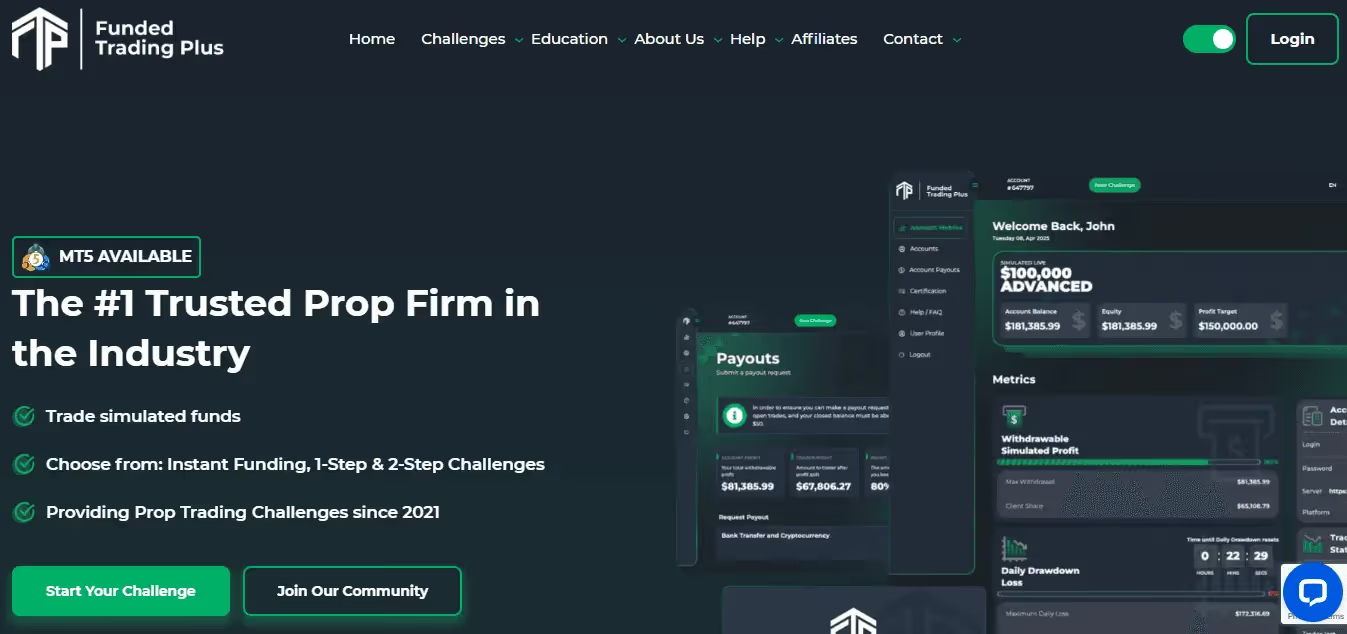
The Master Trader Program offers instant capital and a 4.7/5 Trustpilot rating based on 2,456 reviews as of 2025. That volume of feedback provides more signal than firms with 50 reviews, though you still need to read the actual complaints to understand what breaks down under pressure. High ratings with low review counts often mask problems that only surface at scale.
Traders choose withdrawal cycles of 3, 5, or 7 days based on how frequently they want to access profits. Shorter cycles mean more administrative overhead but faster capital access. Longer cycles reduce the frequency of withdrawal requests but delay your ability to reinvest or use those funds elsewhere. The minimum withdrawal is $50, which matters for smaller accounts where that threshold represents a meaningful percentage of your profit.
The profit split starts at 80/20 and rises to 90% once you hit 20% simulated profit. At 30% profit, you receive 100% of all gains. That progressive structure rewards consistency by increasing your share as you prove performance over time. Maximum drawdown applies uniformly at 6% total and 3% daily across all account sizes, so the percentage boundaries remain constant even as your absolute dollar limits scale.
6. FundYourFX
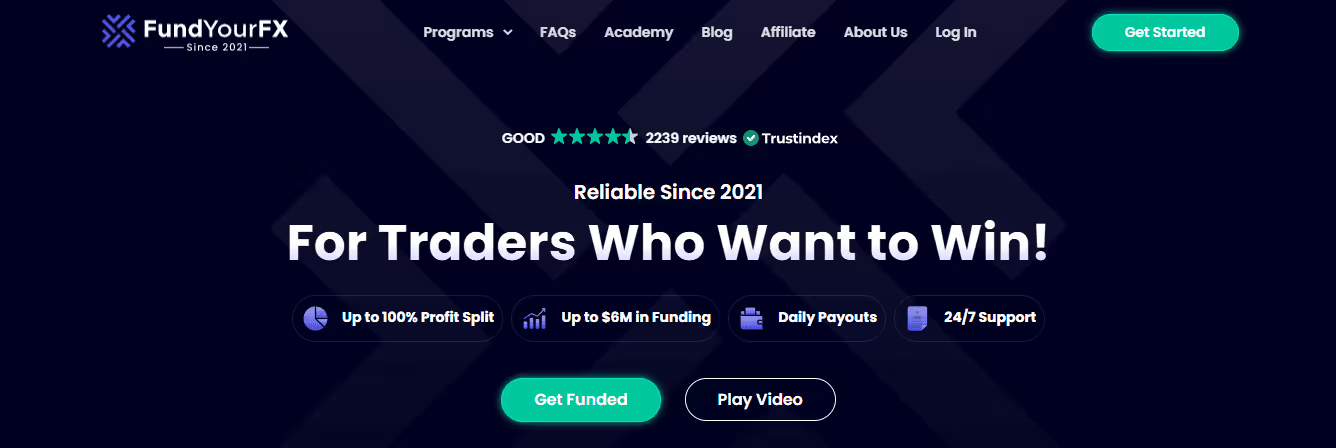
Founded in 2021, FundYourFX offers instant funding alongside evaluation options, supporting forex, commodities, indices, and cryptocurrencies. Multi-asset access matters because it lets you trade where opportunities arise rather than limiting you to a single market category. Their profit split reaches 95% with account growth, though you need to verify at which performance tier the maximum percentage activates.
Weekly payouts create a predictable cash flow once you're consistently profitable. You're not waiting 30 days between withdrawal opportunities, which reduces the psychological pressure of having large unrealized profits sitting in the account. MetaTrader 5 integrates with Match-Trader for execution, and the firm advertises zero spreads with low commissions, though you should test actual execution quality during volatile periods to confirm those conditions hold when liquidity thins.
Funding scales up to $3,000,000 as you hit milestones, with transparent fee structures that don't hide costs in processing charges or surprise deductions. The firm eliminates consistency rules that force you to trade a minimum number of days or maintain specific win rates. You're managing risk and generating returns without artificial activity requirements that push you into trades your strategy doesn't signal.
7. FXIFY
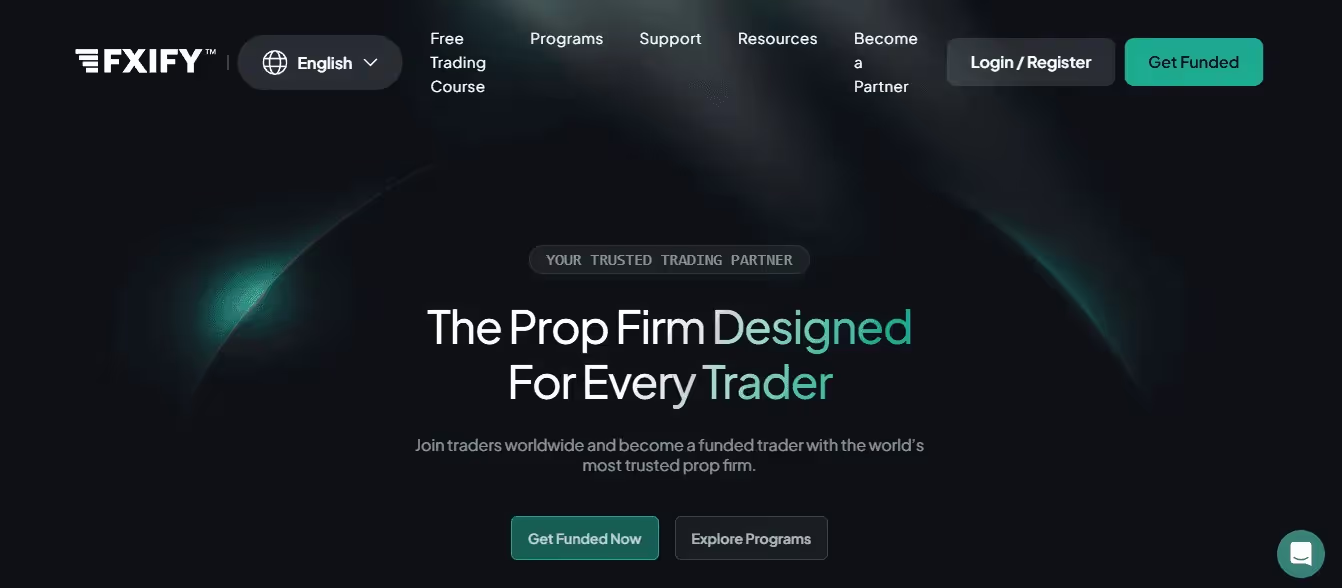
Launched in 2022 in London, FXIFY reports paying out $25 million to over 180,000 traders and has a 4.3/5 Trustpilot rating. Capital becomes available immediately on instant funding accounts, and evaluation traders can request payouts after their first live trade rather than waiting for extended review periods. That speed matters when you're testing whether the firm's execution and rule enforcement align with its marketing claims.
Profit splits reach 90%, among the highest in the industry. Maximum drawdown is 8% trailing, with a 4% daily limit, giving you more room than firms enforcing 5% total thresholds. The wider boundaries accommodate strategies with larger average losses or drawdown profiles that need more breathing room before hitting termination thresholds.
Algorithmic trading, martingale, grid, and news trading are approved. High-frequency trading and arbitrage remain banned; verify that your approach doesn't fall within those categories. Profit per day caps at 30% to 40% of total account balance, which prevents you from doubling your account in a single session, even if market conditions create that opportunity. That restriction protects the firm from unsustainable gains, though it limits your upside on exceptional trading days.
8. FTUK

FTUK provides instant funding alongside one-step and two-step evaluation programs, with accounts ranging from $5,000 to $6.4 million. Profit sharing reaches 80%, and the firm permits weekend holding and news trading without minimum trading-day requirements. That flexibility eliminates the pressure to trade on days when your strategy doesn't signal valid setups just to meet activity quotas.
On-demand payouts process when you request them rather than following fixed schedules. Fast scaling doubles your capital once you hit performance targets, and the firm maintains full audit trails without the compliance opacity that can lead to surprise violations. MetaTrader 4 and 5 support provide platform options based on which version your indicators and scripts require.
The firm's transparent rule structure means you won't encounter restrictions through trial and error. Position limits, drawdown thresholds, and prohibited strategies appear clearly before you start trading, so you can assess whether your approach fits within their boundaries before committing capital to the account fee.
9. Instant Funding IO
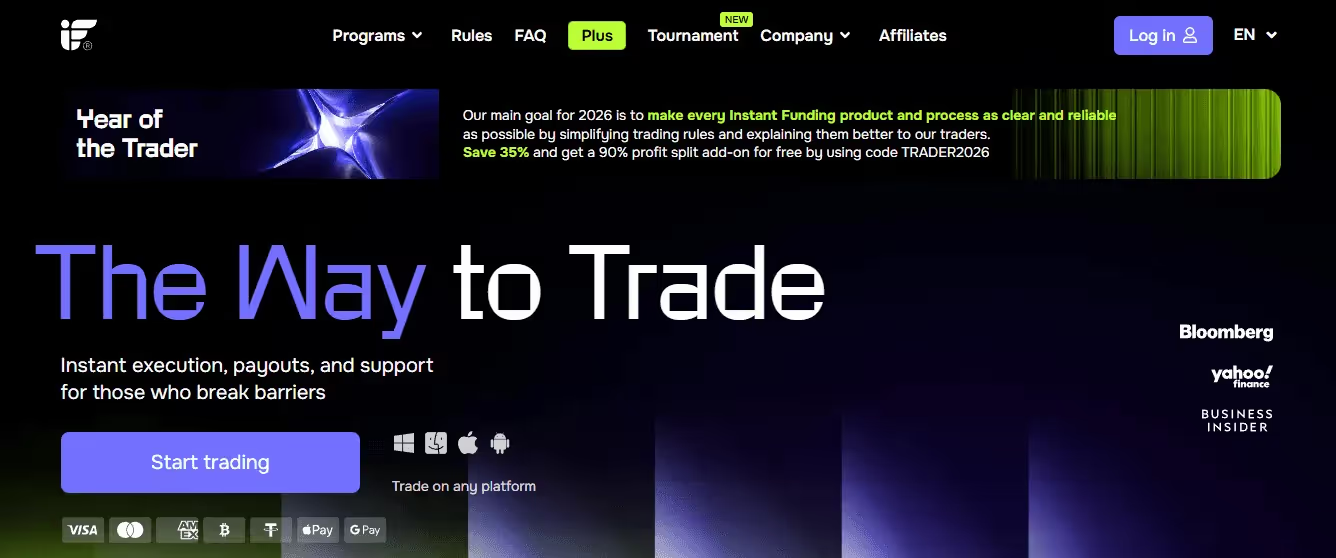
Operating since 2021, Instant Funding IO pioneered live trading from day one without evaluation phases. Accounts trade live immediately after setup, so you're deploying capital in real market conditions rather than in simulated environments that don't fully replicate execution quality or slippage.
Profit splits start at 80% and rise to 90% once you hit 10% profit. Scaling programs increase account size over time based on performance and minimum account age rules, so you can't rush growth by hitting profit targets in a single week. The firm enforces industry-standard risk rules around drawdown and position sizing, though specific percentages vary by account type.
The firm's early entry into instant funding means it has processed more traders through its system than newer competitors, giving it operational experience that reduces payout delays and compliance confusion. That track record matters when you're evaluating whether a firm will honor withdrawals consistently rather than creating friction when you try to access your profits.
10. Hola Prime
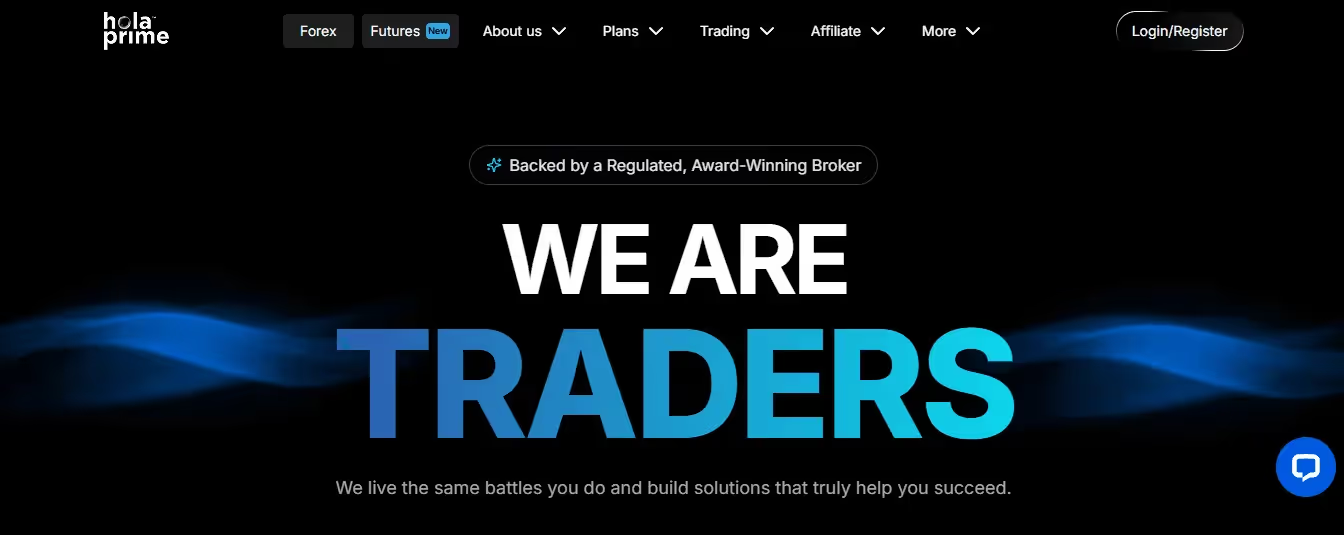
Founded in 2024, Hola Prime operates on simulated demo trading accounts where traders earn up to 95% of simulated profits after passing their challenge. The model differs from firms that offer live capital: you're trading demo funds that mirror your challenge balance, rather than using the firm's real money in markets. Their one-hour payout system processes withdrawals faster than any other firm in this list, though you need to verify whether that speed applies to all withdrawal amounts or only smaller requests. Scaling reaches up to $4 million in demo funds as you hit performance milestones, and the platform supports MetaTrader 5, cTrader, DX Trade, and MatchTrader. The demo structure means you earn real monetary rewards based on simulated trading performance, rather than sharing profits from actual market positions. That distinction matters for understanding what you're actually trading and whether the execution quality matches live market conditions, where slippage and liquidity gaps affect real capital differently than demo accounts.
11. Traders With Edge
Established in 2022 and based in Hong Kong, Traders With Edge offers instant funding with a 50% profit split, along with challenge programs that pay 80%. The lower split on instant accounts reflects the reduced barrier to entry, since you're skipping the evaluation that filters traders before funding. Account sizes range from $2,500 to $1,000,000, with scaling potential up to $3,000,000.
The firm allows EAs, news trading, and weekend holding without the strategy restrictions that force you to modify your approach. MatchTrader and DXtrade support provide platform flexibility, and the firm's Asian base means it operates in time zones that overlap with both European and American market sessions.
The 50% instant-funding split results in a different profit calculation than firms offering 80%-90%. You need to generate twice the gross profit to achieve the same net income, which changes your risk-reward math on every trade. That trade-off might make sense if you value immediate access over profit percentage, but you should assess whether the reduced split justifies skipping the evaluation required to qualify for the 80% tier.
12. 5%ers

5%ers allows traders to start on live accounts immediately without demo experience or evaluation periods. The 50/50 profit split ensures equal revenue sharing between the trader and the firm, and payouts are processed monthly to provide predictable income timing. Two account types offer different risk-reward balances. One uses relaxed targets for steady growth. The other allows more aggressive position sizing with amplified leverage.
Leverage options of 1:10 or 1:30 depend on which account type matches your goals. Lower leverage suits conservative strategies focused on capital preservation. Higher leverage allows traders who are comfortable with larger position sizes relative to their account balance. That choice matters because it determines how much buying power you access per dollar of account equity.
The monthly payout schedule creates longer gaps between withdrawals than firms offering weekly or on-demand access. You're accumulating profits across four weeks before requesting a withdrawal, which increases your exposure to rule violations or market events that could impact your account before you realize those gains. But knowing which firms offer instant funding doesn't tell you which one matches your actual trading needs.
How to Select the Best Instant Funding Prop Firm

Selecting the right instant funding provider means matching your trading strategy to a firm's specific rule structure, not just comparing profit splits and account sizes. You need to evaluate how profits are distributed, whether targets are achievable without incurring excessive risk, and whether compliance monitoring is transparent or relies on retroactive enforcement. The firm that looks best on paper might impose hidden restrictions that undermine your approach once you start trading. The selection process requires you to test whether the firm's boundaries accommodate your actual trading behavior. A 90% profit split means nothing if the daily drawdown limit sits so tight that your average losing trade violates it. Instant access loses value if the payout schedule delays withdrawals for weeks after you hit your target. The cheapest account fee becomes expensive when the firm's execution quality or platform stability costs you trades.
Profit Distribution That Rewards Consistency
How profits get shared determines whether your effort translates into meaningful income or just marginal returns. Some firms advertise high percentages but apply them only after you reach specific milestones that most traders never hit. Others start with lower splits but increase their share as they prove consistency across multiple payout cycles. According to FundedSquad, a 90% profit split is standard at firms prioritizing trader retention, though you should verify the performance tier at which it applies and whether it applies to all trading activity or only certain account types.
The frequency of payouts matters as much as the percentage. Weekly distributions let you access capital regularly, reducing the psychological weight of large unrealized profits sitting in the account. Monthly schedules create longer exposure windows during which rule violations or market events could affect your balance before you withdraw. On-demand systems give you control over timing but often carry higher processing fees that eat into your net income.
Watch for firms that advertise one split percentage in marketing materials but apply different rates to challenge bonuses versus ongoing funded trading. The number that matters is what you keep on every trade after you pass the initial milestone, not the promotional figure designed to attract signups. Read the actual payout terms, not just the headline on the pricing page.
Achievable Targets Without Excessive Pressure
Profit targets should drive growth without forcing trades your strategy doesn't signal. A 10% monthly goal sounds reasonable until you calculate that it requires consistent weekly gains of 2.5% while staying inside drawdown limits that terminate your account if you lose 5% in a single day. The math creates pressure that changes how you trade, pushing you toward setups with higher risk-reward ratios than your system normally takes.
Firms setting realistic targets understand that consistent profitability matters more than explosive growth. They structure milestones around sustainable performance rather than aggressive percentages that work only during ideal market conditions. You want targets that let you trade your actual edge instead of modifying your approach to chase numbers that look good on a performance chart but don't reflect how markets actually behave across different volatility regimes.
Some firms eliminate profit targets entirely for instant funding accounts, allowing you to focus solely on risk management within drawdown parameters. That structure removes the timeline pressure that forces activity when your strategy signals patience. You're optimizing for consistency rather than racing toward an arbitrary percentage by month's end.
Risk Management Tools That Support Smart Decisions
Strong risk policies protect you as much as they protect the firm's capital. Clear drawdown limits, transparent position-sizing rules, and published prohibited strategies help you build a trading plan that stays within the boundaries before you commit funds to the account. Firms that enforce rules retroactively or through vague "irregular activity" language create environments where you discover violations only after your account gets suspended.
Look for platforms that display real-time drawdown calculations, not just end-of-day summaries. You need to know exactly where you stand relative to the daily limit before placing your next trade, especially during volatile sessions where losses accumulate quickly. Firms offering risk dashboards with visual indicators help you make informed decisions about position sizing without manually recalculating percentages.
The best risk frameworks include educational resources explaining why specific rules exist. When you understand that position limits ensure diversification rather than restrict opportunity, you approach those constraints differently. When you recognize that drawdown thresholds prevent catastrophic single-day losses rather than limit your strategy, you build trading plans that work with the structure instead of constantly testing the edges.
Platform Quality That Enables Fast Execution
Technology determines whether your strategy executes as intended or gets degraded by slippage, requotes, and platform freezes during high-volume periods. Test the firm's execution quality under volatile market conditions, not just during quiet sessions when everything runs smoothly. Place orders during major economic releases to see whether fills happen at your intended prices or several pips away from where you clicked.
Data access matters for strategies relying on specific chart timeframes, indicators, or historical analysis. Some platforms limit the depth of historical data available or restrict which technical tools you can install. If your edge depends on custom indicators or automated analysis, verify the platform supports those requirements before paying for the account.
Order execution speed becomes critical for scalping strategies or approaches that capitalize on brief price inefficiencies. Delays of even a few hundred milliseconds can render setups invalid by the time your order reaches the market. Firms with quality infrastructure and direct market access deliver better execution than those routing orders through multiple intermediaries, which add latency at each step.
Research Access That Improves Decision Quality
Market insights and training resources help you adapt your strategy to changing conditions without abandoning the core edge you've already developed. Firms that offer economic calendars, sentiment analysis, and volatility forecasts provide context for positioning ahead of scheduled events. You're not trading blind, hoping your technical signals align with fundamental catalysts moving markets.
Educational content should address practical trading challenges, not just generic risk-management advice everyone already knows. Look for resources that explain how to adjust position sizing during earnings season, how to interpret correlation shifts between asset classes, or how to recognize when volatility regimes change enough to warrant strategy modifications. That specificity helps you grow as a trader rather than just repeating what you already do with larger capital.
Some firms provide access to experienced traders who review your performance and suggest improvements based on patterns they recognize from working with hundreds of funded accounts. That mentorship accelerates your development because you're learning from people who've seen which approaches consistently succeed and which behaviors reliably lead to account termination.
Support Systems That Provide Real Guidance
Responsive customer service matters when you need answers about rule interpretation, payout processing, or technical issues affecting your trading. Firms that offer live chat or phone support during market hours let you resolve issues immediately, rather than waiting days for email responses while your account remains frozen. The quality of support reflects how the firm values trader relationships beyond just collecting account fees.
Mentorship programs connect you with traders who've successfully scaled through the firm's system. They understand which strategies work within the specific rule structure and can identify behavioral patterns that typically lead to violations before you discover them through account termination. That guidance helps you avoid common mistakes that aren't obvious from reading the terms alone.
Community access provides peer support from traders facing the same challenges. You learn which setups other traders find most reliable within the firm's constraints, how they manage psychology during drawdown periods, and which platform features they've discovered that improve execution quality. That collective knowledge accelerates your adaptation to the funded trading environment.
Reputation Built on Transparency and Reliability
A firm's track record tells you whether they honor withdrawals consistently or creates friction when traders try to access profits. Search for complaints about denied payouts, suspended accounts without clear explanations, or rule changes implemented retroactively that invalidate strategies previously allowed. Firms with transparent operations publish clear terms, respond to criticism publicly, and maintain consistent policies rather than adjusting enforcement based on how much money traders make.
Longevity matters because it demonstrates the firm's business model works without constantly changing rules to reduce payout obligations. New firms entering the market often start with generous terms they can't sustain, then tighten restrictions after attracting initial signups. Established firms with years of operation have already refined their policies to balance trader profitability with business sustainability.
Most instant funding providers handle approval processes and withdrawal timing differently than their marketing suggests. Platforms like funded trading programs publish exact payout timelines and compliance criteria before you pay, eliminating the surprise denials that happen at firms where rule interpretation occurs after you've already built your account balance. Their structure makes withdrawal eligibility clear from the start, rather than discovering restrictions when you request your first payout.
But understanding selection criteria only helps if you know how to start trading without getting caught up in rule confusion that can cost you your account before you realize what went wrong.
Start Trading Instantly — Without Rule Confusion
AquaFunded gives you access to capital the same day your payment clears, but the real advantage isn't speed. It's clear. You know the drawdown limits, prohibited strategies, and profit requirements before you place your first trade, not after your account gets flagged for something you didn't realize violated their terms. That transparency removes the guessing game that costs traders their accounts at firms where rule interpretation happens retroactively.
Most traders lose funded accounts not because their strategy fails, but because they misunderstand a restriction they thought they were following correctly. You read the terms, believe you're compliant, then discover during a payout request that your position sizing method or trade timing violated a clause buried in paragraph twelve of the legal agreement. AquaFunded publishes rules in plain language, with specific examples that show what crosses the line. The daily drawdown percentage appears as a fixed number, not a range subject to interpretation. Position limits state exact contract quantities, not vague language about "excessive exposure." When you clearly see the boundaries, you build strategies that operate comfortably within them rather than constantly testing edges you can't see.
The platform displays your current drawdown status in real time, updating with each tick rather than showing only end-of-day calculations. That live feedback matters during volatile sessions when losses accumulate quickly. You know exactly how much room remains before hitting the daily threshold, which lets you decide whether adding another position makes sense or whether you're better off stepping back until tomorrow's reset. Firms that calculate drawdown only at market close force you to estimate your standing throughout the session, introducing uncertainty that changes how aggressively you trade.
Compliance monitoring at AquaFunded focuses on protecting capital, not creating gotcha moments that disqualify profitable traders on technicalities. News trading is allowed as long as you manage risk within the stated parameters. Weekend holding doesn't trigger automatic violations. Scaling into positions across multiple entries gets treated as intentional strategy execution, not rule circumvention, provided your total exposure stays within documented limits. The difference between allowed and prohibited behaviors is explained through specific scenarios rather than legal abstractions that mean different things to different compliance reviewers.
Your first payout is processed on the published timeline once you meet the profit target and remain compliant throughout the trading period. The upfront fee is refunded with the first withdrawal, converting what appeared to be a sunk cost into recoverable capital. That refund structure changes the risk calculation because you're not permanently down the account fee if your strategy performs as expected. You're testing whether the firm's execution quality and rule structure align with its documentation, with the goal of achieving returns that recoup your initial investment and your share of profits.
The funded trading program supports forex, crypto, and futures without forcing you to adapt your approach to narrow asset-class restrictions. If your edge lies in cryptocurrency volatility or commodity futures, you should trade those markets directly rather than applying your methodology to currency pairs where you lack experience. Multi-asset access matters because it lets you deploy the strategy you've already proven works, rather than learning new markets just to qualify for funding.
Starting immediately doesn't mean starting recklessly. You still need a trading plan that accounts for the firm's specific drawdown thresholds and position limits. You still need to size positions based on the account balance they're funding, not the personal capital you're used to risking. The difference is you're applying your existing edge within clearly defined boundaries rather than performing for evaluators who might interpret your decisions differently than you intended them. Your skill determines outcomes. The rules just define the playing field, and when those rules stay visible and consistent, you focus on trading instead of rule navigation.
Related Reading
- How To Take Profits From Stocks
- Accumulation Distribution
- Short-Term Capital Gain Tax On Shares
- What Is Reit Dividends
- Cash Available To Trade Vs Settled Cash
- Best Pairs To Trade Forex
- Can You Day Trade In A Roth Ira
- What Is A Conditional Order
- Orb Strategy Trading
- Stop Loss Vs Stop Limit
- Flag Pattern Trading
- Characteristics of Growth Stocks
- Forex Compounding Plan
