




15+ Best Automated Crypto Trading Platforms for Everyone
Explore 15+ Best Automated Crypto Trading Platforms for beginners and pros. Compare features, fees, and supported exchanges fast.

The crypto market never sleeps, which means opportunities flash by while you're having breakfast or catching up on sleep. Automated crypto trading platforms solve this problem by executing trades on your behalf using algorithms and bots that respond to market conditions instantly, but here's the catch: you still need capital to make meaningful profits. What is a funded account, and how does it change the game? It's a way to access substantial trading capital without risking your own money, letting you leverage powerful trading bots and strategies while a funding provider backs your trades.
That's where a funded trading program becomes your advantage. Instead of slowly building your account from scratch or putting your savings on the line, you can demonstrate your strategy's effectiveness through an evaluation process and gain access to significant capital for automated trading. The trading bots handle the execution while you focus on refining your approach, and when profits roll in, you keep a substantial share without the stress of trading your own funds.
Summary
- Automated crypto trading platforms deliver measurably better results than manual execution: 60% of retail algorithmic traders achieve positive annual returns, compared with just 5-10% of manual day traders who maintain long-term profitability. The gap stems from removing emotional interference that causes traders to cut winners short during fear and extend losers during hope, patterns that destroy accounts regardless of strategy quality.
- Cryptocurrency markets operate continuously across all time zones, with no closing hours, creating an impossible constraint for manual traders who need sleep and can realistically monitor charts for only 8-12 hours before cognitive performance degrades. Automated systems capture opportunities during overnight sessions and Asian market volatility that would otherwise vanish before manual traders wake up, with execution speed measured in milliseconds, versus the 2-6 seconds required for human reaction time.
- Grid trading and DCA bots are the most common automation approaches in crypto markets, with platforms like Pionex offering 16 free trading bots natively integrated into the exchange infrastructure to eliminate API latency. Crypto arbitrage strategies on these platforms often deliver 15-50% APR by shorting futures while holding spot positions, though performance depends heavily on market conditions and volatility.
- Platform selection determines whether automation compounds your edge or drains your account. Reliability requirements include 99.5% uptime or higher over twelve months, since downtime during volatile periods costs the very opportunities strategies were designed to exploit. Security architecture is critical because API access creates direct paths between potential vulnerabilities and your funds. In 2023, cryptocurrency theft exceeded $3.8 billion, according to Chainalysis research on exchange vulnerabilities and API exploits.
- Backtesting engines separate functional platforms from expensive disappointments by running strategies against months or years of historical data across bull, bear, and sideways consolidation periods. This reveals whether the edge is real or imaginary before risking capital, with reputable platforms publishing detailed performance metrics, including win rate, maximum drawdown, and Sharpe ratio, rather than advertising unrealistic 80% monthly returns with no losing periods.
- Funded trading programs address the capital constraint by providing simulated accounts up to $400K that let traders deploy automated strategies across MT5, TradeLocker, Match-Trader, or cTrader with profit targets between 2-10%, absorbing downside risk while bots handle execution discipline around the clock without the psychological weight of watching personal savings fluctuate.
Should You Use Automated Crypto Trading Platforms

Yes, automated crypto trading platforms should be part of your strategy if you want to trade cryptocurrency consistently without the psychological warfare that destroys most accounts. The question isn't whether automation works; it's whether you're willing to acknowledge that human emotion is a liability in markets that never sleep.
According to QuantifiedStrategies, 60% of retail algorithmic traders show positive annual returns. Compare that with manual day traders: Quantified Strategies reports show that only 5-10% remain profitable over the long term. The gap isn't about intelligence or effort. It's about removing the part of trading that kills accounts: you.
The Emotional Tax Manual Traders Pay
Fear cuts winners short. Hope extends to losers. Every manual trader knows this pattern, yet most can't escape it.
When Bitcoin drops 8% in an hour, your body floods with cortisol. Your hands shake slightly as you hover over the sell button. You exit at a loss, only to see the price recover 20 minutes later. That's not a strategy failure, that's biology. Your nervous system wasn't designed for 24/7 volatility.
Revenge trading follows the same script. After a loss, you increase position size to recover faster. The market doesn't care about your emotional state. It moves based on liquidity and order flow, not your need to break even before your spouse checks the account balance.
Automated systems don't experience fear or hope. They execute predefined rules regardless of whether the market just dropped 15% or rallied 30%. That consistency compounds over time into measurable edge.
Speed Matters More Than Most Traders Admit
Crypto markets move differently from traditional markets. A single liquidation cascade can shift Bitcoin 4% in under three minutes. During those moments, manual execution becomes a disadvantage.
Your brain needs time to process information, evaluate options, and commit to action. That delay, usually 2-8 seconds, creates slippage during volatile periods. By the time you click "sell," the price you saw is already gone.
Automated platforms execute in milliseconds. When a predefined condition is triggered, the order reaches the exchange before you can physically react. In scalping or arbitrage strategies, that speed difference determines whether you capture profit or miss the window entirely.
The familiar approach is to manually monitor charts and execute trades based on technical setups you've identified. As market conditions shift and volatility spikes across multiple timeframes, maintaining consistent execution becomes exhausting. You miss setups during sleep, hesitate during rapid moves, and second-guess valid signals when emotions run high. Platforms like funded trading programs provide simulated capital that lets you deploy automated strategies without risking personal funds, compressing the learning curve while your bots handle execution around the clock.
The 24/7 Problem Nobody Solves Manually
Cryptocurrency markets don't close. Asian session volatility doesn't wait for American traders to wake up. European news doesn't pause for your lunch break.
Manual traders face an impossible constraint: the biological need for rest. You can't watch charts for 16 hours a day without cognitive decline. Sleep deprivation degrades decision quality faster than most realize.
Automated systems monitor every candle, every volume spike, every price level you've programmed. They don't need coffee, bathroom breaks, or eight hours of sleep. When an opportunity appears at 3 AM in your timezone, the bot executes while you're unconscious.
That continuous presence matters more as your strategy becomes more complex. If you're trading multiple pairs across different exchanges, manual monitoring becomes physically impossible. Automation scales without adding mental load.
Consistency Beats Intuition Every Time
Manual traders change their approach mid-trade. You set a stop-loss at 2%, then move it to 3% as the price approaches, because "it might bounce." You skip a valid setup because the last three trades lost money, and you're feeling cautious.
These adjustments feel rational in the moment. They're actually variance generators that make your strategy unmeasurable. You can't optimize what you don't execute consistently.
Automated platforms follow the exact same logic every single time. If your rules say enter on RSI below 30 with volume confirmation, the bot enters. No second-guessing. No, "this time feels different." That mechanical consistency allows you to measure actual strategy performance independent of emotional interference.
Over 100 trades, the difference becomes stark. Manual execution introduces dozens of micro-decisions that deviate from your plan. Automated execution removes those deviations entirely.
But knowing automation works and actually implementing it are two entirely different challenges.
Benefits of Automated Crypto Trading
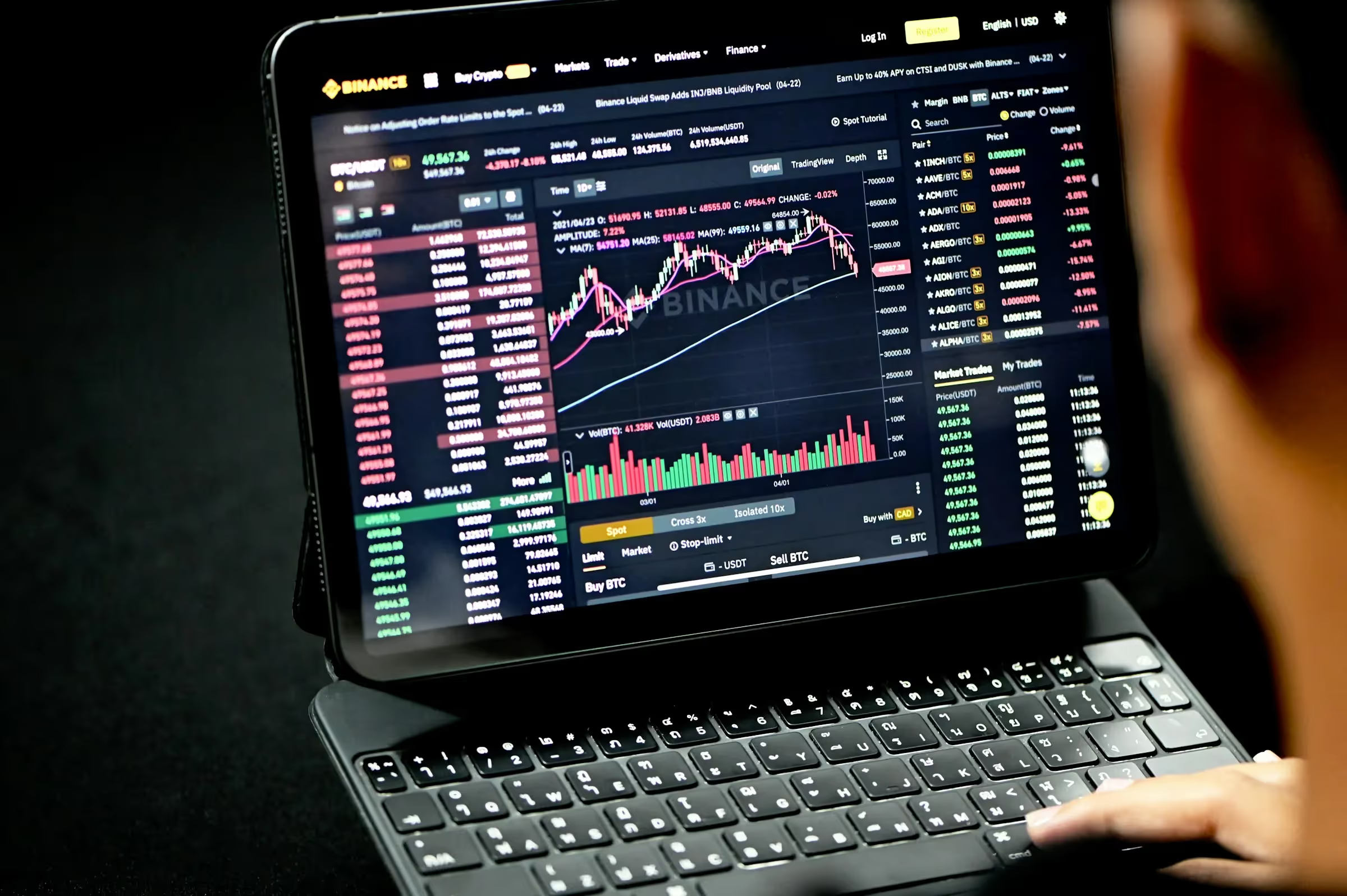
Automated crypto trading removes the cognitive load that breaks most manual strategies. Instead of monitoring price action across multiple exchanges while fighting your own impulses, you define rules once and let the system execute them consistently. The benefits compound across dimensions that manual traders can't replicate: continuous market presence, instant execution, emotional neutrality, simultaneous multi-pair management, historical strategy validation, and the elimination of human error patterns.
Round-the-Clock Market Coverage
Cryptocurrency markets operate continuously across all time zones. Bitcoin doesn't stop moving when you sleep, and altcoin volatility doesn't respect your work schedule.
Manual traders face an impossible constraint. You can monitor charts for maybe 8-12 hours before cognitive performance degrades. During the other 12-16 hours, you're either sleeping, working, or handling life responsibilities. Meanwhile, significant price movements occur during Asian trading sessions, European market openings, and overnight liquidation cascades.
Automated systems monitor every tick across all active hours. When Ethereum spikes 7% at 2 AM in your timezone because of unexpected protocol news, your bot executes the predefined exit strategy while you're unconscious. That continuous presence captures opportunities that would otherwise vanish before you wake up.
The advantage scales with strategy complexity. If you're running mean-reversion tactics across five different altcoin pairs, manual monitoring becomes physically impossible. Automation handles parallel execution without adding mental overhead.
Execution Speed That Matters
Crypto markets move faster than traditional assets. A single whale order can shift Bitcoin 3% in under ninety seconds. During those moments, manual reaction time becomes a measurable disadvantage.
Your brain processes visual information, evaluates context, decides on action, and then sends motor commands to click buttons. That sequence takes 2-6 seconds under normal conditions and longer under stress. By the time you execute, the price you saw is already outdated.
Automated platforms execute in milliseconds. When RSI crosses below 30 with volume confirmation, the order hits the exchange before you can physically react. In scalping strategies or arbitrage opportunities, that speed difference determines whether you capture profit or watch it evaporate.
The gap widens during high volatility. When fear drives rapid selling and your hands shake slightly from adrenaline, execution delays extend further. Bots don't experience physiological stress responses that slow decision-making.
Emotional Discipline Without Effort
Fear extends losses. Greed cuts winners short. Every manual trader recognizes these patterns, yet most can't consistently avoid them.
When your position drops 12% in an hour, your nervous system floods with cortisol. You experience physical discomfort as unrealized losses mount. That sensation pushes you toward premature exits, even when your strategy says hold. Then you watch the price recover 30 minutes later, exactly as your original analysis predicted.
Automated systems don't experience discomfort. They execute stop-loss and take-profit orders at predefined levels, regardless of market volatility. No hesitation during drawdowns. No excitement-driven position size increases after winning streaks.
That emotional neutrality matters more as account size grows. Watching a $50,000 position move against you triggers stronger physiological responses than a $500 position. Bots execute the same logic regardless of whether the trade is $50 or $50,000.
Simultaneous Multi-Pair Management
Most profitable crypto strategies involve relative strength analysis across multiple assets. You're not just trading Bitcoin; you're comparing Bitcoin's price action against Ethereum, Solana, and broader market indices to identify which assets show genuine momentum versus those merely following correlations.
Manual traders hit cognitive limits quickly. Monitoring three chart windows while calculating relative performance metrics and watching for entry signals across all three creates mental overload. You miss setups, confuse signals between pairs, or focus too heavily on one asset while opportunities appear in others.
Automated platforms manage dozens of trading pairs simultaneously without degradation. Your bot monitors Bitcoin, Ethereum, Cardano, Polygon, and 15 other assets in parallel, executing independent strategies on each based on its technical conditions. When three pairs trigger entry signals within the same minute, all three positions open without you touching a keyboard.
The familiar approach is to manually track a handful of major cryptocurrencies and execute trades based on technical setups you identify throughout the day. As your strategy expands to include more pairs and shorter timeframes, maintaining consistent execution across all opportunities becomes exhausting.
You miss valid setups during meetings, hesitate when multiple signals appear simultaneously, and struggle to maintain discipline across different market conditions. Platforms like funded trading programs provide simulated capital that lets you deploy automated strategies across multiple pairs without risking personal funds, compressing the learning curve while your bots handle execution complexity around the clock.
That parallel processing enables portfolio diversification that manual execution can't match. Instead of concentrating risk in 2-3 manually managed positions, you spread exposure across 10-15 automated strategies running simultaneously.
Historical Strategy Validation
Most manual traders skip backtesting because it's tedious. They develop a strategy based on recent price action, trade it live for a few weeks, then abandon it after a losing streak. They never know whether the strategy was fundamentally flawed or just experiencing normal variance.
Automated platforms include backtesting engines that run your strategy against months or years of historical data. You see exactly how your rules would have performed during bull markets, bear markets, and sideways consolidation periods. That historical context reveals whether your edge is real or imaginary.
The process exposes hidden weaknesses. Your strategy might look profitable in trending markets but generate consistent losses in range-bound conditions. Without backtesting, you'd discover this through actual capital losses. With backtesting, you identify weaknesses before risking capital.
Strategy optimization follows naturally. You test different parameter combinations (RSI thresholds, moving average periods, stop-loss distances) on historical data to identify configurations that maximize risk-adjusted returns. Manual traders guess at these parameters. Automated traders measure them.
Reduced Time Investment
Manual trading demands constant attention. You're either watching charts, analyzing setups, executing trades, or thinking about positions you're holding. That cognitive load persists even when you're not actively trading.
Automated systems dramatically compress that time investment. You spend focused effort upfront defining strategy rules, backtesting performance, and configuring execution parameters. After deployment, the system runs independently. You review performance metrics periodically and adjust parameters when market regimes shift, but you're not chained to screens.
That time, liberation matters more than most traders expect. The mental energy you previously spent monitoring markets becomes available for strategy research, risk management refinement, or simply living your life without constant market anxiety.
The shift feels counterintuitive at first. You're conditioned to believe that more screen time equals better performance. In reality, excessive monitoring often degrades decision quality through emotional interference and analysis paralysis.
Elimination of Human Error
Manual execution introduces countless micro-errors. You entered the wrong position size because you misread a decimal. You forgot to set a stop loss during volatile conditions. You close the wrong position when managing multiple trades. You click Buy instead of Sell in a moment of confusion.
These errors can feel embarrassing when they occur, but they're statistically inevitable across hundreds of trades. Your brain isn't designed for perfect accuracy during repetitive tasks under time pressure.
Automated systems execute exactly what you program. If your rules specify 2% position size with a stop loss at 1.5% below entry, that's precisely what executes every single time. No fat-finger errors. No forgotten risk management. No confusion between similar-looking trading pairs.
That consistency matters more as trading frequency increases. A scalping strategy executing 50 trades daily creates 50 opportunities for manual error. Automated execution removes all 50 opportunities.
But choosing which platform actually delivers these benefits requires understanding what separates functional automation from expensive disappointment.
Related Reading
- What is a Funded Account
- How to Grow a Small Trading Account
- What is Trading Commodities
- Long Term Trading Strategy
- Capital Growth Strategy
- What is a Cash Account in Trading
- What is Compound Trading
- How Much Money Do You Need to Start Trading Stocks
- Scale Trading
- Small Account Trading
- How to Evaluate Investment Opportunities
- Blown Trading Account
- What is PNL in Trading
- Do Prop Firms Use Real Money
- Prop Firm Account Management
- Borrowing on Margin
- Trading Leverage
- Does FTMO Offer Instant Funding
- Prop Firm Static Drawdown
- Funding Traders Rules
- What Is Prop Firm Account
- Synthetic Funded Account
- What Is Funded Firm
- Trading Challenges
- Prop Firm IP Address Rule
- Instant Funding Rules
- Do Prop Firms Use Real Money
- How to Get a Funded Trading Account
- FTMO vs The5ers Comparison
- Best Forex Pairs to Trade
- How to Pass a Prop Firm Challenge
How to Choose an Automated Crypto Trading Platform
Not every automated crypto trading platform delivers what it promises. The difference between a tool that compounds your edge and one that drains your account comes down to six characteristics that separate functional automation from expensive disappointment. Reliability, security, user-friendliness, profitability, and transparency aren't optional features. They're the minimum requirements for trusting a platform with your capital.
Reliability Under Continuous Market Pressure
Crypto markets operate without pause, so your platform's uptime directly determines whether you capture opportunities or miss them. When Bitcoin moves 7% in thirty minutes during Asian trading hours, platform downtime doesn't just cost you one trade. It costs you exactly what your strategy was designed to exploit.
The pattern repeats across traders who've tested multiple platforms. You wake up to discover your bot went offline at 4 AM, missing three valid entry signals that would have generated 12% returns before breakfast. Or the platform lags during high volatility, executing your orders seconds late when those seconds determine whether you enter at $42,100 or $43,400.
Reputable platforms publish uptime statistics publicly. Look for 99.5% or higher over the past twelve months. Anything below that threshold means you're accepting systematic missed opportunities as part of your cost structure. Customer reviews reveal patterns that marketing materials hide. When multiple users report the same outage windows or lag issues during specific market conditions, that's data worth considering before you commit capital.
Security That Protects More Than Passwords
Your chosen platform requires API access to your exchange account. That access level lets it place orders, cancel positions, and, in some configurations, initiate withdrawals. A platform with weak security architecture creates a direct path for hackers to access your funds.
According to Chainalysis research published in 2024, cryptocurrency theft exceeded $3.8 billion that year, with exchange vulnerabilities and API exploits representing significant attack vectors. The platforms you trust with trading automation become part of your security perimeter. Their weakness becomes your exposure.
Look for platforms that implement API key restrictions. Your trading bot shouldn't need withdrawal permissions to execute your strategy. Two-factor authentication should be mandatory, not optional. Cold storage for any platform-held funds matters if the service requires depositing capital rather than just connecting via API.
The platform's track record tells you what their security claims actually mean. Has the company experienced breaches? How did they respond? Were users made whole? A platform that's operated for three years without security incidents demonstrates more than one that launched six months ago with impressive security whitepapers but no operational history.
User Interface That Doesn't Fight You
Complexity and sophistication aren't the same thing. A platform can offer advanced strategy configuration while maintaining an interface that doesn't require a computer science degree to navigate. When you're testing new parameters or adjusting risk management rules, friction in the user experience directly delays optimization.
Traders consistently report frustration with platforms that bury essential controls behind nested menus or use technical jargon without explanation. You shouldn't need to read 40 pages of documentation to understand how to set a basic stop-loss or adjust position-sizing logic. The best platforms balance depth with clarity, offering simple defaults for beginners and advanced customization for experienced users who know exactly what they want to modify.
Test the platform's interface before committing serious capital. Most reputable services offer demo accounts or trial periods. Spend thirty minutes attempting to configure a basic strategy. If you find yourself confused about fundamental controls or unable to locate critical settings, that friction won't disappear when you're managing live positions. It'll compound into mistakes during moments when clarity matters most.
Measurable Profitability With Transparent Methodology
The primary reason you're considering automation is to generate profit. Everything else supports that goal. A platform's historical performance data reveals whether its strategies work, or only worked, under specific market conditions that may never recur.
Reputable platforms publish detailed performance metrics, including win rate, average profit per trade, maximum drawdown, and Sharpe ratio across different market regimes. They show you how strategies performed during bull markets, bear markets, and sideways consolidation. That transparency lets you evaluate whether the platform's edge aligns with your risk tolerance and return expectations.
Be skeptical of platforms advertising 80% monthly returns with no drawdown periods. Those numbers either reflect cherry-picked timeframes, survivorship bias, or outright fabrication. Real trading involves losses. Platforms that acknowledge periods of loss while delivering positive, risk-adjusted returns over extended timeframes provide honest performance data you can evaluate.
The familiar approach is to manually execute trades based on technical setups you've identified, then hope your discipline holds during volatile periods when emotions run high. As market complexity increases and you attempt to scale across multiple pairs and timeframes, maintaining consistent execution becomes exhausting while drawdowns test your psychological resilience. Platforms like funded trading programs provide simulated capital with transparent profit targets of 2-10%, allowing you to deploy automated strategies that meet achievable thresholds without risking personal funds, compressing the learning curve while your bots handle execution discipline around the clock.
Transparent Operations and Responsive Support
You need to know who operates the platform you're trusting with market access. Anonymous teams or organizations with no verifiable business history create unnecessary risk. When problems emerge, and they will, you want assurance that someone accountable will respond.
Research the platform's founders and development team. Do they have relevant experience in quantitative trading, software development, or financial technology? Have they built other successful products? Their background indicates whether they understand the technical and financial challenges their platform must solve.
Open-source platforms offer unique transparency advantages. You can review the code executing your strategies, verify that it matches the documented behavior, and modify it if you have programming skills. The community around open-source projects often identifies bugs and security vulnerabilities faster than closed-source alternatives because more eyes examine the codebase.
Support responsiveness matters more than most traders expect until they need it. When your bot behaves unexpectedly during live trading, waiting three days for an email response feels very different than getting help within hours. Test support quality before you need it urgently. Ask a technical question during the trial period and measure response time and answer quality.
But knowing what characteristics matter only helps if you know which specific platforms actually demonstrate them.
Related Reading
- Sources of Capital
- Cash Reserve Account
- Short Term Stock Trading
- Investment Performance Analysis
- Managed Account vs Brokerage Account
- Systematic Trading
- How to Analyze a Stock Before Buying
- Forex Capital Trading
- What is a Retracement in Trading
- How is Risk Involved in Calculating Profit?
- Convergence Trading
- Liquidity Trading
- Futures Trading Minimum Account Size
- What is Drawdown in Trading
- Best Prop Firms in UAE
- Forex Prop Firms With Instant Funding
- Regulated Prop Firms
- Prop Challenge
15+ Best Automated Crypto Trading Platforms for Everyone
Sixteen platforms stand out for delivering automation that actually works across different trader skill levels and strategy types. Some excel at grid trading for sideways markets, others specialize in DCA accumulation or futures arbitrage. The right choice depends on whether you prioritize lifetime licensing costs, cloud-based execution, social trading features, or maximum customization depth. What follows breaks down each platform's core strengths and honest limitations so you can match capabilities to your specific trading approach.
1. AquaFunded

AquaFunded isn't a traditional trading bot; it's a funded prop trading provider that supports algorithmic and bot-based crypto strategies by offering multiple platforms allowing automated execution under funded account conditions. This structure allows crypto traders to automate strategies without risking significant personal capital.
The platform provides access to MetaTrader 5 for full Expert Advisor support, TradeLocker for web-based integration with external alert systems, Match-Trader for automated strategies with real market execution, and optional cTrader for developers building custom algorithms. All platforms support the 24/7 trading environment crypto requires, with bots running continuously across multiple pairs under funded capital backing.
Challenge paths remain flexible, with instant funding options for qualified strategies and no strict time limits that lead to overtrading. Profit splits reach up to 100% depending on plan selection, with funded accounts scaling to $400K for established automated systems.
The advantage centers on capital backing. You're testing bots in live conditions with firm capital rather than personal funds, reducing financial risk while validating strategy performance. 24/7 compatibility matters because automated systems capture opportunities during overnight sessions when manual traders are asleep. Flexible rules without forced deadlines give bot strategies room to adapt without artificial pressure.
Risk rules still apply. Bots must adhere to drawdown limits and risk parameters, and poorly coded systems can quickly breach accounts. Some platforms, such as TradeLocker, may require third-party bridges for certain automated setups, which adds configuration complexity.
2. Pionex

Pionex integrates trading bots directly into its exchange infrastructure rather than requiring external API connections. This native design eliminates API latency issues and connectivity failures that plague independent bot services. With liquidity aggregated from exchanges such as Binance and HTX, Nansen reports that platforms that enable 24/7 trading execution have become essential infrastructure for crypto traders who can't monitor markets continuously.
The platform offers sixteen free trading bots within its interface. Grid Trading Bot automates buying low and selling high within specific price ranges, ideal for volatile sideways markets.
The Crypto Arbitrage Bot shorts futures while holding spot trades to capture a steady yield, often between 15-50% APR. Infinity Grid advances standard grid logic by automating consistent buy-low-sell-high cycles. The Rebalancing Bot automatically maintains desired percentage allocations across selected coins. AI Strategy features recommend parameters for beginners uncertain about configuration.
Pricing remains free, with Pionex earning from 0.05% maker/taker trading fees per trade. Referral codes reduce these fees further.
The zero subscription cost removes barriers for traders testing automation. Extremely low trading fees compound favorably over hundreds of trades. The mobile app's quality exceeds that of most competitors. AI parameter suggestions help novices configure profitable grids without deep technical knowledge.
Bot functionality stays limited to Pionex's ecosystem. Fiat withdrawal options don't exist in some regions. No advanced custom scripting option is available for traders seeking deeper strategy customization.
3. eToro

eToro positions itself as the best auto-trading software for both beginner and advanced traders, with multi-asset support for more than 5,000 instruments. The platform covers bonds, stocks, commodities, cryptocurrencies, and funds, enabling diversification strategies that single-asset platforms can't match.
CopyTrading lets users follow and replicate trades of seasoned investors, ideal for beginners learning market dynamics while generating returns. Smart Portfolios use algorithmic software and the eToro team's expertise to recommend pre-designed portfolios tailored to specific risk levels and market goals. The social trading feature creates an environment where users interact, exchange tips, and gather insights from experienced traders.
The copy trading implementation stands out among algorithmic systems. The engaging social trading community offers learning opportunities that are absent from purely technical platforms. Asset range diversity supports portfolio strategies beyond crypto-only approaches. Smart Portfolios reduce decision paralysis for beginners who are uncertain about their allocations.
Bot options remain limited without third-party integrations. Traders seeking advanced automation capabilities must integrate external tools, which adds complexity.
4. 3Commas
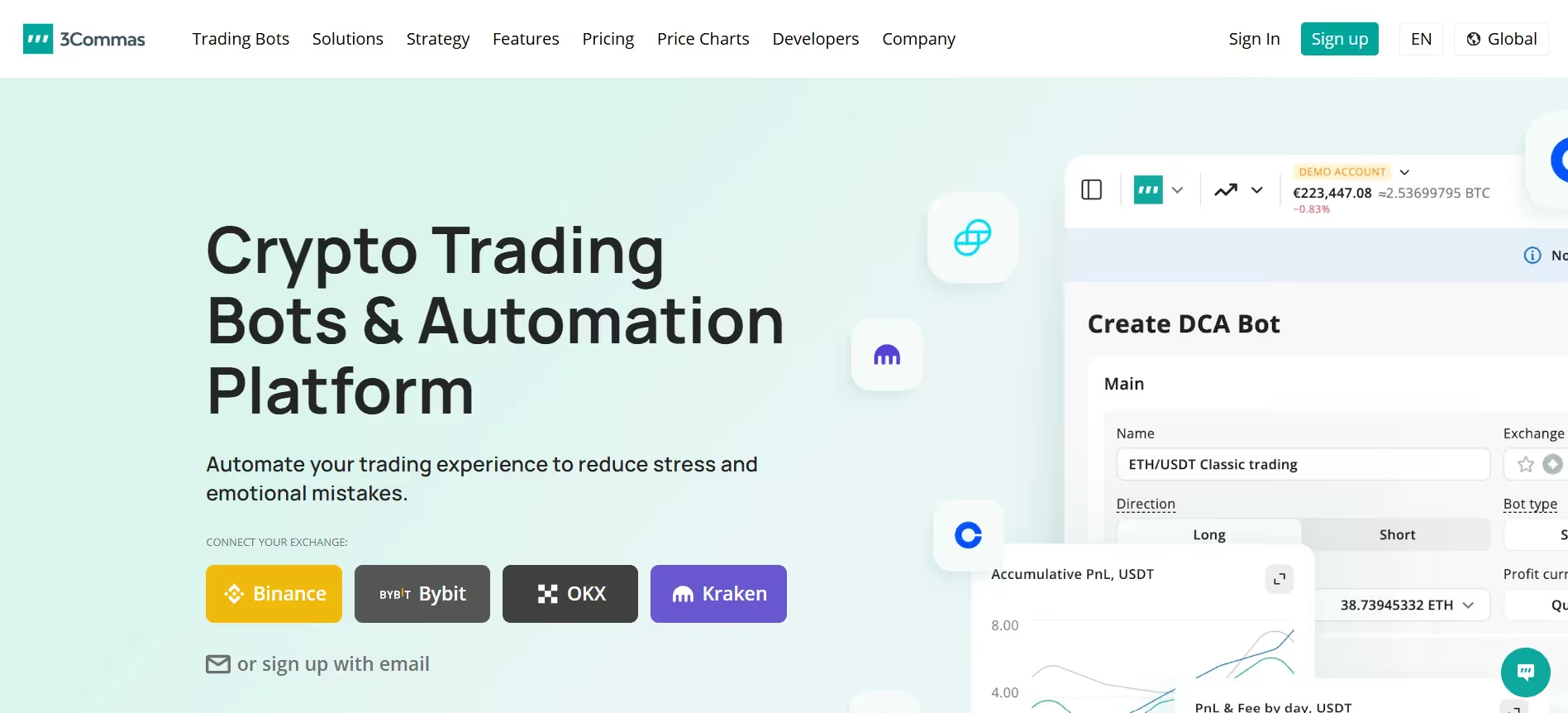
3Commas gained recognition for its SmartTrade terminal, which offers order types that many native exchanges lack. The platform runs automated strategies on existing exchange accounts, whether you're executing simple DCA accumulation or complex multi-pair strategies.
The platform supports DCA, Grid, and Signal bots, Smart Trade Terminal functionality, panic sell buttons, and TradingView integration for custom signals. This breadth covers the most common automation approaches without imposing single-strategy constraints on traders.
Free trials last fourteen days. The Starter plan at $20 monthly includes SmartTrade, five DCA bots, one Grid bot, and one account connection. Pro pricing at $50 per month includes SmartTrades, 20 DCA bots, 10 Grid bots, and 3 account connections. The Expert tier at $200 per month includes SmartTrades, 1,000 DCA bots, Grid and Signal bots, and 15 account connections.
The user interface proves intuitive for intermediate traders. A massive marketplace of preset bot templates and signals accelerates setup. Exchange support spans most major platforms. Paper Trading mode allows strategy testing with simulated capital before risking real funds. The mobile app enables remote monitoring and editing of bots.
The learning curve steepens for absolute beginners. TradingView integration requires paid subscription beyond 3Commas costs. Platform performance can lag during extreme market volatility when execution speed matters most.
5. Algorix

Algorix targets experienced traders wanting complete control over portfolio customization and algorithmic settings. The platform delivers AI-powered insights, Ghost Mode trading, and strategy banks for data-driven trading across multiple asset classes.
Intelligent analytics leverages artificial intelligence and operations research to deliver precise market predictions. Customization options give traders complete control over trading rules and portfolios, supporting highly complex algorithms for fine-tuned strategies. The platform facilitates back-testing, high-frequency trading, risk management, and other advanced trading strategies.
The quality of analytics and insights exceeds that of most competitors. Support for high-frequency trading is critical to scalping strategies. Extensive customization options accommodate sophisticated approaches. End-to-end automation removes manual intervention points. Intelligent risk management solutions adapt to changing market conditions.
The platform requires prior experience in algorithmic trading. Beginners face steep learning curves without guided onboarding.
6. Cryptohopper
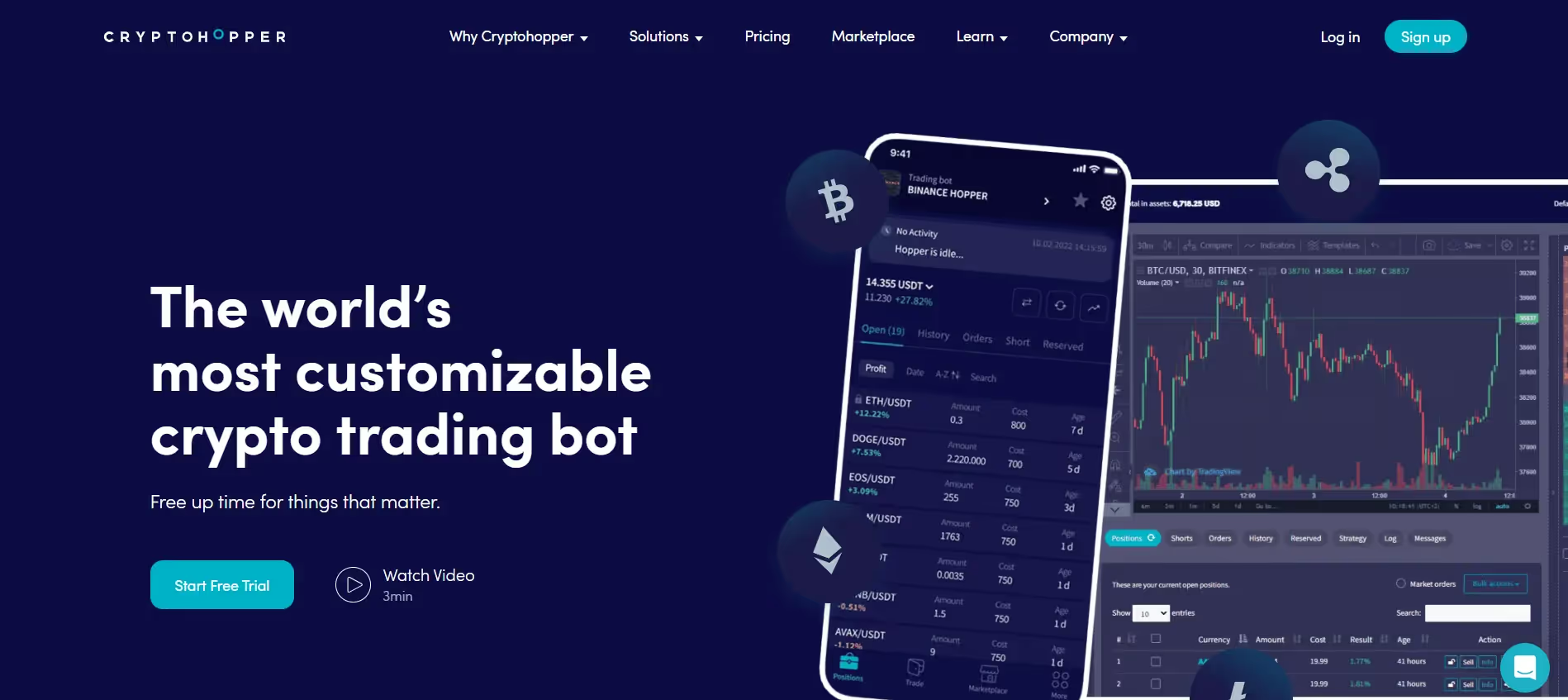
Cryptohopper combines automated trading and social trading tools, allowing users to either configure their own bot or copy proven strategies from the built-in marketplace. Supporting 75+ cryptocurrencies with seamless integration across major exchanges, the platform runs entirely in the cloud, so your computer doesn't need to remain online for the bot to trade.
Wizard-based bot configurators and pre-made templates simplify initial setup. Real-time trading signals inform strategy adjustments. Arbitrage Bot functionality exploits price differences across exchanges. The social trading marketplace enables users to copy strategies from successful traders. Paper trading and historical backtesting validate approaches before capital deployment. Trailing stop-loss and take-profit automation manages risk without manual monitoring.
The Pioneer plan offers unlimited copy bots plus portfolio management. Explorer at $29 monthly includes fifteen selected coins, two triggers, and one simulated bot. Adventurer at $69 monthly expands to fifty selected coins, Exchange Arbitrage, and 500 positions. Hero at $129 monthly adds Market Making, Triangular Arbitrage, AI Strategy Designer, and all coins.
Cloud-based operation means zero downtime from local hardware failures. User-friendly design reduces configuration friction. AI Strategy Designer enables hands-off trading for busy professionals. Strategy-building tools accommodate custom approaches. Signal Marketplace provides external strategy sources. Support operates 24/7. Copy trading democratizes access to proven strategies. Paper trading availability across all plans reduces risk during learning phases.
The best features are concentrated in expensive plans. Beginners may feel overwhelmed by option density.
7. CMC Markets
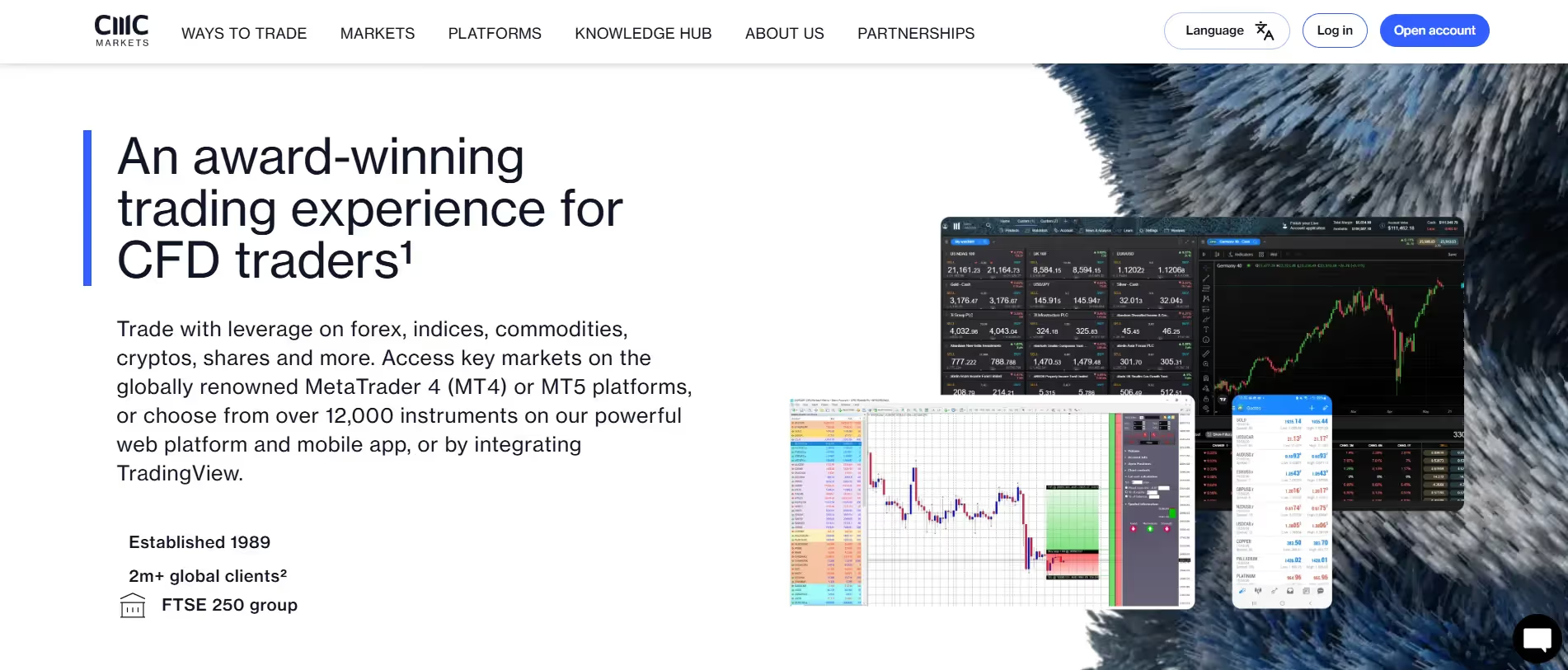
CMC Markets integrates MetaTrader 4, providing access to more than 200 instruments, a highly customizable user experience, and extensive trade rule management options. Zero minimum deposit requirements remove barriers for beginners exploring automated trading.
MetaTrader 4 integration enhances trading with comprehensive charting tools, technical analysis options, and automated trading capabilities. Users access tight spreads across more than 12,000 instruments, including major, minor, and exotic Forex pairs, as well as CFDs on commodities, indices, and cryptocurrencies. Robot Expert Advisors deliver real-time insights for intelligent trading decisions based on risk capacity and budget.
Instrument selection breadth supports diversified strategies. Forex and CFD trading infrastructure proves robust. MetaTrader 4 integration provides familiar tools for experienced traders. Zero minimum deposit enables low-risk exploration. Competitive fees enhance profitability on frequent trades.
Asset coverage outside Forex and CFDs remains limited. No back-testing features exist for strategy validation before deployment.
8. Bitsgap
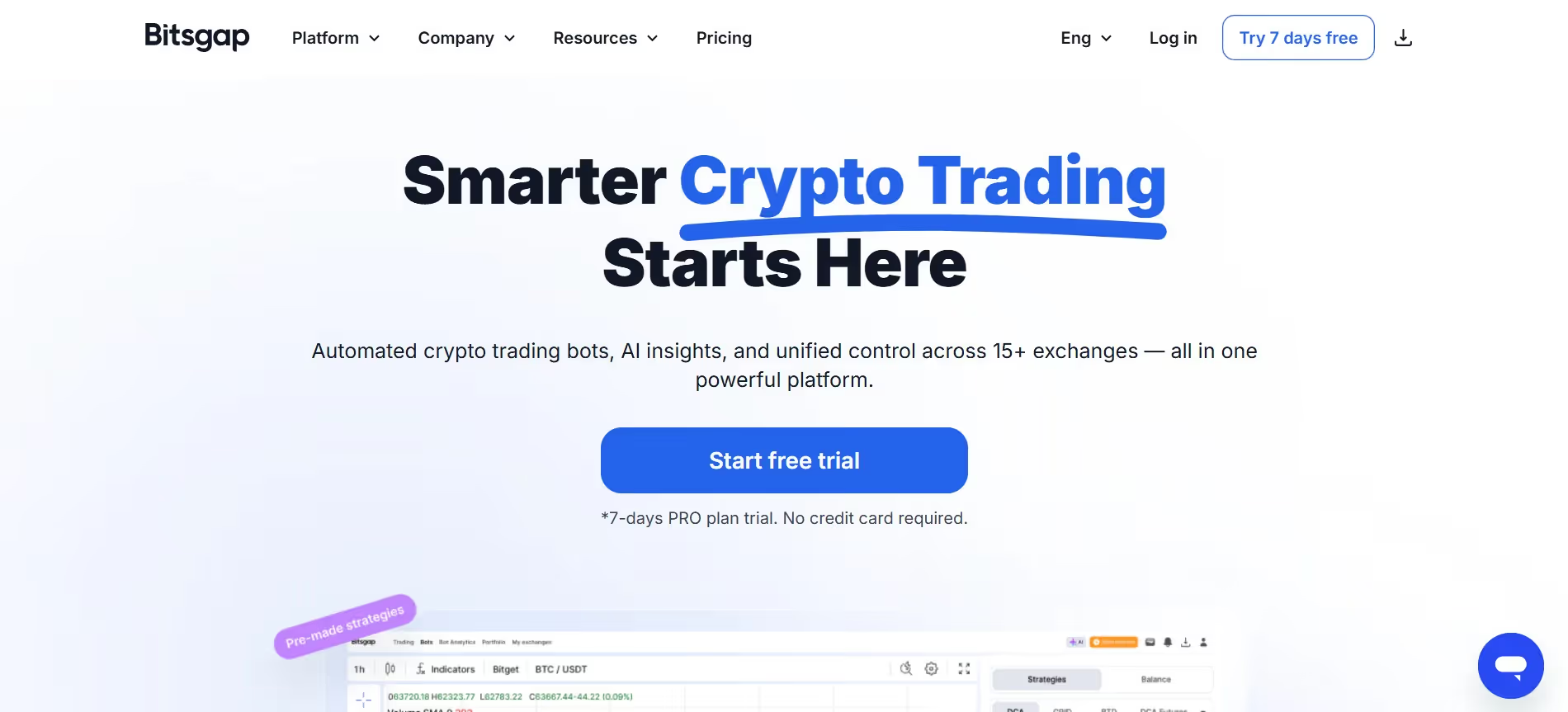
Bitsgap focuses on refining grid trading and arbitrage capabilities through its high-frequency Grid Bot and unique Combo Bot for futures trading. The clean, futuristic interface and the ability to identify instant arbitrage opportunities have built a substantial following among traders who profit from small price movements.
Grid, DCA, and futures trading bots include visual setup tools that reduce configuration complexity. The Combo Bot combines grid and DCA strategies for higher profit potential in futures markets. Portfolio tracking consolidates data across all integrated exchanges. An arbitrage scanner automatically identifies price differences. Smart orders enable advanced stop-loss and take-profit combinations.
Free trials last seven days. Basic at $29 monthly includes three Active Grid Bots and ten Active DCA Bots. Advanced at $69 monthly expands to ten Active Grid Bots, fifty Active DCA Bots, and Futures Bots. Pro at $149 monthly provides fifty Active Grid Bots, 250 Active DCA Bots, and Take Profit for Grid Bots.
The arbitrage engine's power exceeds most competitors. A clean professional interface reduces cognitive load during monitoring. Combo Bot allows high-risk, high-reward strategies for experienced traders. Wide exchange support enables cross-platform arbitrage. Pre-made strategies with backtests accelerate deployment. Smart orders offer sophisticated risk management beyond basic stop-loss orders.
No margin trading support exists. Maximum features require expensive plans that may exceed the budget for smaller accounts.
9. IG
IG offers more than 19,500 instruments, along with state-of-the-art research tools, educational resources, and multiple automation paths via MetaTrader 4, ProRealTime, and APIs. This variety appeals to traders who prioritize breadth of instrument selection.
The instrument collection spans Forex pairs, cryptocurrencies, indices, commodities, shares, and stocks. Multiple automation options let users create custom experiences with APIs, leverage MetaTrader 4, or use ProRealTime for automation without coding requirements. The platform interface proves intuitive, with a mobile app providing extensive access to resources, reports, technical indicators, drawing tools, and other solutions.
Instrument selection remains unmatched among competitors. User-friendly interface and mobile app reduce friction. Research and educational resources support continuous learning. No deposit or withdrawal fees improve cost efficiency. Flexible automation options accommodate different technical skill levels.
Fees exceed those of some competing platforms. High minimum deposit requirements create barriers for small account traders.
10. Gunbot
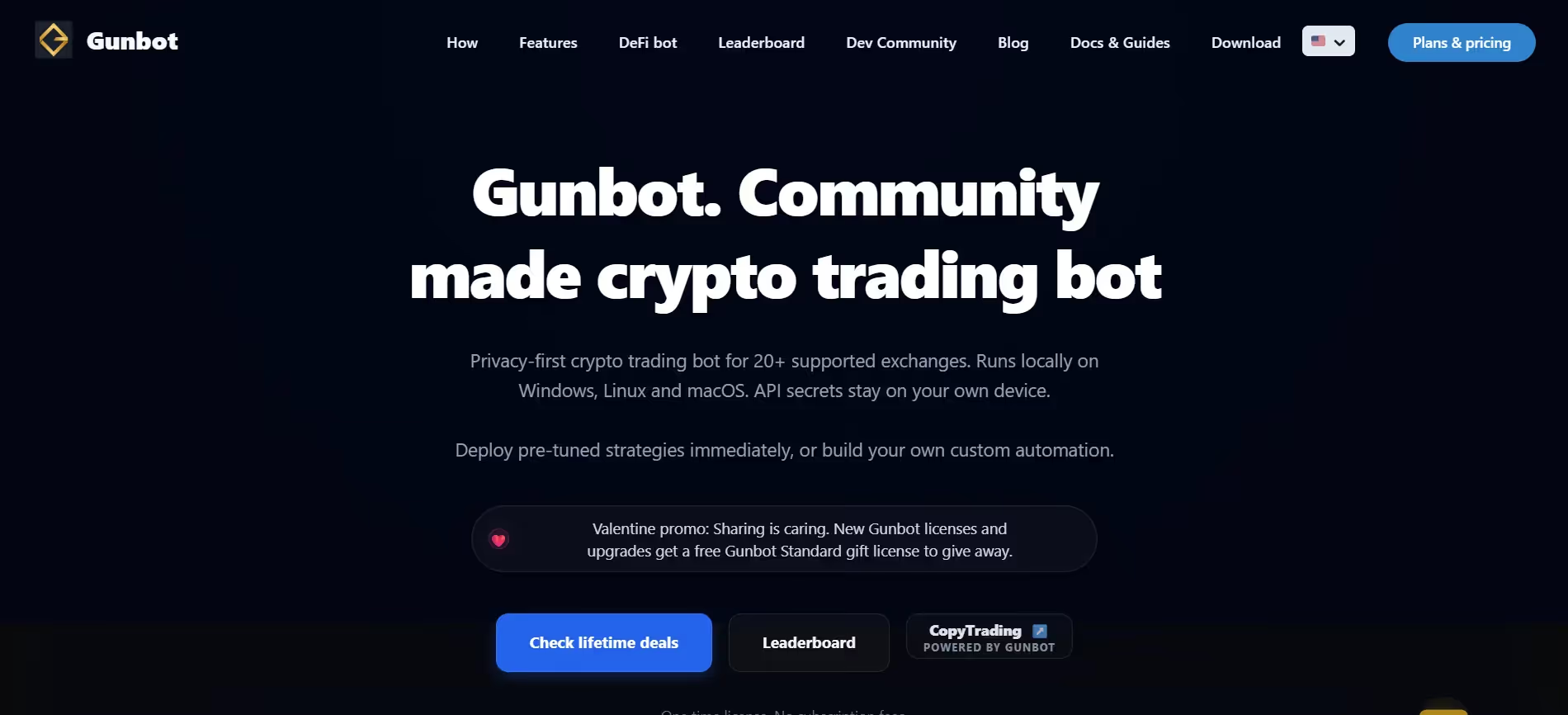
Gunbot operates as a self-hosted crypto trading bot for experienced users seeking complete control and privacy. The application runs on your computer or a Virtual Private Server, giving you ownership of both the software and the data. The platform has expanded to support DeFi exchanges and decentralized automated market makers, making it unique among mainstream options. Telegram integration enables remote live monitoring, bot control, and performance tracking.
Local execution means you own the software and data without third-party custody risks. Unlimited customization is available to traders who know JavaScript and can code virtually any strategy. DeFi support enables trading on decentralized exchanges such as Uniswap and dYdX. StepGrid Strategy provides safer alternatives to standard grid approaches. The TradingView add-on connects external signals.
Standard lifetime license costs $199 one-time. A pro lifetime license at $300 supports more exchanges. DeFi lifetime license at $500 includes unlimited exchanges and DeFi support.
Lifetime licensing eliminates recurring subscription costs. Privacy-focused architecture keeps API keys and trading data under your control. Unlimited trading pair support removes artificial constraints. Automated trading applies to both spot and futures. An extremely active community provides troubleshooting support. Unlimited customization accommodates unique strategies. DeFi support opens opportunities unavailable on centralized platforms. Telegram integration enables remote management.
Technical knowledge requirements for installation exclude non-technical traders. No native mobile app exists. Setup isn't "plug and play" like cloud alternatives.
11. HaasOnline

HaasOnline serves institutional traders and hedge funds through unmatched customization power. The platform offers HaasScript, a scripting language that enables the creation of highly complex bots. Running locally on your computer keeps API keys private while requiring 24/7 uptime and manual updates.
HaasScript provides a purpose-built scripting language for crypto trading logic. Visual Editor offers a drag-and-drop builder for creating scripts without writing code. Backtesting engine delivers the most robust historical data replay with high precision. Inter-Exchange Arbitrage exploits price differences across exchanges. Flash Crash Bot places buy orders deep below the market price to catch flash crashes.
Free trials last three days. Starter plan at $19.99/month includes basic bots and limited positions. The Standard plan at $49.99 per month includes access to more advanced bots and insurance features. Pro at $99.99 monthly provides full HaasScript access and unlimited bots.
Market-making bots enable liquidity provision strategies. Customization power remains unrivaled. Advanced backtesting validates strategies thoroughly. Custom script bots accommodate any conceivable strategy. Institutional-grade security protects sensitive data. Options and futures trading support expands strategy possibilities.
Pricing exceeds most competitors significantly. Complexity proves too advanced for beginners. Steep learning curve delays profitability for new users.
12. TradeSanta

TradeSanta simplifies automated trading with a straightforward dashboard that lets you launch bots in minutes. The friendly "Santa" branding and simplified approach to Grid and DCA trading appeal to beginners who find interfaces like 3Commas or HaasOnline intimidating. Advanced features such as backtesting, trailing stop-loss, and automated trading integrate seamlessly without overwhelming new users.
Grid and DCA Bots handle primary automation needs. Long and Short Bots enable directional strategies. Performance excels on large-volume trades. Technical Indicators inform strategy adjustments.
The Basic plan at $25/month supports up to 49 bots. Advanced at $45/month includes 99 bots, TradingView Screener, and Trailing Take Profit. The maximum monthly plan provides unlimited bots, TradingView signals, and Futures bots.
The user interface proves very friendly for beginners. Easy setup process reduces time to first trade. A good mobile app enables monitoring anywhere. The "Virtual" option simulates trading volume you don't have for testing purposes. Affordable pricing relative to the bot quantity provided.
Limited advanced features constrain experienced traders. Exchange support covers fewer platforms than competitors.
13. XTB
XTB operates as a regulated broker on the Warsaw Stock Exchange with the xStation 5 solution for automated trading. The platform suits users interested in a range of assets and in trading with lower capital through CFD exposure. Automated trading systems help build strategies, diversify portfolios, and monitor trading changes in real time. Demo accounts enable strategy testing without capital risk.
Diverse CFD portfolio covers stocks, commodities, Forex, cryptocurrencies, and more. CFDs offer flexibility to benefit from price movements in both directions. A user-friendly platform is available in mobile and web versions, with intuitive interfaces and educational resources. Analytical tools provide in-depth insights for intelligent asset decisions.
Strong CFD offerings support diverse strategies. Educational tools help beginners learn effectively. Free deposits and withdrawals improve cost efficiency. Commission-free stocks and ETFs reduce costs for some investments. User-friendly design reduces learning curve.
Features outside CFD trading remain limited compared to specialized platforms.
14. WunderTrading
WunderTrading has carved out a niche as the best crypto auto-trading bot for Copy Trading and Spread Trading. While offering standard automation, social trading features let users transparently view professional traders' track records and automatically copy their moves. The platform provides DCA bots, market tactics, and TradingView integration to automate strategies across multiple exchanges in one unified environment.
Crypto Trading Bots include ready-made options such as Market Neutral bots that profit from price fluctuations and DCA bots that average entry costs. TradingView Integration connects external signals. Copy Trading enables the replication of successful trader strategies. Multi-Exchange Oversight links and conducts trading across platforms through a single interface. Advanced Orders support multi-target take profits, stop losses, and trailing stops.
Free plan includes one Signal, Grid, and DCA bot, five open positions, and Manual Trading. Basic at $9.90 monthly provides five active bots (Signal and Grid), twenty DCA bots, Multi-pair bots, and Trailing stops. Pro at $19.90 monthly expands to fifty Signal bots, twenty Grid bots, 100 DCA bots, Telegram bots, swing and spread trading. The Premium plan at $44.90 per month includes unlimited bots, five Neutral bots, 200 Grid and 300 DCA bots, an AI bot, multi-API support, and higher limits.
Useful free plan enables testing without financial commitment. Best platform for Spread Trading strategies. Good social trading tools facilitate learning. A transparent marketplace for Copy Trading shows real performance data. User-friendly interface reduces friction.
Copy Trading quality relies on trader performance, which varies. Fewer "native" bot strategies compared to specialized platforms. Spread trading requires a solid understanding of the market to consistently profit.
15. Learn2Trade
Learn2Trade focuses on helping beginners and intermediate traders extend their skills through guidance and support for buying and selling assets effectively across markets. The comprehensive MAM account service allows traders to invest with analysts who execute trades on their behalf. Copy trading services recently launched.
Educational resources include webinars, tutorials, and advanced courses that provide comprehensive coverage of automated trading insights. Analytical insights provide technical analysis tools and expert collaboration on strategy development and growth plans. Easy-to-use automated trading tools let users experiment with different strategies and embed learned concepts into trading efforts.
Educational resources quality exceeds most competitors. Unique services and support differentiate from pure technology platforms. Copy trading capabilities democratize access to professional strategies. Beginner-friendly tools reduce intimidation.
Limited advanced features constrain experienced traders seeking sophisticated automation.
But knowing which platforms exist only matters if you can actually afford to test them properly without risking your rent money.
Stop Letting Your Crypto Bots Trade Small Amounts Due to Limited Capital
If you've built or purchased an automated strategy that performs consistently but can't scale it properly without risking capital you can't afford to lose, you're stuck in the worst position. Your bot works, the logic proves profitable in testing, but position sizing stays microscopic because you're trading with money that matters. That constraint kills the compounding effect that makes automation worth the effort in the first place.
Platforms like funded trading programs provide the infrastructure and capital to grow without a personal risk ceiling. Run your crypto bots on MT5, TradeLocker, Match-Trader, or cTrader under funded accounts up to $400K, with flexible rules and up to 100% profit split. Your automation works 24/7 in real market conditions while the firm absorbs the downside risk. The profit targets between 2-10% remain achievable for strategies that already demonstrate an edge, and your bots handle execution discipline without the psychological weight of watching your own savings fluctuate.
Let your automation work as it was designed. Not on demo accounts that teach nothing about real execution. Not on $500 personal balances that generate $12 monthly returns. On capital large enough that your edge actually compounds into income worth the time you invested building the system.
Related Reading
- How To Take Profits From Stocks
- Accumulation Distribution
- Short-Term Capital Gain Tax On Shares
- What Is Reit Dividends
- Cash Available To Trade Vs Settled Cash
- Best Pairs To Trade Forex
- Can You Day Trade In A Roth Ira
- What Is A Conditional Order
- Orb Strategy Trading
- Stop Loss Vs Stop Limit
- Flag Pattern Trading
- Characteristics of Growth Stocks
- Forex Compounding Plan
