




10 Tips for Forex Online Trading Like a Pro
Forex Online Trading strategies that work: learn 10 practical tips for planning, risk control, and steady execution with AquaFunded. Start smart today!

Demo trading and backtesting offer valuable learning experiences, yet live markets bring challenges that often test even well-prepared strategies. Many forex trading success stories highlight the need to adapt techniques from controlled simulations to real trading environments, where leverage, spreads, and unexpected execution factors come into play. Balancing risk management with strategic adjustments can help bridge the gap between simulated wins and live profitability.
Real-world trading demands a disciplined approach to money management and careful broker evaluation, ensuring that plans remain effective under pressure. By honing strategy execution and managing market imperfections, traders can transform practice gains into long-term success; AquaFunded’s funded trading program offers a clear path to accessing real capital while providing essential tools and supportive feedback.
Summary
- Deep liquidity and USD dominance shape execution. Global FX trading reached about $9.6 trillion per day in April 2025, up 28% from 2022. The US dollar was on one side of 89% of trades, so USD pairs and peak sessions usually offer the narrowest spreads and cleanest fills.
- Market growth increases competition and sensitivity to slippage. The market is estimated at roughly $10.2 trillion by 2025 and is expected to grow about 5 percent annually, so small execution costs can quickly erode a trader's edge.
- Proving a live plan matters, not just demo performance, so validate setups with at least 30 calendar days or 50 executed trades to observe real execution and emotional responses before scaling.
- Behavioral and structural failure modes are standard; for example, 90 percent of beginners lose their initial investment within the first six months and only about 10 percent of traders consistently make profits, which underscores the need for strict rules and routine.
- Concrete risk limits work better than aspirational targets. Start by risking about 0.5 to 1 percent of equity per trade and keep gross margin usage low, for example, under 20 percent of account value, until drawdowns and volatility prove sustainable.
- Focus on and measure performance, so specialize in two to three pairs with a minimum of 30 trades per pair, and evaluate execution venues by testing four capabilities in a week, including transparent fill reporting and real-time slippage analytics.
- AquaFunded's funded trading program addresses this by offering a structured evaluation path to real capital with clear rules and measurable execution feedback.
What is Forex Online Trading

Forex trading is the global market where currencies are exchanged and priced continuously. It works by pairing one currency against another. Traders can buy one currency and sell the other to profit from exchange-rate movements. You either make money or lose money based on shifts in relative value, market liquidity, and execution quality. These factors change throughout the day as economic news and trading activities come in.
1. What forex trading is and how trades are executed
Forex is a decentralized market where buyers and sellers agree on currency rates, typically through electronic brokers, banks, or trading platforms. You place an order for a currency pair; the platform routes it to a liquidity provider or market maker. Execution fills at a quoted price, and your account reflects the gain or loss as rates move. This system runs on real-time price feeds, margin rules, and settlement processes that enable retail and institutional traders to take directional long or short exposures without owning the underlying banknote.
2. Which currency pairs matter and why?
The market trades many currency pairs, but major pairs like EUR/USD, GBP/USD, and USD/JPY are the most important. They handle a high volume of trades and offer low prices. These pairs connect major economies and provide significant liquidity. This is important for factors such as spreads, slippage, and how quickly you can enter or exit a position. Because of this, choosing pairs that align with your time frame and risk tolerance is a key decision for achieving consistent results.
3. Why is timing as important as strategy?
The critical mistake most traders make is treating timing as secondary. Trades placed during quiet hours incur wider spreads and erratic fills. On the other hand, the same strategy during busy hours runs more smoothly and is less costly. This timing mistake explains why disciplined execution and careful selection of trading sessions often set consistent performers apart from those who overtrade and chase losses. This pattern is common among both retail and institutional traders.
4. How does the market schedule affect trading opportunities?
Forex trading is continuous during business hours, with activity rising and falling by region. Knowing when markets open, close, and overlap helps you predict when there will be lots of buyers and sellers, along with how much prices might move, instead of just guessing. Think of session timing like the difference between fishing from a pier at dawn and casting into open water at high tide; both can work, but the risk and reward can vary. Additionally, through our funded trading program, you can access a range of trading resources to help you make informed decisions.
5. What are standard session times (UTC) and what do they signal?
- Sydney session, 2100–0600 UTC: This session is known for early-week direction-setting and lower liquidity compared to Europe and the US.
- Tokyo session, 0000–0900 UTC: This session shows Asian market activity, with more interest in JPY crosses and regional economic news.
- London session, 0700–1600 UTC: This is a major liquidity center where European macroeconomic news plays a significant role in daily flows.
- New York session, 1200–2100 UTC: US macroeconomic data and news influence global price discovery, which often leads to significant intraday moves.
6. Why Do Overlaps Matter and When Should Traders Focus on Them?
Overlap windows occur when two trading centers are open simultaneously, resulting in the deepest liquidity and the tightest spreads. The London/New York overlap is critical because liquidity is highest at this time, making trades more reliable. If the goal is to achieve cleaner fills and more predictable transaction costs, traders should schedule their trades during these overlap periods whenever their strategy allows.
7. What are the practical traits of each session?
Practical traits of each session include the following:
- Sydney provides an early hint for the week and often shows signs of risk appetite, which helps position traders set their bias.
- Tokyo boosts moves in Asian-focused pairs and can create sustained trends for carry or mean-reversion plays.
- London focuses flow on EUR, GBP, and cross rates, leading to range breaks or persistent trends around European data releases.
- New York completes daily stories and often starts follow-through that carries into the next session, especially around U.S. data and rate commentary.
8. How do volatility and liquidity change profit potential?
How volatility and liquidity affect profit potential: Profits depend on both market movement and trading costs. This means that market conditions that increase volatility can either help or hurt profits, depending on how well trades are executed. Market size is essential. According to the 2025 Triennial Central Bank Survey, global FX trading reached $9.6 trillion per day in April 2025, up 28% from 2022. There is ample liquidity during busy trading periods, making execution quality even more important than many traders realize. At the same time, the US dollar's strong position affects pricing and trade flow. As noted in the 2025 Triennial Central Bank Survey, the US dollar was part of 89% of all FX trades in April 2025, so you can expect USD pairs to have the tightest spreads and quickest fills.
9. What are standard trader failure modes and emotional realities?
Standard trader failure modes and emotional realities emerge prominently in trading patterns. Traders who lack time-based rules often overtrade in thin markets, mistakenly attributing the issue to their strategy rather than to timing or execution. This approach can be exhausting, as flipping positions at random hours leads to cost erosion and diminished returns. To break this cycle, discipline, routine, and a solid plan that connects session choice to risk limits are essential. Additionally, learning to avoid low-probability trading windows is as valuable as identifying the right entry signals.
10. What is the status quo friction, and how do modern platforms change the equation?
Most traders manage timing and execution by switching between retail brokers, spreadsheets, and news feeds. This setup feels familiar and flexible. However, as trade volumes and complexity grow, pricing signals break down, transaction costs rise, and avoidable delays occur when every millisecond counts. Platforms like AquaFunded centralize live order routing, transparent pricing, and execution analytics. This reduces hidden slippage, giving traders more unmistakable evidence to trust their entries and exits. In turn, this lowers the cost per trade while keeping risk controls visible, which is where a funded trading program can provide even greater support.
11. How can traders match sessions to their trading goals?
To effectively match trading sessions to specific goals, consider the following strategies: If you trade intraday scalps, focus on the London/New York overlap for the best liquidity and lowest spreads. For swing positions, use the Sydney and Tokyo sessions to set a directional bias, which lets the European or US sessions confirm it. If your edge relies on headline-driven moves, align your calendar to stay active during key data releases for your trading pairs. Finally, record your results and backtest entries by session; this will help you determine whether the extra volatility improves or harms your edge.
What analogy can keep this practical?
To keep this practical, think of sessions as restaurant shifts. Some shifts serve regular customers with predictable orders, while others are busy periods when speed and teamwork are critical. It's essential to select the change that best matches your kitchen and your team's strengths, just as our funded trading program provides the proper financial support tailored to your approach.
What is the surprisingly stubborn obstacle most traders face?
Mastering these pieces sharpens trade selection. However, there is a surprisingly stubborn obstacle that most traders still face, which changes everything.
Is Forex Online Trading Hard?

Forex trading can be tough, but it is not impossible. The main challenges are not really about the technical side, but more about emotional control, how well you execute trades, and sticking to risk management rules: skills that you can learn and get better at over time. For those looking to enhance their trading experience, our funded trading program provides the support and resources necessary to navigate these challenges effectively. According to BestBrokers.com, the global forex market is expected to hit $10.2 trillion by 2025. This large size offers significant opportunities, but it also underscores the importance of executing trades precisely and managing costs effectively. As you grow, your margin for error becomes clearer. Additionally, BestBrokers.com reports that forex trading volume is likely to increase by 5% annually. This growth will bring more competitors and change the market dynamics, making it even more important to have skills that help maintain stability now and in the future.
Myth 1: “Is forex just too complicated for a beginner?”
Understanding why people feel overwhelmed can help make it manageable. Many beginners conflate familiarity with the subject with fluency. They attempt to execute complex trades without first mastering a simple trade plan. This leads to a challenging and discouraging learning experience. Over several months of onboarding sessions with new traders, a clear pattern emerged: those who broke learning into smaller skills and focused first on one currency pair, one time frame, and one entry rule showed greater consistency more quickly than those who tried to learn every indicator at once. The solution is straightforward: learn one decision at a time, track results, and add complexity only when the basic routine is solid.
Myth 2: “Do you need to be a math genius or have secret knowledge?”
Identifying the skills that truly predict success reveals why raw IQ matters less. The market usually rewards temperament and process more than math skills. Traders with basic technical knowledge often outperform those with strong math skills because they focus on key factors such as position sizing, stop-loss logic, and patience. Skills such as emotional control, routine, and a consistent approach to evaluating trades can be developed over time. If traders treat strategy development as engineering rather than waiting for inspiration, they can gain an advantage that math alone can't provide.
Most traders manage execution and analysis by assembling various tools and spreadsheets, which can seem flexible and comfortable. This method works well until hidden costs emerge, causing trades to slip and reporting errors that obscure ongoing losses. Platforms like AquaFunded combine live order routing, transparent pricing, and execution analytics. This combination gives traders better insight into where costs arise and provides tools to enforce risk rules, helping reduce wasted trading costs and encouraging disciplined decision-making.
Myth 3: “If I do well in demo, I can switch to live and keep winning.”
Why demo results often mislead and how to shorten the demo-to-live gap. Demo accounts remove real-money risk, which changes how you behave. Hesitation, mistakes in position sizes, and panicking when exiting happen only when there are real stakes. A demo account is like a flight simulator without turbulence; it teaches you how to do things but not how to handle real pressure. To effectively bridge the gap, transition slowly by using lower leverage, setting fixed position limits, and keeping a journal that tracks your emotions with each trade. This method turns simulated skills into trusted, stress-tested live practice.
Myth 4: “Consistent profits are impossible in forex.”
It's essential to understand when consistency is possible and where many traders fail. Consistency is not a myth; it comes from having clear rules, controlling costs, and being honest about your trading strengths. Traders often give up when they stop measuring the two things they can control the most: execution costs and risk for each trade. A common problem is emotional overtrading, which can ruin any statistical advantage. To address this, track your execution metrics, keep your position sizes small relative to your account equity, and treat your strategy as an ongoing experiment that requires adjustments and patience.
What is the analogy for trading in forex?
A quick, concrete analogy: consider trading like running a small bakery, rather than joining a TV cooking contest. You win by standardizing recipes, controlling ingredient costs, and delivering reliable service day after day. You do not win by improvising dramatic flourishes that blow margins.This simple separation between pressure-tested routines and flash is just the beginning. The following section highlights the common mistakes that can turn promising practices into costly habits.
Related Reading
- Forex Trading Success Stories
- Pros and Cons of Forex Trading
- Is Forex Trading Profitable
- How Many Forex Trading Days in a Year
- Forex Secrets
- How to Trade Forex With $100
- Day Trading vs Forex
- Forex Tax Rate
- Is Forex Closed on Christmas
- How to Use ADX Indicator for Day Trading
- Best Time Frame to Trade Forex for Beginners
- Is Forex Trading Hard
- Risk Management in Forex Trading
- Scalp Trading Forex
- Forex Trading Account Types
10 Mistakes Beginners Make While Trading Forex Online

Beginners lose money because they treat trading like guessing rather than running a small, measured business. Poor planning, weak risk controls, and intense emotions can turn small advantages into significant losses. The solutions are about following procedures, not inspiration; they require rules that traders must adhere to before the screen shows anything. Most traders conduct their analysis and execution using various tools that feel comfortable and flexible at first. However, over time, this method masks execution costs and weakens risk controls, leading to surprises as positions accumulate. Platforms like AquaFunded provide transparent pricing, fast execution, and combined risk analytics. This helps traders see where slippage and costs happen, enforce consistent position sizing, and measure outcomes, turning habits into a repeatable process.
1. Trading Without a Clear Plan.
What it looks like: Jumping into charts based on a tip, signal, or hunch, without writing down why you entered, where you will exit, or how the trade fits your account goals. Why it damages you: Results become scattered; you cannot evaluate which rules work, and impulse takes the place of analysis. After a three-month onboarding program for novice traders, the pattern became clear: those who skipped written plans doubled their trading frequency and repeated the same mistakes.
2. Weak Risk Management
Such as sizing positions based on hope rather than math, ignoring risk-per-trade limits, and not setting a consistent risk-to-reward standard. This mismanagement can lead to critical negative consequences. One or two adverse outcomes can deplete funds needed for recovery, leading to longer recovery times and increased stress, which makes it harder to make rational decisions. The reality is apparent: a CPT Markets study shows that 90% of beginners lose their initial investment within the first six months of trading, underscoring how quickly unprotected accounts can disappear.
3. Avoiding Stop-Losses
Avoiding stop-losses often reflects a mindset of “I will hold through it.” Traders might believe the market will bounce back rather than accept a set loss. This way of thinking creates several problems: losses can grow unpredictably, emotional ties to losing positions can intensify, and accounts can decline quickly. A minor mistake can escalate into a significant issue for the account.
4. Excessive Leverage
What it looks like: using the most leverage allowed to try for quick profits without considering how small moves affect your margin. Why it damages you: small price changes can quickly lead to significant changes in your account balance. Margin calls can occur with little notice, forcing you to make decisions in a panic. Think of leverage like a car that accelerates quickly but has no brakes; speed can make any mistake worse.
5. Overtrading
What it looks like: placing many trades with low confidence because you're bored, feeling FOMO, or trying to 'make back' your losses for the month instead of waiting for better chances with a higher chance of success. Why it damages you: fees and spreads take away your profits, feeling worn out affects your judgment, and trading too much replaces good quality trades with many poor ones, so your best opportunities get hidden among the rest.
6. Emotional Decision-Making
Emotional decision-making can significantly affect trading results. It shows up when fear, greed, or revenge control the size of trades and the timing of exits. Traders often increase lot sizes after losses and may cut winning trades short while holding losing positions. This behavior is harmful because it prompts traders to disregard their rules, leading to greater losses and reduced confidence. Over time, these habits show up in trading results, which supports the fact that only 10% of forex traders consistently make profits, according to CPT Markets, 2025. This number underscores how rare it is to achieve disciplined, repeatable success in trading.
7. Trading Without Event Awareness
Trading without event awareness can be harmful. This means starting trades without consulting the economic calendar or ignoring central bank statements. These actions can cause surprising price changes, leading to slippage and stop-outs. Also, technical setups may fail for reasons that don't align with the trader's plan, and execution quality can suffer when markets gap, as explained in the AquaFunded blog.
8. Spreading Attention Across Too Many Pairs
Spreading attention across too many pairs can be harmful. This occurs when a trader jumps between multiple currency pairs because each setup appears promising. The results of this behavior include a decline in analysis quality, which can lead to missed signals. Also, too much information can lead to inconsistent trade execution, harming overall trading performance.
9. Chasing Unrealistic Outcomes
Chasing unrealistic outcomes often involves expecting to make steady daily profits or quickly double your account. As a result, traders might take more risks to achieve these goals. This behavior can be harmful; impatience leads to reckless trading, with risk-taking often exceeding what a trader can handle. As a result, emotional burnout happens when reality doesn't match these high expectations.
10. Failing to Review and Learn from Trades
Failing to review and learn from trades can be harmful. This often means making trades and then moving on without journaling entries, exits, market context, or emotional state. Such neglect can lead to repeated mistakes, slow the learning process, and allow small bad habits to become primary causes of loss.
Most traders handle analysis and execution across scattered tools because that feels familiar and flexible, which works early on. Over time, that approach hides execution costs and fragments risk controls, creating surprises when positions compound across hours and sessions. Platforms like AquaFunded provide transparent pricing, fast execution, and integrated risk analytics, so traders can see where slippage and cost occur, enforce consistent position sizing, and measure outcomes, turning habit into a repeatable process.During a focused four-week coaching cycle, traders who documented every trade, note, and emotion saw a significant reduction in avoidable errors. This helped them improve their consistency faster than those who did not.
Which behavioral gap still trips up traders?
This revelation is helpful, but one stubborn behavioral gap continues to trip traders up. Understanding this gap can change how traders approach the next phase.
Related Reading
- Forex Algo Trading
- Types of Forex Trading
- Forex Trading Spreads
- Forex Market Liquidity
- Forex Mini Account
- Forex Price Action Trading
- Forex Hedging Strategies
- Forex Trend Indicators
- Advanced Forex Trading
- Best Forex Pairs for Scalping
- London Session Forex Pairs
- Best Currency Pairs to Trade for Beginners
- Minor Currency Pairs
- Best Time to Trade USDJPY
- Forex Swing Trading Signals
10 Tips for Forex Online Trading Like a Pro
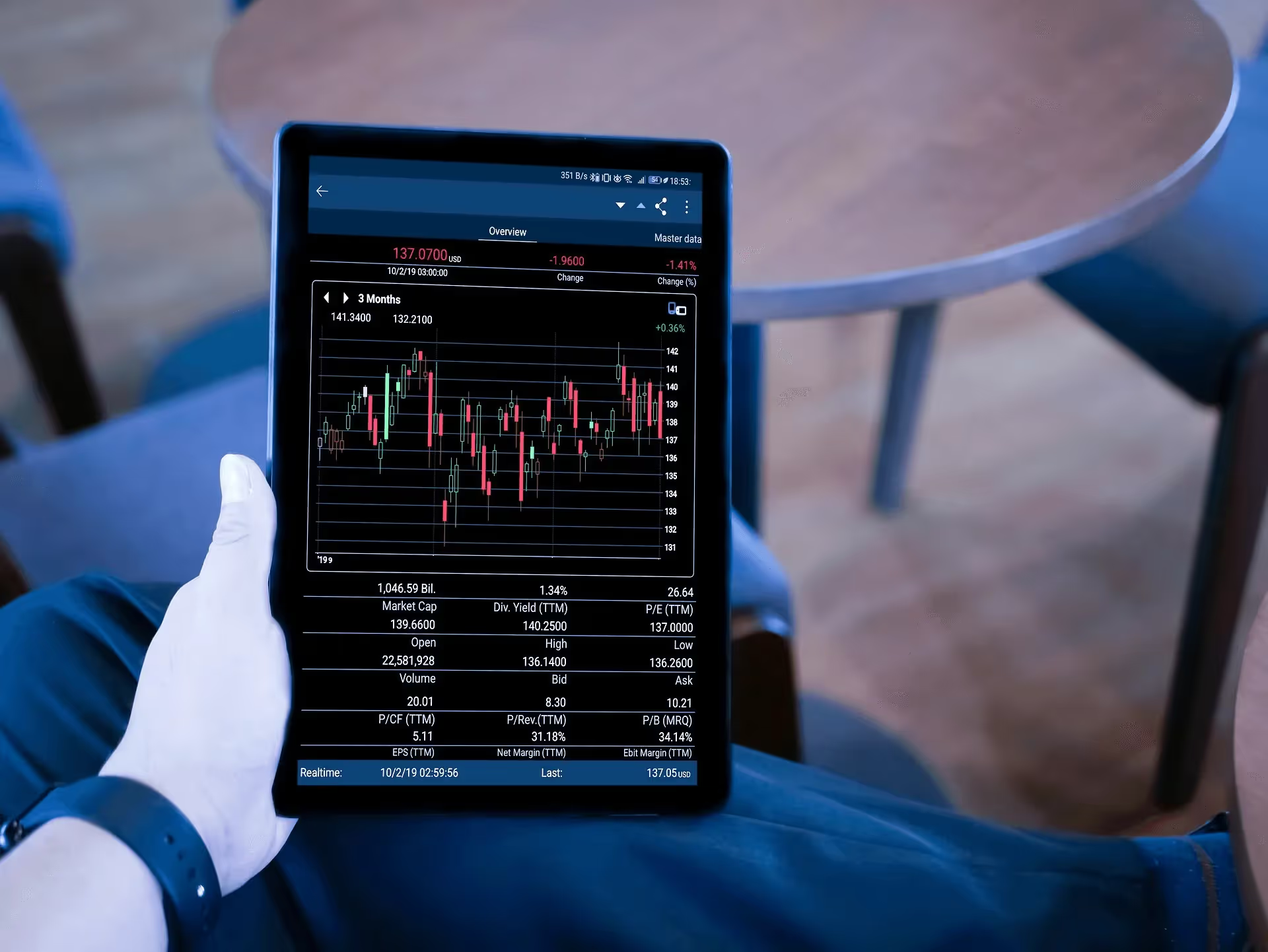
Disciplined traders win by turning rules into routine and by shrinking the number of judgment calls they must make each day. Below are ten focused, easy-to-follow practices you can start using right away to improve the chances that your next months of trading are measured progress, not emotional damage control. In particular, consider how a funded trading program can give you the necessary support to make effective decisions with confidence.
1. Create a living trade plan and test it before scaling
Create a residing trade plan and test it before scaling. Write a one-page plan that specifies the exact conditions that trigger entries, your stop logic, and exit protocol. Validate it with a live simulation or a small real account for at least 30 calendar days or 50 executed trades. During a six-week coaching cycle, a clear pattern emerged: traders who treated the plan as a checklist, updating it weekly with a single metric (e.g., win rate, average R:R, or slippage), stopped making the same mistakes. Practical elements to include and monitor are the exact entry signal, signal timeout (how long the setup remains valid), stop placement method, position sizing rule, and a post-trade note field for emotion and execution quality.
2. Make risk limits the primary KPI, not profit targets
Make risk limits the primary goal, not profit targets. Set a fixed risk per trade and two account caps that you will not exceed: a maximum trade risk and a maximum total loss for each day or week. Use a simple size formula: position size equals account equity times target risk divided by trade risk in pips, rounded to the nearest lot that follows your risk rule. If you want a clear safety line, start by risking no more than 0.5 to 1 percent of equity for each trade and set a daily loss limit equal to two times that number. From there, adjust your limits as your performance becomes steady. Track only those metrics you can check automatically, because enforcement beats good intentions.
3. Treat leverage as a variable you turn up slowly
Treat leverage as a variable that you increase slowly. Think of it as a tuning knob for volatility, not a quick way to get faster returns. Limit your gross notional exposure to an equity level you are comfortable with; for example, keep margin use under 20 percent of your account value while you are learning. If your strategy shows a steady advantage over 60 trading days with stable drawdowns, consider slightly increasing your exposure. If not, reduce your exposure. The main point is to let volatility confirm the model before you increase it.
4. Build a high‑pass filter so you only trade clear setups
Build a high-pass filter to trade only clear setups. Design a three-rule filter that every signal must pass: confluence across your preferred indicators or price action, an execution window that aligns with liquidity, and an acceptable risk-to-reward. Then, set a maximum number of open trades per instrument and per account to avoid position bloat. Quality control shows fewer trades and cleaner execution. The discipline to skip low-probability entries is the practical edge most traders never master.
5. Automate the guardrails that stop emotion from becoming risk
Automate the guardrails that stop emotion from becoming risk. Stop losses and fixed position sizes are your first layer of protection. Add behavioral rules as a second layer. For example, implement an automatic pause after two consecutive stop-outs. During this pause, you must review your journal notes before trading again. Consider having a rule that blocks new trades on days when you feel very stressed. Use automation tools to enforce entry sizes and set daily loss limits. This helps ensure emotions do not change the rules when things get tense.
Why is a centralized trading platform important?
Most traders manage their trading using a mix of spreadsheets, broker UIs, and news feeds because it feels comfortable. While this method might work for small-scale trading, as positions and rules increase, execution errors and hidden costs build up. Trades can slip, and oversight shifts from proactive to reactive. Platforms like AquaFunded bring together order routing, execution analytics, and risk controls. This helps traders identify where slippage and spreads reduce returns, apply fixed sizing rules across accounts, and accelerate the feedback loop between their plan and actual results.
6. Structure learning into micro‑skills and measure progress
Structure learning into micro-skills and measure progress. Break education into one skill per week. For example, week one focuses on reading micro price action; week two covers position sizing and risk math; week three addresses execution quality and slippage measurement; and week four emphasizes trade journaling and bias management. After each week, set a single measurable goal, such as completing 30 demo trades with recorded entry, stop, and exit reasons. This constraint-based path builds competence without overload and turns abstract study into observable behavior change.
7. Lock down news protocols that prevent surprise losses
Lock down news protocols that avoid losses of surprise. Create an economic calendar rulebook: mark high-impact events, reduce position sizes by a fixed fraction before a significant announcement, and avoid opening new trades within the first 10 to 20 minutes after a significant headline. If trading through events, widen stops to account for spread expansion and verify your broker’s historical slippage for that event type. These simple, preplanned adjustments can ensure that headline shocks do not lead to account shocks.
8. Master two to three pairs and build a pair dossier
Mastering two to three currency pairs can significantly improve your trading efficiency. Choose a small number of instruments and create a one-page dossier for each pair. This dossier should include its average daily range, typical reactions to major announcements, correlation with your base pairs, and the best times for clean fills. Make sure to commit to at least 30 trades per pair before applying patterns to other instruments. Specializing turns guesswork into repeatable recognition.
9. Recalibrate expectations to the survival curve
Accept the uncomfortable fact that the business is unforgiving, and measure success by survival and repeatability first. According to TradingView, 95% of forex traders lose money. That stubborn outcome is a map of what happens when process, cost control, and emotional rules are missing. Aim to be in the minority who survive long enough to refine your edge, and use that horizon to set modest, time-based targets instead of chasing significant monthly returns.
10. Evaluate platforms by what they let you measure and enforce
Evaluate platforms based on how well they measure and enforce rules. When selecting a place to execute trades, give it a score based on four essential abilities that you can check within a week: transparent fill reporting, real-time slippage analysis, enforceable position limits, and integrated risk dashboards. Consider each ability an essential control, and run a short live test that records fills compared to quoted prices across several sessions. This test provides much more helpful information than relying on marketing claims about spreads.
What is the reality of forex trading?
Only a narrow set of traders achieves repeatable profits, as the work is more about process than prediction. Only 5% of traders are consistently profitable. This 2025 TradingView statistic underscores why disciplined routines and measurable controls matter more than chasing a secret indicator. Consider a concrete analogy: building your trading approach is like fitting a machine rather than painting a portrait. Each part must be tested under pressure, and if one gear fails, it can change the whole output. This simple rule often breaks most traders, especially those who try to grow too quickly. The following challenges may be more complex than expected.
Join Our Funded Trading Program Today - Trade with our Capital and Keep up to 100% of the Profit.
The critical step for AquaFunded is proving a repeatable process with real money, not just another demo. Consider AquaFunded, which offers funded account paths, flexible challenge options, and quick payouts. This setup allows traders to focus on disciplined forex trading online while keeping their profits.
Related Reading
- Best Forex Pairs to Trade During Asian Session
- Best Forex Funded Account
- Top Prop Firms
- Best Prop Firm
- Forex Prop Firms
- Best Forex Pairs to Trade During New York Session
- Best Forex Trading Platform
- Forex Trading for Beginners
- Forex Trading Hours
- Forex Trading Brokers
- Forex Trading Course
- What Is Forex Trading and How Does It Work
- Forex Currency Trading
- How Does Forex Trading Work
- Online Forex Trading
