




What Is Forex Trading and How Does It Work
What Is Forex Trading and How Does It Work? Learn actionable risk management, timing strategies, and session insights from AquaFunded for smarter trading.

Mastering currency trading means honing the ability to read charts and react decisively as market conditions shift. It involves understanding tools like leverage, pips, and margin while integrating technical analysis with economic news. Many wonder, "What is forex trading and how does it work?"
Building a successful strategy requires combining precise risk management with disciplined backtesting and trade management. Clear analysis of market trends and a steady approach can transform demo results into live success. AquaFunded’s funded trading program offers a structured path from practice to live capital, emphasizing clear rules and risk limits.
Summary
- Forex operates at a massive scale and around the clock, with over $6 trillion in daily volume and market hours that run 24 hours a day, five days a week, creating both opportunity and trader fatigue.
- Behavioral failures drive most losses, with industry data showing that about 90% of forex traders lose money, and only about 10% remain consistently profitable.
- Session selection and timing materially affect execution, since trading is organized into four sessions, Sydney, Tokyo, London, and New York, and overlaps, especially London/New York, concentrate volatility and order flow.
- Constrained, repeatable practice improves outcomes. For example, committing to a 90-day routine of fixed session hours, documented entries, and weekly reviews raises adherence and reduces impulsive trades.
- Demo results often collapse under live-money stress, a pattern observed in cohorts after 8 to 12 weeks unless traders use staged scaling, such as micro-sized live steps, before increasing position size.
- Operational friction erodes edges, so simple tests prevent costly migrations, for example, running a 30-trade live sample at target size to log fills, slippage, and requotes before choosing an account.
- This is where AquaFunded fits in; the funded trading program addresses the demo-to-live transition by providing clear rules, staged scaling, and defined risk limits to help preserve execution and process during growth.
What Is Forex Trading and How Does It Work

Forex trading is the global market where traders buy one currency and sell another to make money from changes in exchange rates; you focus on the value of one currency compared to another, not just on one currency. Trades happen through brokers or platforms, using orders and leverage. The money you make depends on timing, liquidity, and how well you control your risks. What are the main pieces you need to understand? Key points:
1. What exactly happens when you trade currencies?
You always trade a pair, buying one currency while selling the other at the same time, like EUR/USD. The exchange rate shows how much of the second currency is needed to buy one unit of the first. Your profit or loss is based on how that exchange rate changes from when you enter to when you exit.
2. Which currency pairs are important, and how many can you trade?
Markets have many pairs, but most activity is in the major ones like EUR/USD, GBP/USD, USD/JPY, and USD/CHF. Traders usually stick to a small number of pairs because liquidity and predictable trends are important. Focusing on a few pairs lets you learn their specific behaviors and makes decisions easier. If you're considering enhancing your trading experience, our funded trading program can provide the capital and support you need.
3. How does the market stay open all the time?
Trading centers are in different time zones, which lets the market move from Australia to Asia, then to Europe and North America. This allows traders to trade throughout the day and night. According to Bank of America, 2025, the forex market operates 24 hours a day, it operates five days a week, creating both opportunity and fatigue for traders who try to follow every change.
4. When should you pay attention to market sessions?
There are four main sessions, each with its own rhythm: Sydney, Tokyo, London, and New York (listed in Coordinated Universal Time for planning). Overlaps, especially between London and New York, increase order flow and volatility. Think of session overlaps like a highway interchange, where lanes merge, volumes spike, and decisions that would be simple in quiet traffic suddenly need quick judgment.
5. Why is timing just as important as strategy?
The quality of execution, spread width, and volatility vary by session. A good strategy executed during quiet hours can cause slippage or false signals. Using the same plan during an overlap might show clear trends and reliable fills. Traders who plan their entries and exits to align with session features can reduce random losses and improve expectancy.
6. How do orders and execution work?
You enter market or limit orders, set stops and take profits, and monitor fills on a trading platform. Leverage increases your position size relative to your capital, which can improve both your potential gains and losses. Strong risk controls are very important: position sizing, stop placement, and max-drawdown rules help prevent a single mistake from ruining your account.
7. Which inputs drive price changes?
Exchange rates change based on many factors that affect prices. These factors include actions by central banks, economic data, global events, and short-term movements such as hedge adjustments. Technical tools, such as support and resistance levels and momentum indicators, help traders interpret price movements. On the other hand, fundamental context helps explain whether a price movement will last or quickly reverse.
8. What is the scale and liquidity of the market?
How much scale and liquidity are we actually dealing with? Given the market’s extraordinary scale, traders operate within an ecosystem where large flows can quickly shift conditions. According to Bank of America, the foreign exchange market is the world's largest financial market, with daily trading volume exceeding $6 trillion. This depth explains why institutional activity can reshape intraday behavior.
9. What common mistakes do traders make?
Discipline failures at key moments can severely impact results. For instance, ignoring stops during session overlaps or engaging in revenge trading after a loss often turns a minor setback into a significant drawdown. Implementing backtesting and keeping a strict trade journal can reduce guesswork. Most traders who keep disciplined records can rebuild trust in their plan and stop chasing noise.
10. How do you change knowledge into routine?
Choosing session windows that align with your goals and personal schedule is essential. It's also important to limit the number of pairs you trade, backtest setups across different sessions, and follow a position-sizing rule that you never break. These operational limits can turn potential into repeatable performance.
How do traders build better habits?
This challenge is common among retail traders and applicants to funded programs. Inconsistent routines often lead to greater losses during busy market periods. When traders adhere to a 90-day routine that includes set session hours, written entries, and weekly journal reviews, they follow the plan more consistently and make fewer impulsive trades. This process helps reduce last-minute guesswork. Most teams prepare for trades using a mix of tools and manual checklists because it seems quick and easy. However, as trade frequency and complexity increase, these manual steps can fragment the decision-making process and slow their responses, increasing the risk of errors. Tools like AquaFunded combine session planning, automated rule checks, and trade journaling into one place. This helps teams save time during preparation while maintaining consistent execution under pressure.
What emotional challenges do traders face?
It is tiring when fear and greed replace rules; that emotional swing is why many traders quit early. Traders who are excited about the chance to become funded or gain freedom find that discipline, mentorship, and community support shape outcomes more than simply finding a new indicator. Treat the work as self-development as much as market research, because inner discipline is the key to enhancing technical skill. The mechanics become clear through this explanation. However, the real struggle is less about technical skills and more about personal challenges. What comes next will show why this difference is essential.
Is Forex Trading Hard?
Yes. Forex Trading is challenging in practice because the human side of trading can magnify small mistakes into significant losses, but it is not impossible to achieve. With focused learning, disciplined routines, and intentional emotional training, beginners can make steady progress instead of going in circles. For those seeking support, our funded trading program offers valuable resources to help traders navigate their journey.
1. Is forex really too technical for someone starting now?
Myth: Forex is an alphabet soup of charts and math that only advanced minds can master.
Reality: The hurdle is not raw intelligence; it is technique and repetition.
When a group of funded program applicants was trained over 12 weeks, a clear pattern appeared: traders who broke tasks into small, repeatable skills, such as sizing positions, executing orders, and logging outcomes, improved their consistency much faster than those who chased complicated indicators. This means you do not need advanced math; you need a method you can repeat under pressure, one that builds muscle memory and calm.
2. Do you have to be a genius to win at this game?
Myth: Success requires special talent or secret insight.
Reality: I have a different opinion: trading rewards character more than IQ.
The most important skills are patience, emotional control, and consistent habits. In many reviews of applicants, a lack of emotional control explained failures more than poor market analysis. Traders who used deliberate pause routines, pre-commitment rules, and fixed session windows made fewer impulsive trades and bounced back from losing streaks faster. That kind of discipline can be taught and measured.
3. If my demo account is green, am I ready to trade live?
Myth: Demo profits mean you have a live-ready system.
Reality: Demo accounts remove the single variable that breaks most traders: real-money emotions.
After working with funded applicants for 8 to 12 weeks, a pattern emerged: traders achieved steady demo returns, but when moving to live trading, fear and position-sizing decisions turned winners into losers. The technical plans worked well until the emotional environment changed, which caused execution failures. This underscores the importance of staged exposure, small live stakes, and explicit emotion drills, which are more important than any single technical indicator.
4. Is consistent profit in forex a myth?
Myth: The market is zero-sum for retail, so steady winners do not exist.
Reality: Maintaining profitability is difficult, and the market punishes sloppiness.
The scale of the problem shows up in the data, Defcofx, "90% of forex traders lose money", published in 2025, which highlights how many traders fail to control risk and consistency. At the same time, longevity comes from process more than talent, and that explains why Defcofx, "Only 10% of traders are consistently profitable", published in 2025, which reflects that a small minority combine rules, risk limits, and emotional control into a durable edge. If you treat trading as a skill set to be trained, not a lottery ticket, you join the pathway that those 10 percent occupy. Additionally, our funded trading program provides resources to accelerate your learning and market mastery.
Why do beginners feel crushed while the market itself is not the villain?
Beginners often feel overwhelmed, even though the market isn't the real problem. They go through the same failure cycle: unrealistic expectations, ignoring key fundamentals, misreading signals, and then reacting emotionally to setbacks. This pattern is evident among both funded applicants and independent learners. The point of failure is easy to predict: when rules are under stress, people often forget them. Fixing this problem means simplifying and focusing on adding steps to the process, which helps prevent short-term emotions from undermining long-term gains. Engaging in a funded trading program can provide the structure and support needed to navigate these challenges.
A note about practice that matters?
To gain traction, practice under constraints that match live pressure. Choose two pairs, limit trading hours to one session for 90 days, and log every trade right away, including the reason for entering each trade. Do weekly reviews where you must explain losing trades in simple terms. This approach, which uses constraints, changes scattered learning into a skill curve and stops the random tinkering failure mode that can waste months.
What hidden habits do profitable traders refuse to break?
Curiosity loop: That confidence feels earned until one sees the hidden habits that every successful trader won't change.
Related Reading
- Forex Trading Success Stories
- Pros and Cons of Forex Trading
- Is Forex Trading Profitable
- How Many Forex Trading Days in a Year
- Forex Secrets
- How to Trade Forex With $100
- Day Trading vs Forex
- Forex Tax Rate
- Is Forex Closed on Christmas
- How to Use ADX Indicator for Day Trading
- Best Time Frame to Trade Forex for Beginners
- Is Forex Trading Hard
- Risk Management in Forex Trading
- Scalp Trading Forex
- Forex Trading Account Types
10 Tips for Forex Trading Like a Pro
Most traders fail because they view trading as a series of guesses rather than a repeatable process. The single best change a trader can make is to build discipline into every trade, not just into ideas. This urgency is evident from TradingView, 2023: "90% of forex traders lose money", which points out failures in risk control and consistency rather than market impossibility.
1. What should you master as a trader?
Understand market drivers, not only chart patterns. Think of knowledge as a tool to improve your skills. Learn which economic news affects the pairs you choose, and keep an eye on correlation matrices to see how they interact. Keep a short file of recent central bank comments that have affected price movements. During an eight-week coaching program for new traders, those who noted one major event each day and documented how the price reacted learned to predict price trends much more quickly than those who focused solely on indicators.
2. How to create an effective trading plan?
Write a plan you can read in thirty seconds. A plan that just sits there collecting dust is useless. Your plan should include the target monthly return, maximum permissible drawdown, risk per trade as a percentage of equity, permitted setups, and a pre-entry checklist you can review before you click. Make the checklist simple. It should cover the entry reason, the stop location in pips tied to volatility, and the exact exit rule. If you cannot say these three items even when you're stressed, then your plan is not practical.
3. How to validate your trading plan?
Prove the plan under pressure, then scale in rules. Paper trading is a simulation, not the finish line. To validate your rules, operate in live-like conditions: the same hours, same leverage, and the same slippage assumptions. Implement a staged scale-up: start with a demo account, then move to a micro-sized live account, and make incremental increases only after a fixed sample of trades demonstrates the plan’s expected returns. This process helps prevent the common simulation-to-live collapse, where promising ideas fail under the pressure of real-money emotion.
4. What tools should you use for forecasting?
To forecast the market’s weather, combine two helpful tools: an economic calendar and positioning clues with a volatility measurement like the Average True Range (ATR) for sizing stops. Fundamentals show whether a move has energy, while technicals show where liquidity is located. By using both, traders can avoid treating breakouts and news spikes as separate events; they usually tell the same story from different perspectives.
5. How can you manage risk effectively?
Draw a line you will not cross. Decide on your maximum loss per trade and your daily stop-loss before you start the session, and make sure to stick to it. It's a good idea to set that limit in your platform so it can't be easily changed, or to use a cool-off rule that requires you to take a break for a set period after exceeding the limit. This rule helps prevent the gambler’s slide, which can turn one mistake into a series of losses.
How to avoid execution errors?
Most traders manage size and scaling by juggling multiple accounts or by simply increasing lot size because it feels faster. While this familiar approach works for a time, hidden friction emerges as position size rises. Emotional reactions amplify, leading to execution errors multiplying. Platforms like AquaFunded provide an alternative path, offering funded accounts with controlled scaling and configurable challenge paths. This allows traders to access larger capital under defined rules, keeping execution aligned with their plan.
6. Why are automated exits important?
Automating exits is essential for protecting profits and reducing bias. Using stop orders and setting trailing stops based on volatility helps keep exits fair. It's crucial to be aware of a potential issue: in thin markets, some trailing stops may trigger before a significant market move occurs. To prevent this, avoid applying strict mechanical rules during periods of low liquidity and instead rely on volatility-adjusted exits.
7. How to protect your trading psychology?
Guard your psychology with simple protocols. Revenge trading often happens when emotions take control, leading to predictable failures. After a losing streak, it's helpful to take a forced break. Write a one-page journal entry that explains what went wrong and make a rule to lower the size of your positions for the next three trades. This practice can help prevent catastrophic recovery attempts and keep your losses small. The market rewards persistent processes, not just momentary confidence. This view helps explain why TradingView, 2023: "Only 10% of traders are consistently profitable", showing how rare disciplined and repeatable behavior really is. Consider how a funded trading program with structured guidelines might further support your trading journey.
8. How to achieve steady trading success?
Favor a steady edge over quick wins. Small, repeatable advantages add up over time. Focus on improving one part of your process each month, like entry timing or stop placement, instead of chasing new systems. Consistency beats sporadic brilliance, and this work needs patience, routine, and weekly accountability.
9. What should you change in your strategy?
Change only one variable at a time. If performance slips, test one change for a set number of trades and keep a record of it. When traders change many settings at the same time, they can never figure out why something worked or did not work. Controlled experiments create knowledge, while tinkering leads to confusion.
10. How can your trading platform support you?
Choose a platform or partner that keeps your process safe. Select brokers and programs that let you follow your rules instead of sabotaging them with tempting features. Many traders like platforms for their convenience, but that same convenience can hide extra costs like slippage, unexpected problems with platform execution, or pushes toward high leverage. Teams find that funded trading programs centralize risk controls and clarity, making sure that growth doesn't hurt discipline. This setup helps keep the important factors that create a true competitive edge.
What Are the Key Takeaways for Traders?
Traders can build technical skills in just a few months. However, the habit of working is the slow and stubborn part that sets apart casual players from consistent traders. That sense of discipline might feel like a finish line. Yet there is one hidden platform choice that quietly determines who keeps their gains.
Related Reading
- Forex Algo Trading
- Types of Forex Trading
- Forex Trading Spreads
- Forex Market Liquidity
- Forex Mini Account
- Forex Price Action Trading
- Forex Hedging Strategies
- Forex Trend Indicators
- Advanced Forex Trading
- Best Forex Pairs for Scalping
- London Session Forex Pairs
- Best Currency Pairs to Trade for Beginners
- Minor Currency Pairs
- Best Time to Trade USDJPY
- Forex Swing Trading Signals
15 Best Forex Trading Platforms

The best forex brokers are those that meet a trader's specific needs: low, predictable costs, reliable execution, platforms that work well together, and clear scaling rules. Below are 15 top choices, each presented with clear information about their strengths, weaknesses, and reasons why a trader might pick them.
Note: VPS Forex Trader (2023) reports over 10 million users worldwide, and the same review notes that many platforms support trading in more than 50 currency pairs. This reminds us that liquidity and product offerings can vary across providers.
1. AquaFunded

AquaFunded turns trading skill into funded capital, allowing traders to access up to $400,000 in accounts without risking their own equity. They offer instant funding paths or challenge routes you can customize, with no rigid time constraints, attainable profit targets, and profit splits up to 100 percent. The platform emphasizes quick payments and a retail-friendly scaling structure for traders who pass their evaluation.
2. Fusion Markets
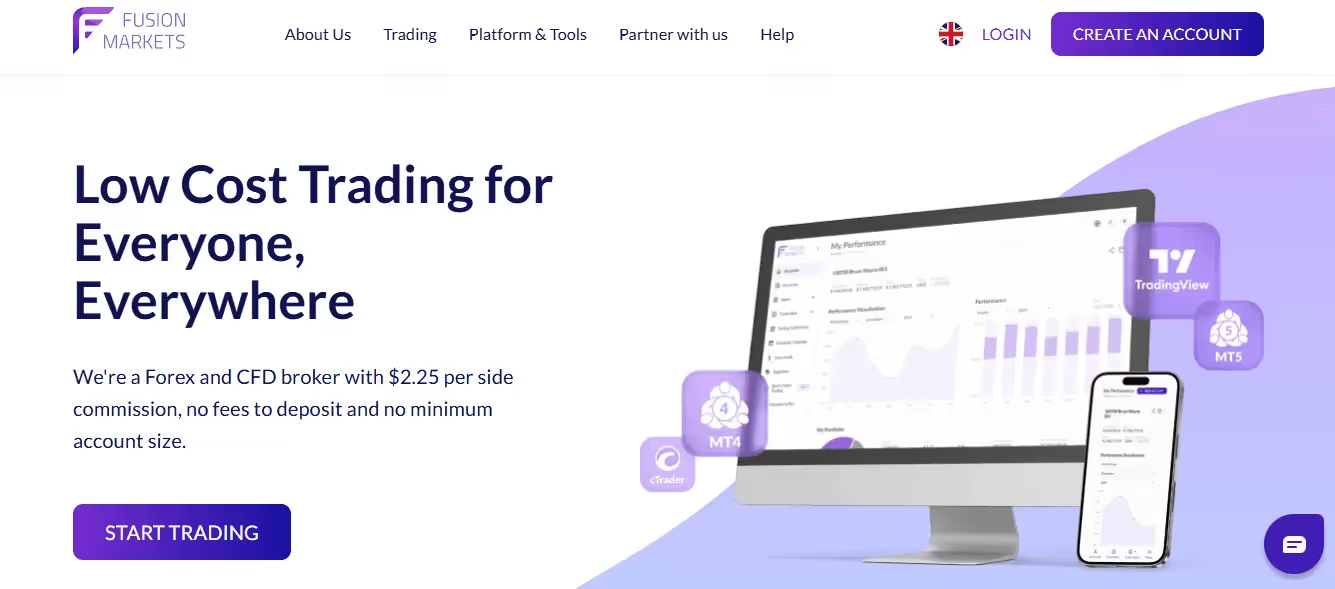
Fusion Markets focuses on keeping trading costs low across account types. Standard accounts carry narrow spreads, while Zero accounts hit near-zero spreads with a modest per-side commission. They offer swap-free accounts for traders who need them, and they do not charge deposit, withdrawal, or inactivity fees.
Pros
- Consistently low trading and non-trading fees, which preserve edge.
- Fast account setup and responsive support.
- Transparent pricing across standard and zero account tiers.
Cons
- The product range is limited compared with multi-asset brokers.
- Only MetaTrader platforms are available, which may frustrate users who prefer alternatives.
3. PrimeXBT
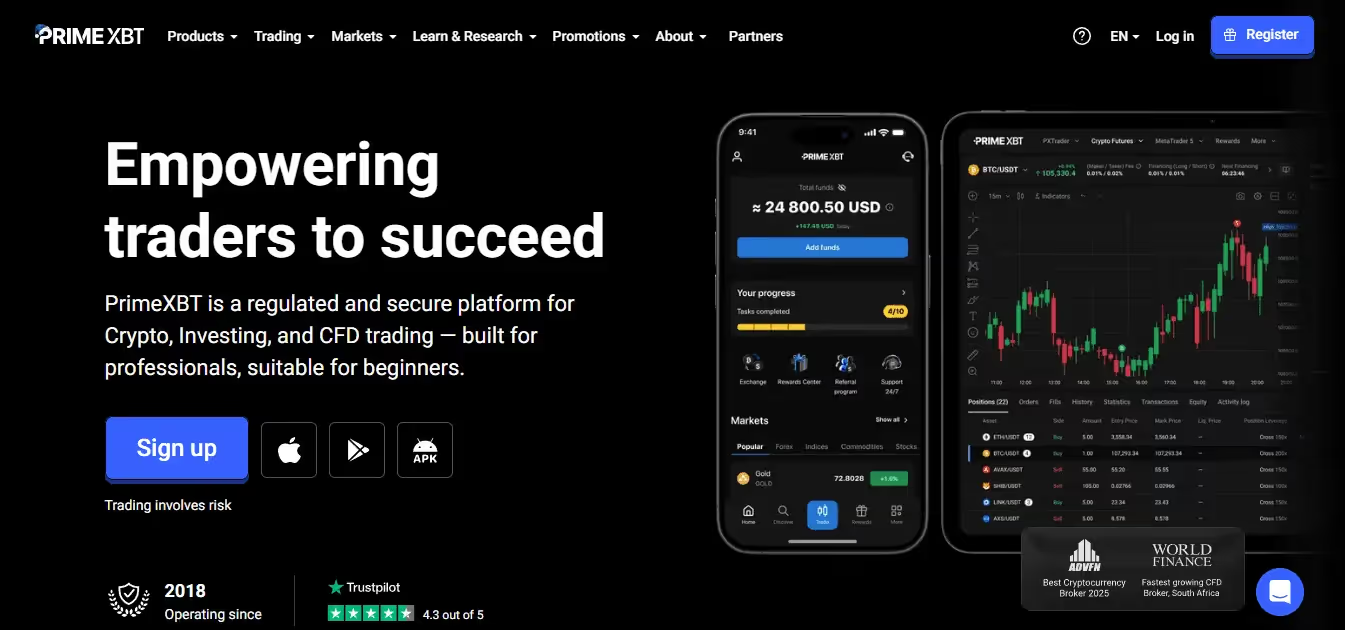
PrimeXBT caters to traders who mix forex and crypto, offering a proprietary copy-trading network with a large pool of signal providers. Educational content is extensive, and the low entry deposit keeps access open. Active traders get volume-adjusted pricing and a rewards program tied to milestones.
Pros
- Strong copy-trading ecosystem and plentiful educational articles.
- Accessible minimum deposit and incentive-driven rewards.
- Competitive spreads for active traders and volume discounts.
Cons
- No support for algorithmic strategy deployment on the server side.
- Proprietary ecosystems can lock you into platform-specific mechanics.
4. Pepperstone

Pepperstone blends low cost with a broad platform selection, including MetaTrader, cTrader, TradingView integration, and a native Pepperstone terminal. They support many currency pairs and thousands of markets overall, with Razor accounts providing raw spreads plus commissions for high-frequency or institutional-style trading.
Pros
- Wide platform support and advanced MT4/MT5 toolkits.
- Strong execution, API access, and social trading options.
- High leverage available in some jurisdictions and excellent trade routing.
Cons
- Demo accounts have a 60-day limit, which can disrupt long validation cycles.
- Some regional pricing and offering differences make comparisons tricky.
5. XM

XM is a long-standing market maker with a low $5 minimum deposit and a massive client base. They offer a long list of instruments, tight spreads on majors, and a loyalty and research program aimed at retail traders who want educational support alongside execution.
Pros
- Low deposit requirement and abundant research plus education.
- Competitive spreads on major pairs and a functional loyalty system.
- Strong regulatory oversight in multiple jurisdictions.
Cons
- Inactivity fees apply if accounts go dormant.
- The market-making model can produce conflicts around liquidity in stressed markets.
6. EightCap
EightCap lets traders choose between standard accounts with commission-free spreads or raw accounts with low commissions and near-zero spreads. Minimum deposits are modest, and trade sizes support micro- to large-lot requirements, with flexible strategy allowances, including scalping.
Pros
- Low entry deposit and ample maximum leverage in eligible regions.
- Clean cost structure and solid technology stack.
- Daily research and concise educational content.
Cons
- Leverage limits and product availability vary by jurisdiction.
- Lower brand awareness than incumbents.
7. FP Markets

FP Markets stands out for sheer asset depth, giving access to thousands of stocks plus dozens of forex pairs. Their hybrid ECN/STP model lets traders choose execution flavour, trading either ECN-style raw prices or smoother STP spreads depending on preference.
Pros
- Exceptional asset selection, especially equities from multiple exchanges.
- Competitive fees and flexible execution models.
- ASIC regulation adds a level of trust for many traders.
Cons
- The Iress platform and some services are geographically restricted.
- Platform complexity can overwhelm new traders.
8. AvaTrade

AvaTrade offers diversified cross-asset trading, a strong regulatory footprint across multiple regions, and a choice between fixed and floating spreads. They provide access to many forex pairs and non-forex instruments, and they package structured education for newer traders.
Pros
- Broad platform support and a large educational academy.
- Multiple regulated entities and sensible cross-asset choices.
- Good for traders who want both forex and non-forex exposure in one account.
Cons
- Trading costs are reasonable but not the outright cheapest.
- Product tailoring by region creates inconsistent feature sets.
9. BlackBull Markets
BlackBull Markets is a low-cost broker offering multiple ECN account tiers for retail and institutional clients. They offer swap-free options, deep leverage in eligible markets, and broad platform compatibility, including MetaTrader and cTrader.
Pros
- Multiple account structures with transparent commissions.
- Extensive platform and third-party copy-trading integrations.
- Large symbol set, especially for CFD traders.
Cons
- Educational resources are thinner than those of some competitors.
- No dedicated, proprietary mobile app for a smoother branded experience.
10. FXCM
FXCM combines an established brand with a diverse platform roster, including MT4, its Trading Station, and new automated tools. They focus on execution transparency with published slippage stats and a rebate program for active traders, while keeping entry simple with a low minimum deposit.
Pros
- Rich platform choices and strong support for algorithmic workflows.
- Deep liquidity and clear execution reporting.
- Competitive environment for frequent traders with rebates.
Cons
- The asset list is compact compared with multi-asset brokers.
- Some advanced tools are limited to specific account types.
11. IC Markets

IC Markets targets cost-conscious active traders with raw spread accounts across MetaTrader and cTrader, plus VPS offerings and MAM/PAMM for managers. Execution and liquidity depth are common reasons traders migrate here.
Pros
- Deep liquidity and low-latency execution, with strong platform support.
- Multiple social trading and account management tools.
- High leverage availability in eligible regions.
Cons
- Minimum deposit is a bit higher than some budget brokers.
- Offering and pricing can differ across regions, complicating comparisons.
12. Tickmill

Tickmill offers classic and raw account structures, with the raw tier aimed squarely at low-cost, pro-level trading. They support algo trading and professional tools and have structured pricing that, in 2025, earned recognition for fee competitiveness.
Pros
- Raw pricing that is highly competitive for active traders.
- Full MetaTrader suite and pro-grade add-ons.
- Support for algorithmic strategies and institutional-grade tools.
Cons
- Narrower asset mix than full-service brokers.
- Removed VIP tier limits some advanced clients' options.
13. Admirals

Admirals provides an upgraded MT4 and MT5 experience through a premium plugin, and they pair competitive pricing with a huge catalogue of equity CFDs and ETFs. Their leverage policies vary by jurisdiction, and they place emphasis on volatility protection and research.
Pros
- Significant equity and ETF coverage and superior MT platform enhancements.
- Low minimums for share trading and broad educational materials.
- Good regulatory footprint in key markets.
Cons
- Forex pair selection is average relative to peers.
- Customer service responsiveness can lag during busy periods.
14. IG

IG is a legacy brand for traders seeking reliable access to major forex pairs with competitive spreads and strong market hours coverage. They excel at share trading tools and extended trading times for certain products, but they do not offer swap-free accounts.
Pros
- Award-winning share trading fees and extended market hours.
- Stable execution and institutional-grade infrastructure.
- Solid education and research services.
Cons
- Spreads can be higher than the lowest-cost alternatives.
- Limited product diversity for traders who need futures or spot crypto access.
15. Axi
Axi emphasizes low trading costs and a strong MT4 experience enhanced by a NextGen plugin for advanced order handling. They support multiple account tiers, including higher-minimum Elite accounts for lower commissions, and they offer a funded trader pathway through partner programs.
Pros
- Low commissions on pro accounts and an advanced MT4 setup.
- Competitive latency and an intuitive copy-trading app.
- Funded trader options through partner routes, and a high profit share in some paths.
Cons
- Recent regulatory issues have created trust concerns in some jurisdictions.
- Platform support is skewed toward MT4 while competitors push MT5 and other terminals.
What should you consider before choosing a broker?
Many traders choose a broker based solely on the spreads and promotions they advertise. But this can lead to hidden costs; early decisions may disrupt your workflow as you grow. This can split data, require manual checks, and create execution differences that erode small advantages. Solutions like funded trading programs bring together rules, automate checks, and maintain consistency, helping traders grow without rebuilding processes each time they change accounts.
What are the everyday trader's needs?
Traders often have two primary needs: lower ongoing costs and the chance to use the exact platforms and tools their systems need. This trend is evident among both retail traders and those seeking a funded trading program. When a platform's features do not align with its strategy, or when surprise fees arise, effective plans can quickly lose value within months.
How to evaluate brokers effectively?
Practical questions to ask before choosing a broker include: Which platforms and account types will keep your edge rather than just offering low headline spreads? How will scaling change your cost structure, and does the broker allow you to test this step by step? Do the broker's rules and trade reporting work automatically with your journal and review process? These questions prompt you to evaluate brokers based on how well they support repeatability, rather than on their marketing.
What is the role of execution nuance?
What many traders overlook when switching brokers is that execution nuances really matter. Factors such as routing, slippage profiles, and how a platform handles orders can significantly affect returns, even if spreads appear the same on paper. Traders have lost their expected advantage because of the differences in a broker’s liquidity providers. The answer is to run a short live sample that matches the exact size and timing of the session you plan to use.
What steps can you take for better comparisons?
To compare effectively, start with a 30-trade live sample at your target size. Log fills, slippage, and any requotes. Use this data to select the account type and broker that best match your plan. This small test helps avoid long, costly migration mistakes.
What does this decision help achieve?
This simple decision helps traders avoid a common emotional trap that keeps coming back. At the same time, it sets up the next move that really matters.
Join Our Funded Trading Program Today - Trade Forex with Our Capital and Keep up to 100% of the Profit
Most traders use their own money to start their first live trading account. When they expand their account without proper limits, mistakes can accumulate, and their confidence can decline. To improve their trading skills, manage leverage, and reduce risk while growing their accounts, they should consider AquaFunded. This funded program is like training wheels for trading in real markets. It lets traders practice making real-time trades without setbacks getting in the way of their progress. Our funded trading program offers the support you need to succeed.
Related Reading
- Best Forex Pairs to Trade During Asian Session
- Best Forex Funded Account
- Top Prop Firms
- Best Prop Firm
- Forex Prop Firms
- Best Forex Pairs to Trade During New York Session
- Best Forex Trading Platform
- Forex Trading for Beginners
- Forex Trading Hours
- Forex Trading Brokers
- Forex Trading Course
- Forex Currency Trading
- Forex Online Trading
- How Does Forex Trading Work
- Online Forex Trading
