




16 Best Forex Trading Platforms for Everyone
Best Forex Trading Platforms: AquaFunded reviews 16 top brokers with detailed pros, cons, and execution tips so you can confidently choose your platform.

Robust trading platforms can shape outcomes, and many Forex Trading Success Stories begin with the right tools. Slow execution, wide spreads, and limited charting may cloud a trader’s edge, making careful evaluation essential. Features like versatile order types, backtesting capabilities, and strong regulatory support ensure a smoother trading experience.
AquaFunded provides real capital, clear guidelines, and a streamlined transition from practice to live markets while enhancing risk management and support. This comprehensive approach helps traders refine their strategies and build confidence, ultimately allowing more consistent performance through AquaFunded’s funded trading program.
Summary
- The forex market's extreme liquidity makes execution quality decisive; global FX turnover reached $9.6 trillion per day in April 2025, so platforms must prioritize low latency, diversified routing, and transparent fills.
- Demo-to-live execution gaps are a common scaling pitfall; most traders discover mismatches in the first 50 live trades, and the article recommends staged scaling, such as 25 percent size for the first 30 live trades and 50 percent for the next 60.
- Survival in FX is process-driven, not heroic, with 90 percent of forex traders losing money and only 10 percent consistently profitable, underscoring the need for strict risk rules and repeatable expectancy measurement.
- Platform selection should solve your binding constraint, not chase features, given that over 70 percent of traders prefer mobile capability and the average trader uses three different platforms to diversify latency and liquidity risks.
- Robust testing and measurement matter; the guide calls for at least 200 trades or a six-month out-of-sample window and backtests that include spreads, slippage, commissions, and latency to avoid overfitting.
- AquaFunded's funded trading account addresses this by providing staged evaluation paths, built-in risk enforcement, and standardized execution metrics so traders can scale strategies under controlled, auditable conditions.
Benefits of Forex Trading
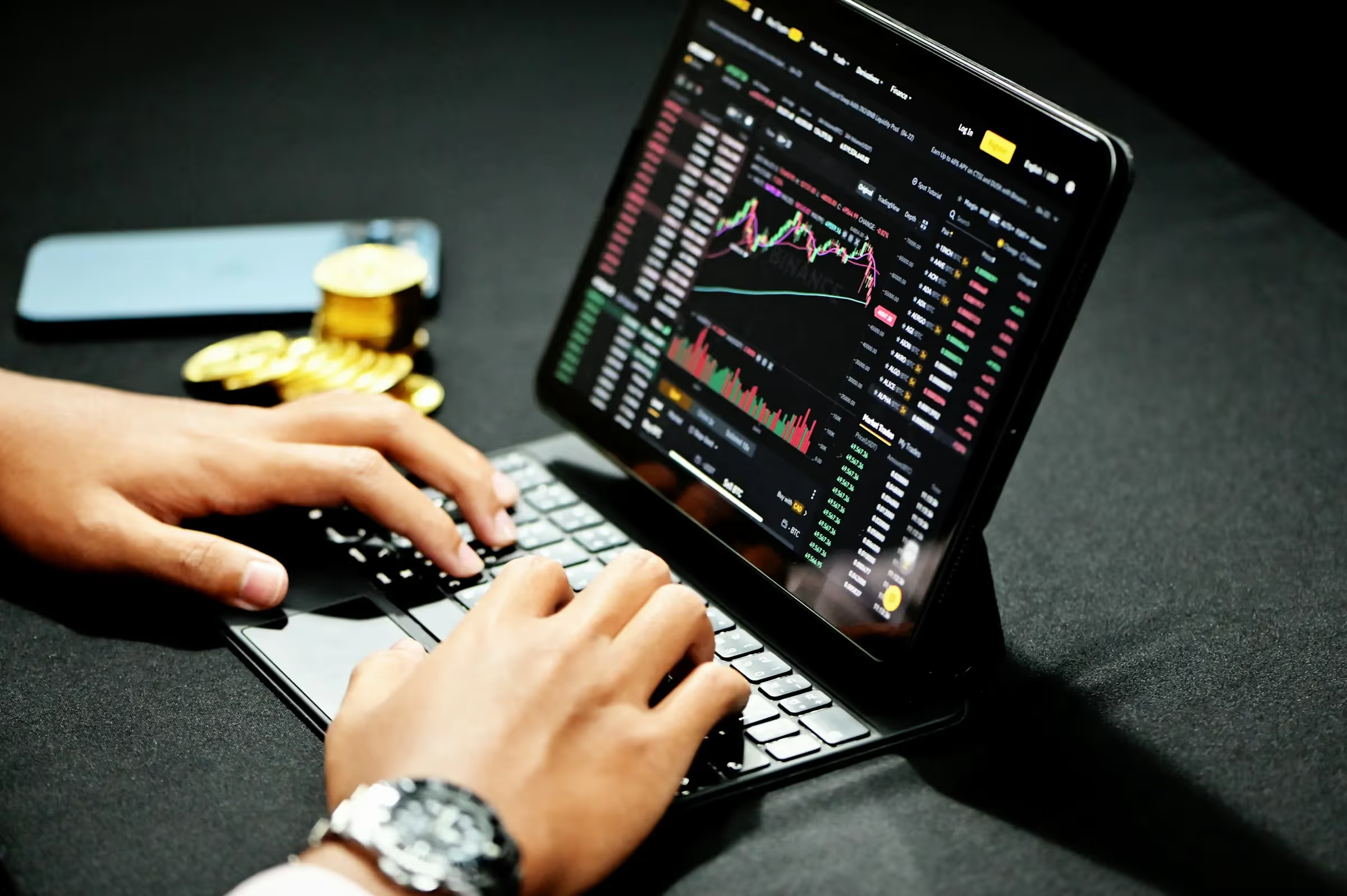
Forex trading provides tangible benefits that you can use right away: flexible hours, low startup costs, deep liquidity, and tools that help you make money whether prices go up or down. With access to leverage, hedging tools, narrow spreads, and a supportive learning community, this market is ideal for active traders committed to success. If you're interested in maximizing your potential, consider our funded trading program to help you get started.
1. Flexible Trading Hours
Most traders see time as a key advantage: because forex is open all day, five days a week. This means you can trade during your morning routine, after work, or when important news comes out in different regions. The trading sessions switch from Sydney to Tokyo, then to London, and finally to New York.
This setup allows you to respond immediately to political developments or economic news without waiting for an exchange to open. It also helps people who are balancing work, family, and other commitments find time to trade. However, pay attention to your broker’s weekend rules, as some may limit instruments or increase spreads on Saturdays and Sundays.
2. Low Barriers to Entry
New traders often start with small capital, growing from there. Many brokers accept very modest initial deposits and provide demo accounts for practice.
You can open an account with just a few dozen dollars and test strategies on a demo account equipped with charting and order types. This approach allows traders to scale up as they prove their edge. Such a gradual path lowers both psychological and financial friction. Therefore, the best forex trading platform for you is one that combines low upfront costs with strong education, transparent pricing, and reliable order execution.
3. Profit Potential from Both Rising and Falling Markets
Trade direction does not limit opportunities in FX; you can buy a currency pair if you think it will go up, or sell if you think it will go down. This flexibility helps you create strategies for different market conditions, including trending markets, range-bound moves, or event-driven swings.
Many platforms provide options for short positions, options, and forwards, allowing you to adjust your risk based on your goals, ranging from conservative hedges to quicker directional bets. The options you choose depend on your time frame and how much risk you are comfortable taking.
4. High Liquidity Market
The depth of the forex market makes it easy to enter and exit positions with minimal slippage, especially in major pairs. This liquidity leads to smaller spreads and cleaner trade execution. Global activity is vast; the 2025 Triennial Central Bank Survey reports that global FX trading reached $9.6 trillion each day in April 2025. This demonstrates why large orders move quickly without changing prices.
Therefore, the best forex trading platform focuses on execution speed, competitive spreads, and routing to multiple liquidity providers. This ensures that your trades hit market prices instead of stale quotes.
5. Leverage
Leverage lets you control larger positions with less money. It can make your returns much bigger when you make the right choices, but it can also increase your losses when you make mistakes. Use leverage carefully: set your position sizes based on how far your stop-loss is, how much money you have in your account, and the chances of success of your strategy. Don't set them based on how big you want your profits to be.
For better risk control, combine leverage with strict stop orders and a rule-based sizing method. This way, if there's a big market move, it won't wipe out your account in just one session.
6. Hedging With Forex
Hedging with forex gives companies and traders a way to set rates and stabilize cash flows. Retail traders can also use these tools to lower their exposure. Forward contracts set a rate for a future date, while options give the right, but not the duty, to trade at a certain price. Moreover, futures provide standardized, exchange-traded protection that is easily transferable.
For businesses that earn foreign revenue, a forward contract or option can change earnings into predictable domestic currency values.
For traders, these tools help limit downside risk while still allowing for upside potential.
7. Low Trading Fees
Major pairs have high liquidity and intense competition among brokers. This leads to tight spreads and often low, clearly presented fees. Traders can expect their total costs, including spreads and commissions, to be competitive with those for stocks or options.
This is especially helpful for traders using a platform known for tight pricing and fast order routing. It's important to choose platforms with clear fee structures and real-time execution metrics to prevent fees from eroding your profits.
8. Active and Supportive Community
An engaged community accelerates learning in the FX space by providing abundant resources, including forums, webinars, and mentorship. Traders actively share trade ideas, chart setups, and post-mortems, thereby shortening the learning curve.
Platforms that offer copy trading, structured education, and in-platform analytics allow users to test concepts without starting from scratch.
These practical support systems are integral to what defines the best forex trading platform: convenient charts, social proof, and analytics that transform experience into repeatable methods.
What are the risks of manual risk management?
Most traders manage risk and position sizing using spreadsheets and mental checklists because these methods are familiar and cost-effective. However, as accounts grow and trade frequency increases, these manual checks can consume significant time and lead to errors. This can cause missed opportunities and inconsistent execution. Platforms like Funded Trading Account centralize risk rules, automate position sizing, and provide execution telemetry, which reduces the need for manual checks.
This automation helps traders scale disciplined processes while maintaining audit trails.
How does liquidity impact trading performance?
Liquidity can show up in unexpected ways. Daily transactions can reach massive amounts, reflecting how much the market is moving, with Dukascopy Bank SA reporting daily transactions exceeding $6.6 trillion. This highlights the importance of strong execution quality and routing, especially when handling larger amounts.
Consider this scale as both an opportunity and a constraint: select platforms that offer deep liquidity, provide real-time fills, and offer clear analytics. These features assist you in figuring out if your execution is adding or taking away value.
What should traders prioritize in their trading process?
Developing a trading process is like tuning a race car instead of just buying one. The platform you use and the fees matter, but what really affects lap times is your consistent practices, strict risk rules, and execution quality.
What habits lead to consistent profits?
That advantage is only the beginning. The real test is about building habits that change access into consistent profits.
10 Tips for Forex Trading Successfully

You can trade Forex successfully, but it takes a disciplined process, repeatable rules, and honest measurement of whether your edge actually works. Below are ten clear steps focused on practice that build on the basics you already know. These steps will help you create a daily routine you can follow. Additionally, considering a funded trading program can enhance your trading experience and provide additional resources.
1. Embrace risk management with precise sizing.
Position sizing is not just guesswork; it is a math problem that you need to solve before placing an order. First, decide on a fixed percentage of equity to risk with each trade. Next, convert that percentage into currency per pip using your stop distance.
Then size the lot so that a stop hit equals the preset loss. Track two things every week: account risk and maximum drawdown. Stop trading if the drawdown is more than the agreed limit until the plan is fixed. Treat your risk rule like a contract; if you break it, see that as a major failure to address, not an acceptable mistake.
2. Define repeatable expectancy, not superstition
Measure your edge by tracking average win, average loss, win rate, and resulting expectancy over at least 200 trades or a six-month sample, whichever comes first. Use that data to objectively determine whether your system yields positive expectancy. If the math shows a negative expectancy, change the system; do not double down. Testing has shown that traders who relied solely on intuition maintained a negative expectancy until they adopted measurable rules and iterative fixes.
3. Run disciplined backtests and out-of-sample checks
Run disciplined backtests and out-of-sample checks. It's important to backtest with realistic assumptions. This means you should include things like spreads, slippage, commissions, and execution latency. Set aside a real out-of-sample period or walk-forward window to avoid fitting your model too closely to past data.
Keeping a record of parameter changes and how the performance changes after each tweak helps you see which adjustments really made things better in terms of robustness rather than making them more fragile.
4. Keep a trading journal that speaks numbers and emotions
Record each trade with entries for rationale, setup, size, stop, take-profit, outcome, and a brief emotional note. Review the journal weekly to spot and label ongoing issues.
For example, look for patterns like chasing entries after a series of losses or adjusting stops on profitable trades. This practice helps traders turn feelings into fixable process changes. It helps to close small behavioral leaks before they sink an account.
5. Specialize, then diversify within your lane.
Master a narrow set of pairs and timeframes until your execution is mechanically consistent. Then, add correlated or complementary pairs to spread idiosyncratic risk.
Specialization speeds up pattern recognition, while limited diversification helps smooth out equity swings. A focused approach ensures the best trading platform is one that provides deep, reliable fills and advanced charting for the few instruments that you trade most.
6. Use volatility-based sizing and stop placement
Use volatility-based sizing and stop placement. Set stops using a measure of volatility, like Average True Range (ATR), which helps your stop show the current market activity. It’s important to size your positions so the dollar risk stays the same, even when the market becomes more or less volatile.
This helps keep your mental stress steady as the market changes. For example, when ATR increases, widen your stops and reduce your lot size accordingly, instead of giving up on your plan or taking your stops away entirely.
7. Practice robust transition from demo to live
Practice a strong transition from demo to live. When you move from demo to live trading, gradually increase your real capital. Start with 25 percent of your target size for the first 30 live trades. Then increase to 50 percent for the next 60. Only use full-size after you meet specific performance goals.
Live trading comes with execution friction and emotional stress, so careful scaling helps to show hidden issues without putting your whole account at risk. Most traders notice the difference between demo fills and live fills in their first 50 real trades, so it's important to plan for that time.
8. Automate what is repeatable, monitor what is not
Automate what is repeatable and keep an eye on what is not. You should automate things like position sizing, stop placement, and basic risk controls. This helps to remove decision fatigue.
However, it's important to have human oversight for discretionary filters and major events. Automation can help avoid late entries and inconsistent sizing, but it might not work properly if logs, fills, and live execution quality are not checked every day. Create simple alerts to let you know when an automated rule is not working as it should.
9. Match session selection to your strategy tempo
Match session selection to your strategy tempo. Choose the market hours that fit your trading method and personal schedule. Make a strict rule to only trade during those hours.
For example, if you focus on momentum during the London-New York overlap, create a firm rule against trading during the quieter Asian sessions, except for certain setups. Being consistent with your timing helps remove a major source of mistake-driven trades and decreases the urge to trade out of boredom or revenge.
10. Make learning a measurable habit
Make learning a measurable habit. Set monthly learning goals that are linked to specific metrics: test one new idea in a sandbox for 30 trades, read one study each month, or aim to reduce average loss by X percent in 90 days through tighter execution.
After working with traders who shift from fast, noisy markets like crypto to FX, a clear pattern emerges: those who commit to small, measurable experiments improve faster than those who consume endless theory without testing it.
What hidden costs do traders face?
Status quo disruption presents a hidden cost and a practical bridge. Most traders manage risk and growth using spreadsheets and manual checks because this approach is familiar and appears cost-effective. At first, this method may work, but as traders grow, spreadsheets can become messy.
Execution rules may get overlooked, and stress builds up, turning neat plans into chaotic screens.
Platforms like AquaFunded provide instant account access with built-in risk rules and standardized execution parameters. This reduces operational noise, allowing traders to improve their strategies faster and focus on the measurable improvements that matter.
What Hard Truths Should Traders Accept?
Hard truths must be accepted in trading. According to David_Perk, "90% of forex traders lose money." The market is unforgiving for those without a straightforward process. Additionally, David_Perk, "Only 10% of traders are consistently profitable." highlights that consistency, rather than heroics, leads to success.
Treat these facts as guardrails, as they indicate where to focus efforts. Prioritize repeatability, risk control, and honest measurement in your trading approach.
What final checklist should traders follow?
A final practical checklist for traders includes the following step: calculate position size using a volatility stop and a fixed percentage risk.
Log every trade with a one-line lesson and review weekly.
Run a 200-trade backtest or conduct a six-month forward sample before scaling.
Automate sizing and stops, monitor daily fills, and scale into live capital in stages.
How can AquaFunded assist traders?
Turn your trading skills into substantial profits without risking your own money. AquaFunded gives you access to accounts of up to $400K, with the most flexible trading conditions in the industry. Traders enjoy no time limits, easy profit targets, and up to 100% profit split.
You can join their funded trading program for quick access or choose a customizable challenge path. Start trading today with instant funding options, or show your skills through their challenge paths and keep up to 100% of what you earn.
What should traders expect when facing challenges?
That simple framework works until unexpected problems arise that most guides overlook. At that moment, everything changes.
Related Reading
- Forex Trading Success Stories
- Pros and Cons of Forex Trading
- Is Forex Trading Profitable
- How Many Forex Trading Days in a Year
- Forex Secrets
- How to Trade Forex With $100
- Day Trading vs Forex
- Forex Tax Rate
- Is Forex Closed on Christmas
- How to Use ADX Indicator for Day Trading
- Best Time Frame to Trade Forex for Beginners
- Is Forex Trading Hard
- Risk Management in Forex Trading
- Scalp Trading Forex
- Forex Trading Account Types
16 Best Forex Trading Platforms for Everyone
These 16 platforms cover every practical route a trader might take, from social copy-trading and beginner-friendly apps to raw-spread ECN providers and bank-grade custody.
Below, I list each platform with a fresh, practical description along with concise pros and cons. This way, you can match features to your style and stage.
This selection aligns with curated roundups like Myfxbook, "16 Best Forex Trading Platforms for Everyone", and insights from S&P Global Ratings.
1. AquaFunded
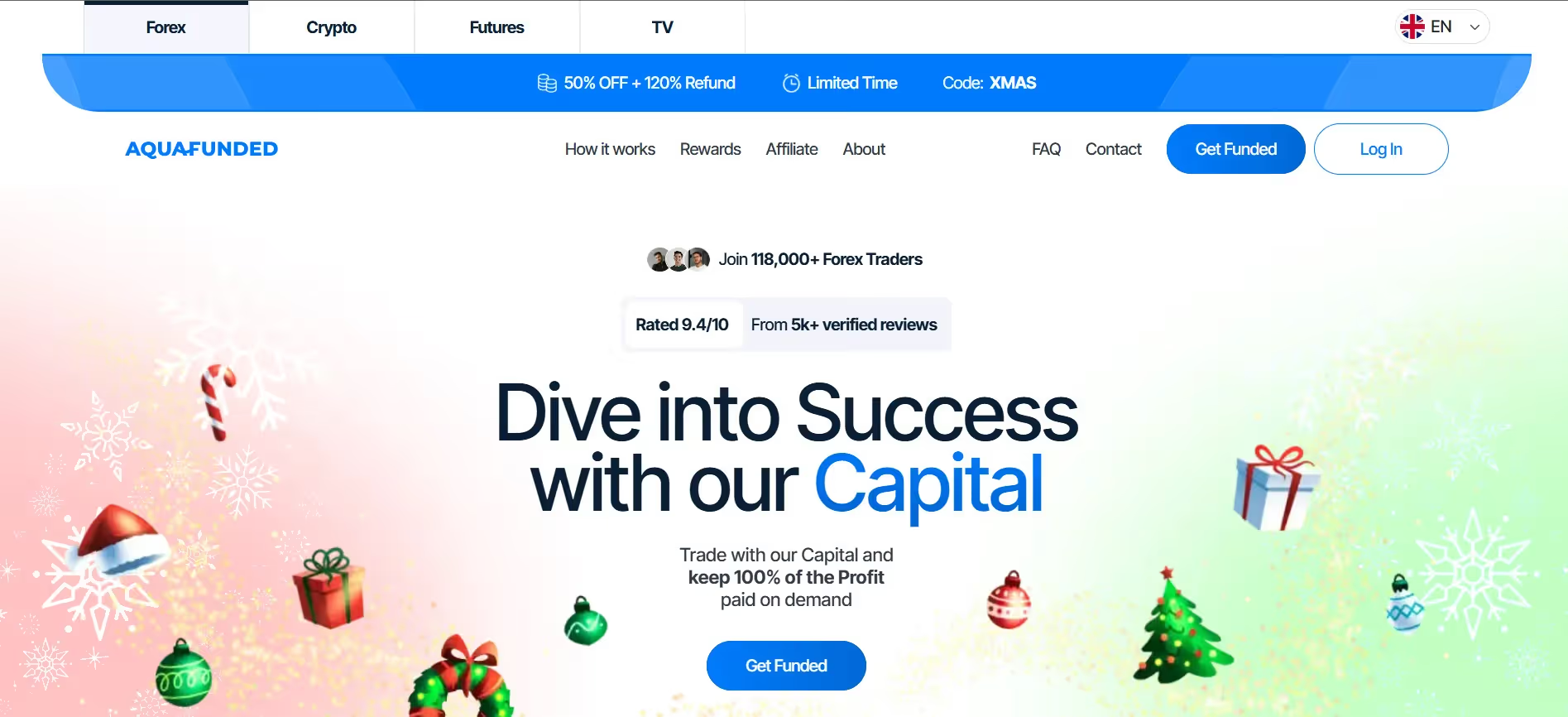
AquaFunded Description: A funded trading program that gives skilled traders access to institutional-style accounts without needing their own money. It uses step-by-step evaluation paths and standard risk rules to create a controlled environment for traders who want to test strategies on larger balances quickly.
2. IG Markets
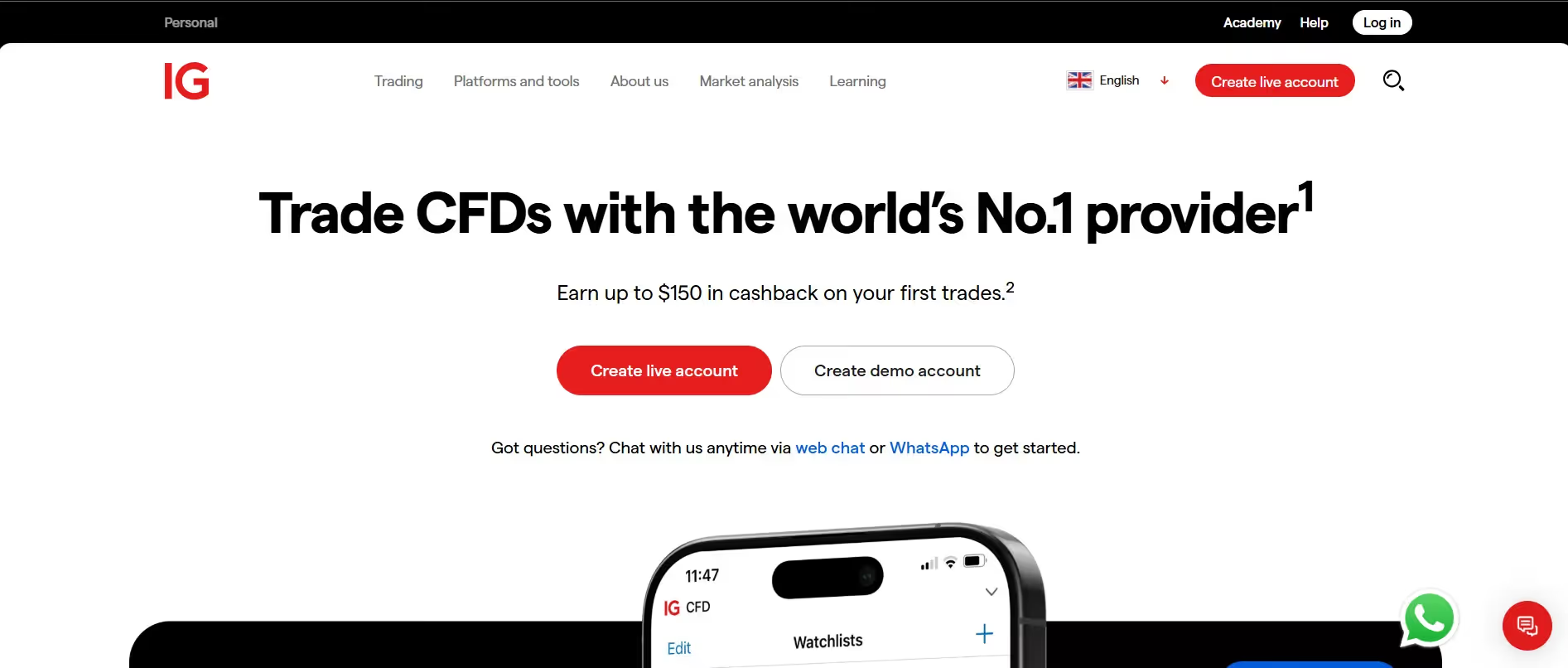
IG Markets Description: IG Markets is a well-known global broker that has its own desktop and web platforms. It also connects to MT4. This broker is known for covering a wide range of markets and providing professional research, making it suitable for traders seeking institutional reports and advanced charts in one place.
- Deep regulatory coverage and top-notch research
- Powerful charting and order types on the native platform
- Wide instrument set beyond FX.
- Some advanced features need larger deposits.
- The interface can feel complicated for new traders.
3. FOREX.com
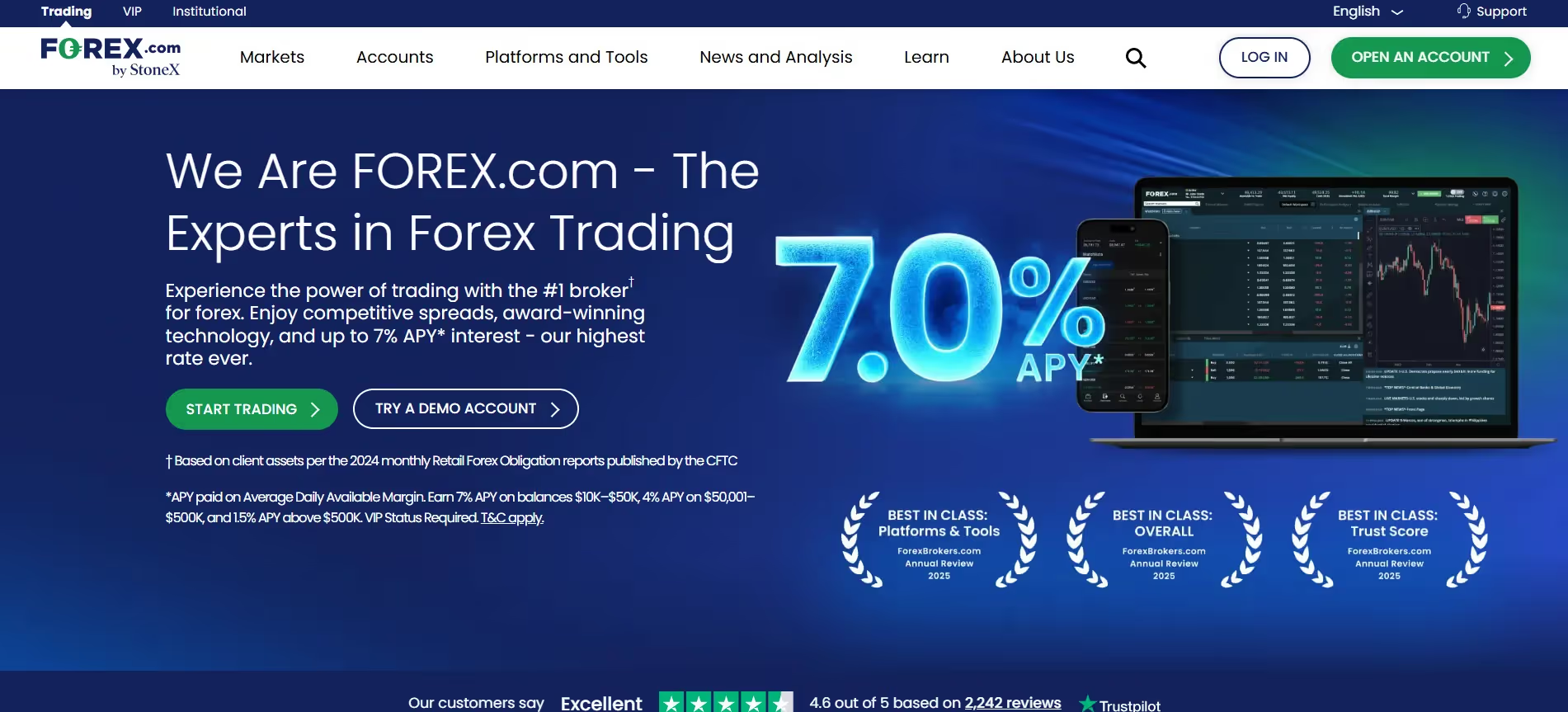
FOREX.com is a forex broker. It offers its own good platforms and also supports MetaTrader. The broker emphasizes execution and data-driven analysis, which is excellent for active retail traders. This makes it a good choice for those who want a specialist’s toolset without the distraction of trading many different assets.
- Focused FX features and analytics
- Strong execution and trade reporting
- A limited range of non-forex products
- Standard account pricing can be less competitive for high-volume traders.
4. Pepperstone
- Very tight spreads and fast fills
- Multiple pro platforms and API access
- Suitable for algorithmic and high-frequency methods.
- A wide array of platforms can overwhelm newcomers
- Less in-house research compared to large banks.
5. IC Markets

- Raw spreads from near zero on major currency pairs
- Strong execution and liquidity
6. OANDA
Description: OANDA is a clear and focused broker that offers flexible trade sizes and strong analytics. It is made for traders who want predictable pricing and good regulatory oversight. This platform works well for careful traders who value data and rules.
- Flexible lot sizing and clear fees
- Excellent analytics and reporting
- Solid regulatory standing.
- Spreads can widen during quick-moving events.
- The range of assets is smaller compared to some multi-asset venues.
7. Saxo Bank
- A sophisticated trading platform and analytics are available through the AquaFunded blog
- Extensive instrument coverage worldwide
- Strong global regulation and reporting. On the downside, there are challenges like high minimum balances and fees for smaller accounts, which can make it too much for casual or part-time traders.
8. eToro

- Great copy-trading and community features
- Very easy to use for beginners
- Spreads are wider compared to ECN venues
- Limited advanced order types and analytics
9. Interactive Brokers
- Very low trading costs when trading in large amounts
- Wide global market access and advanced order options
- Hard to learn, complicated interface
- Not designed for casual mobile-first traders
10. FP Markets

- Raw ECN pricing and support for multiple platforms
- Fast execution and clear commissions
- Some platform designs feel outdated in certain areas
- Research and education features are limited
11. XM

- They have a strong education program and low minimum deposits.
- There are multiple account options that fit different experience levels.
- Their dependence on MetaTrader limits the variety of platforms.
- The quality of trade execution is average when compared to raw ECN brokers.
12. AvaTrade
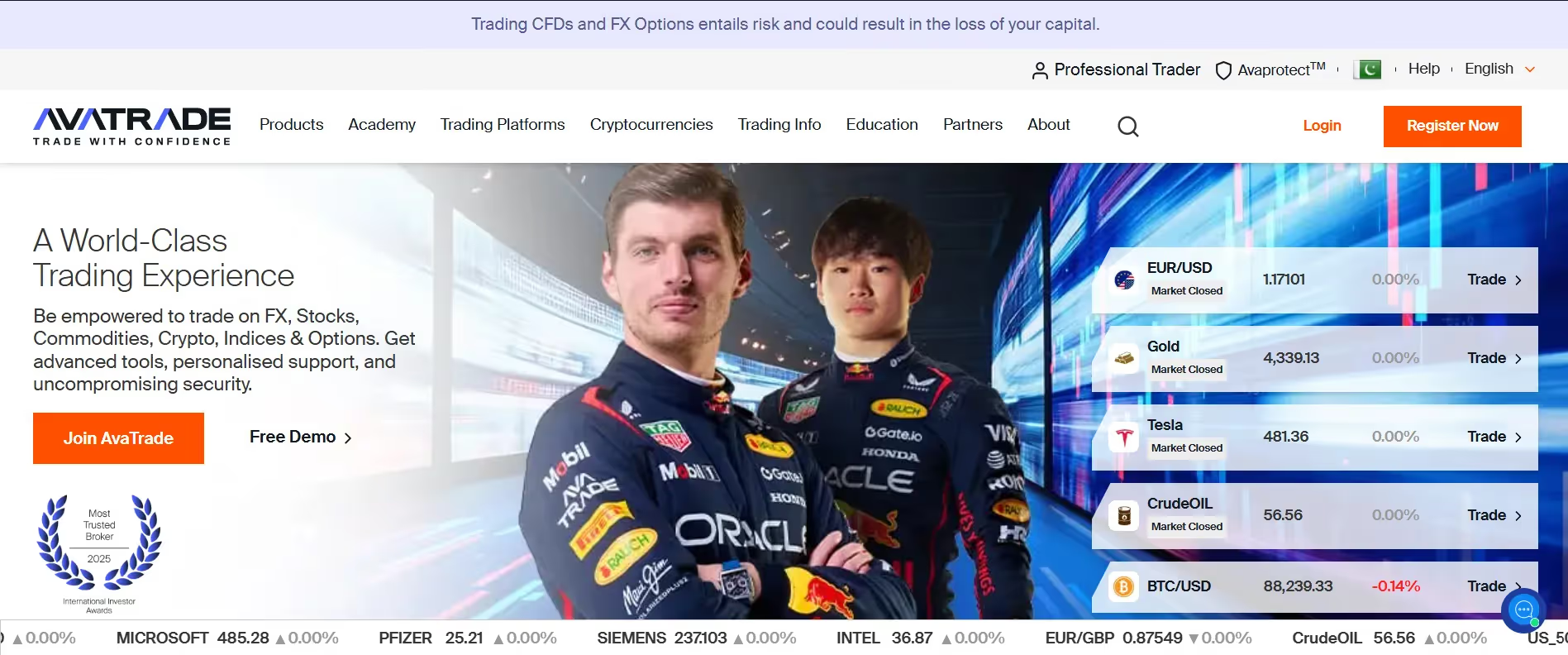
Description: A balanced broker offering fixed-spread options, copy trading, and several platforms, including MetaTrader and native apps, positioned for traders who want straightforward risk tools and simple account structures.
- Fixed-spread choices and risk-management features
- Copy trading support and beginner-friendly tools
- Multiple platform options
- Not as competitive on spreads for high-frequency traders
- Limited deep customization for advanced algos
13. XTB
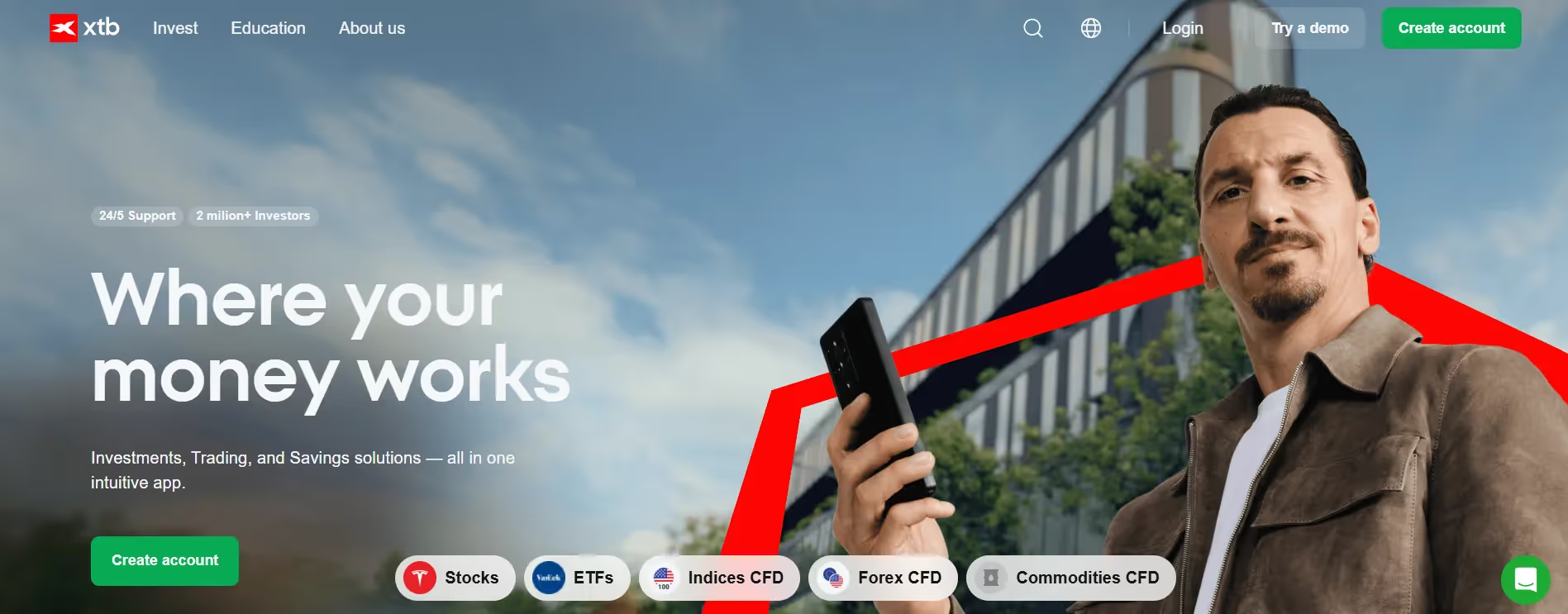
XTB is a broker known for its polished proprietary platform, xStation. It provides excellent mobile charting and integrated education, making it a strong choice for traders who value a modern interface, solid regulation, and strong customer service.
- High-quality proprietary platform and mobile user experience
- Strong educational and analytic content
- Limited third-party platform support
- Fewer options for advanced platform customization
14. easyMarkets
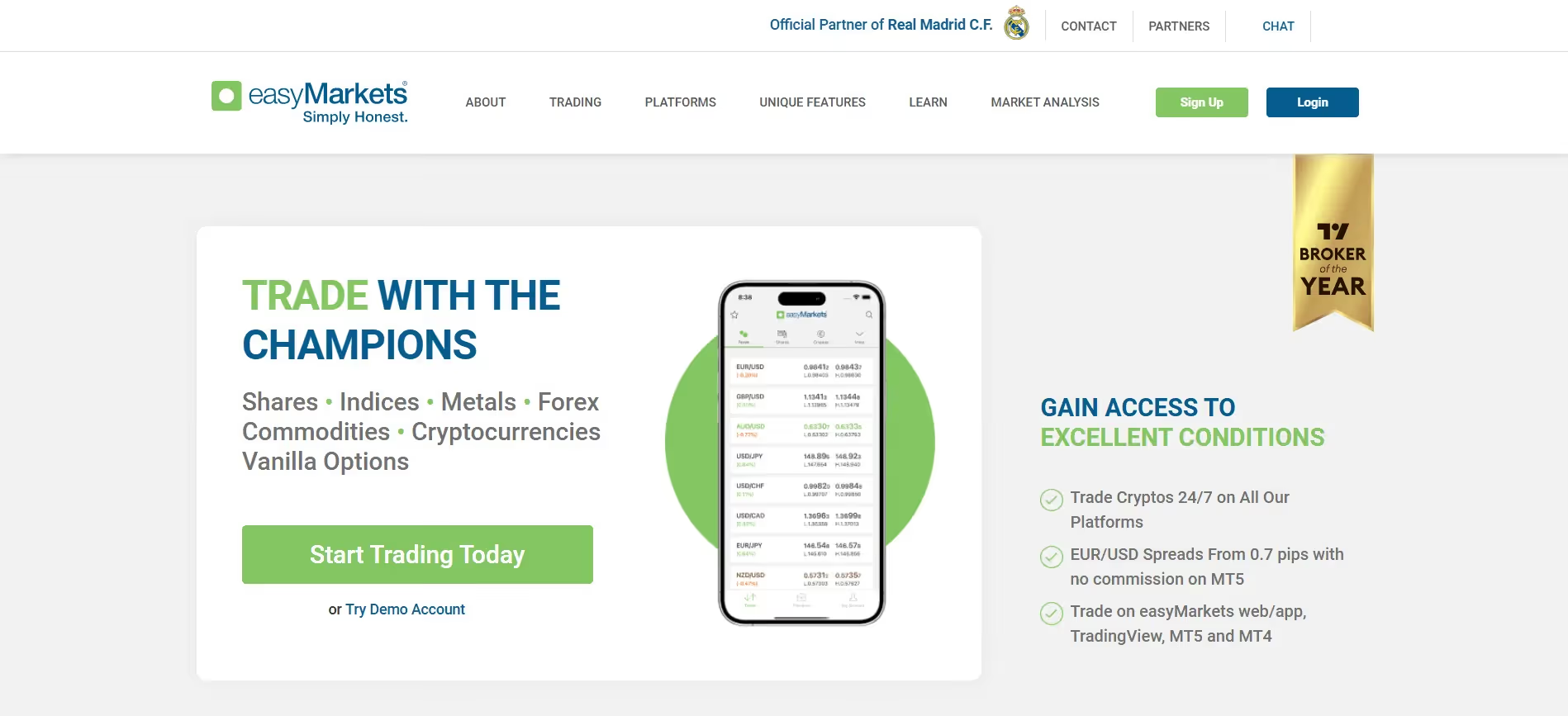
easyMarkets is a platform aimed at regular users, made to be simple and to have better risk controls. It has features like guaranteed stops and fixed spreads. These features are great for traders who want protection from catastrophic slippage and a clear understanding of costs.
- Guaranteed stops and fixed-spread options
- Easy-to-use protective tools for regular clients
- Limited currency pair options
- Not the best choice for advanced trading strategies or high-frequency trading.
15. Swissquote
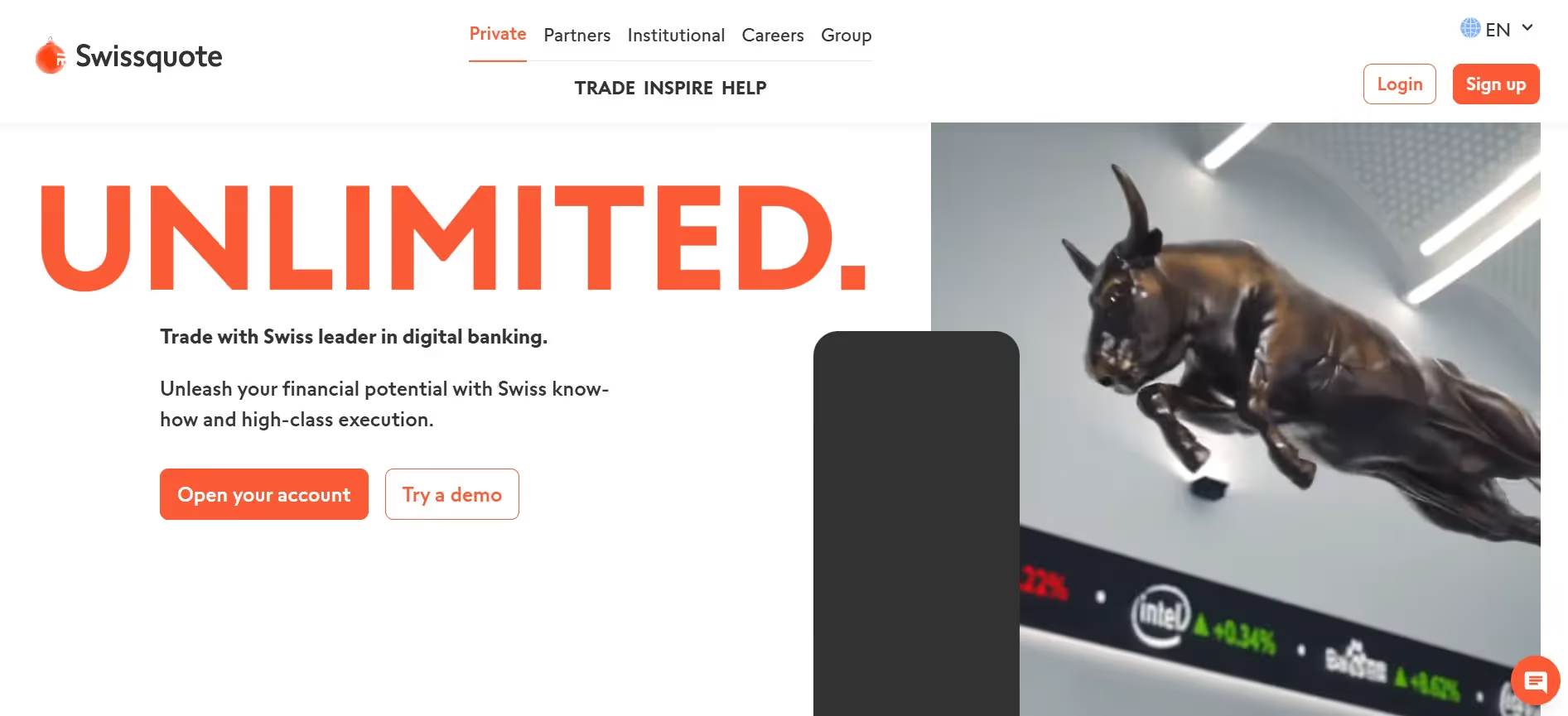
- Bank-level custody and compliance
- Strong research and reliable execution
- Higher fees for active traders
- Better for experienced investors
16. ZuluTrade
- Strong copy-trading system across brokers
- Good transparency in performance and adjustable risk
- Results depend entirely on the signal providers chosen
- Fee structures differ by broker and strategy, which makes cost comparisons hard.
How should traders select a platform?
Most traders start on one or two platforms before trying out specialists. This makes sense until things get complicated. The standard approach is to manage several demo accounts and spreadsheets since it does not require learning new processes. While this method works at first, as strategies grow, differences in execution and mixed risk rules can slow things down and waste time.
Both teams and individual traders find that funded trading program and platforms with automated risk management, such as funded-account services, help shorten trial cycles. This lets them concentrate on getting better rather than dealing with accounting issues.
What is the key takeaway in choosing a platform?
When choosing a platform, it is important to match its strengths with your most important needs, instead of just picking features you like. If latency or raw spreads are your main concerns, focus on ECN providers and direct liquidity access. On the other hand, if education and social proof are what matter most to you, choose platforms that have strong learning options and copy-trading systems. For those looking for regulatory certainty and custody, it's best to pick bank-backed or well-regulated brokers that provide clear reporting.
This needs-first approach helps you avoid going after attractive features that don't really solve your true limitations.
What will the next section cover?
The next section will show how to change these platform features into a choice that fits your time, capital, and trading temperament.
What unforeseen challenges may arise?
That simple choice may feel decisive now, but the real trade-off you did not expect will change everything.
Related Reading
- Forex Algo Trading
- Types of Forex Trading
- Forex Trading Spreads
- Forex Market Liquidity
- Forex Mini Account
- Forex Price Action Trading
- Forex Hedging Strategies
- Forex Trend Indicators
- Advanced Forex Trading
- Best Forex Pairs for Scalping
- London Session Forex Pairs
- Best Currency Pairs to Trade for Beginners
- Minor Currency Pairs
- Best Time to Trade USDJPY
- Forex Swing Trading Signals
How to Choose the Best Forex Trading Platform
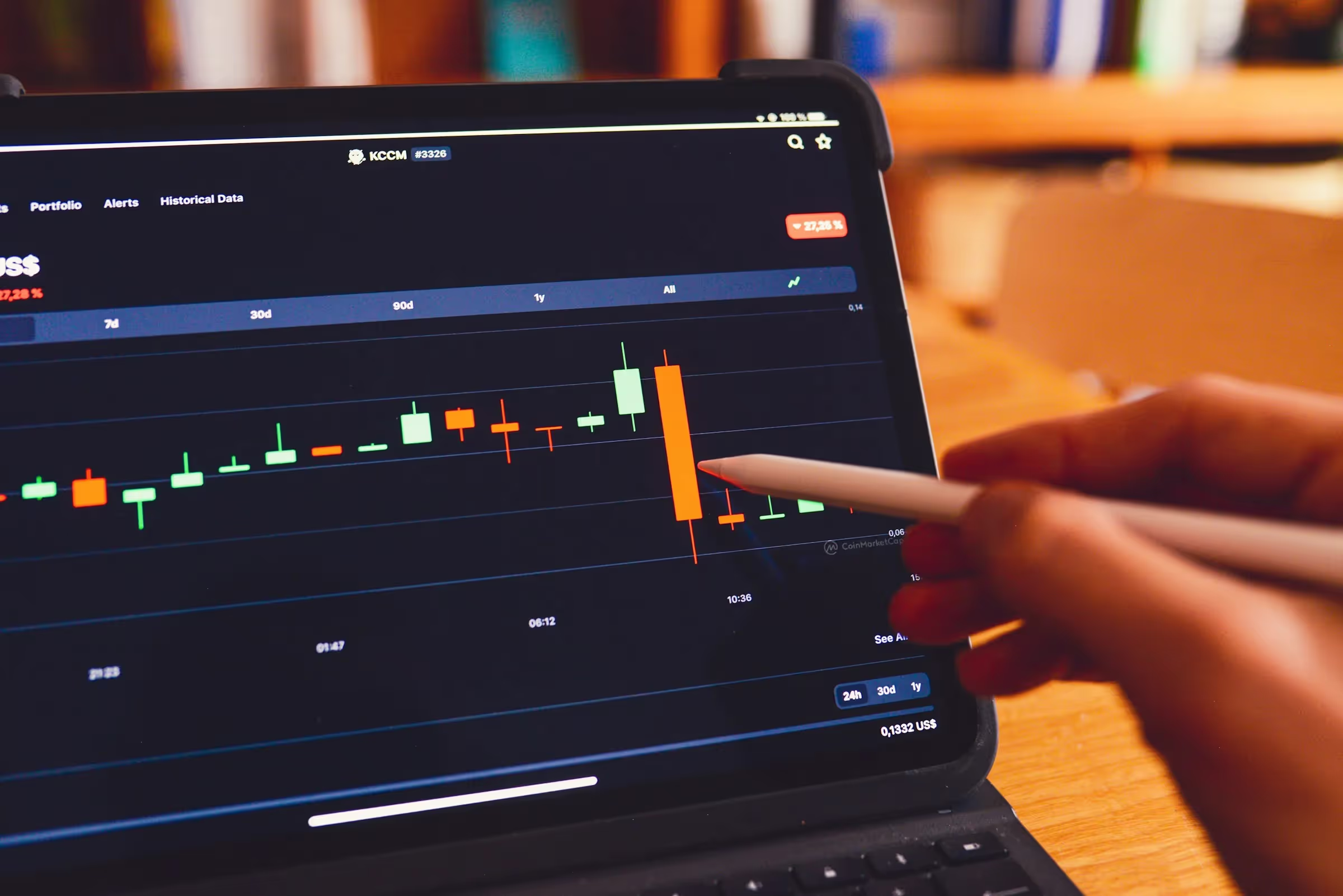
Choose a broker by looking at real facts, not just promises. Check their legal status, run simulations on capital movements, assess actual execution, and put the platform to the test under the exact conditions where you want to trade.
Here are nine useful checkpoints, each translated into specific actions to guide your research and complete in days, not months.
1. What are regulatory compliance and custody practices?
.First, request the registration numbers, the exact names of the regulators, and the legal entity that will safeguard your funds. Then, check those details on the regulator’s public register. Look for written evidence that client funds are kept separate and remain available in the event of insolvency. Also, ask for recent auditor summaries or proof of trust accounts.
Be cautious if you receive vague answers, encounter outdated licenses, or notice a corporate structure that routes custody through unclear affiliates.
2. How to evaluate leverage terms and margin mechanics?
Leverage terms, margin mechanics, and downside protection are critical components to understand. Read the margin schedule and margin call policy line by line. Model three losing scenarios based on current volatility to see if your account would be liquidated.
Ensure negative balance protection is documented, and verify whether leverage tiers differ by jurisdiction or instrument. The test is simple: simulate a 3x adverse move and see exactly when the broker will close your position and how margin calls are communicated.
3. What are the real costs of trading?
Real cost of trading: spreads, commissions, and execution slippage. Request time-stamped fills for live accounts and compare those fills to top-of-book quotes during news events and quiet hours. Ask for average spread and worst-case spread tables for the last 30 trading days. Measure average slippage on market orders.
Price alone is meaningless unless you know how often the broker actually achieves it under stress. For those interested in improving trading outcomes, our funded trading program offers a structured way to access resources and optimize your strategies.
4. How to assess deposits and withdrawals?
Deposits, withdrawals, and reconciliation friction. Open an account and deposit a small real amount. Then withdraw it, timing each step and noting fees, verification delays, and the banks in between. Check multi-currency funding options and see if the broker gives you credit in your chosen base currency or changes it upon receipt.
A good broker will show withdrawal processing times and keep a clear fee schedule. If you find hidden wire fees or unclear conversion charges, those problems become more important than the main spreads.
5. What should you consider for a trading platform capability?
Trading platform capability and API access: Evaluate the platform using the same setups you plan to trade, like automated scripts, OCO orders, complex brackets, or chart-based alerts. Important points to check include backtesting fidelity, order types parity across desktop and mobile, and whether the platform gives trade receipts with exchange timestamps. Mobile parity is crucial because over 70% of traders prefer platforms with mobile trading capabilities, as noted in a report by Akhbar Forex.
This preference can create execution risk if the mobile app cannot place the same orders as the desktop version. Also, confirm the API rate limits and latency guarantees if you plan to automate strategies.
6. What trading hours and session rules apply?
Understanding trading hours, session rules, and specific times for different instruments is essential to successful trading. Plan your trading around each instrument's hours. This includes paying attention to rollover times, weekend maintenance periods, and any daily times when certain exotic pairs might not be liquid.
Make sure to ask your broker about their policies for extended hours and off-book fills. Also, check if spreads get wider or if certain pairs are restricted during rollovers and holidays. If you are trading pairs that cross different time zones, it's important to find out how the broker timestamps fills so that they match your strategy’s signal windows.
7. How to evaluate the depth of the market and the available currency universe?
Depth of market and available currency universe. Count how many pairs are available, but also check the depth by placing small test orders to see how prices change. For exotic pairs, confirm who offers liquidity and if the broker re-quotes or connects to different liquidity providers. Many traders choose to spread their trades across different platforms.
As noted in Akhbar Forex, "The average trader uses 3 different platforms to diversify their trading strategies." Be ready to split your trades when one platform can't provide enough depth or speed.
8. What education and analytics should you expect?
Education, analytics, and performance data you can trust are very important when picking a trading program. Don’t accept marketing webinars as real education. Look for clear learning paths and practice areas with historical tick data for backtesting.
Open, clear performance leaderboards should also be important; they should show details such as slippage and drawdown. Choose providers that share raw trade logs from sample strategies, so you can check their claims instead of just trusting them.
9. How to test customer support responsiveness?
Test support by assessing responsiveness, escalation handling, and evidence for disputes. Ask Tier 1 and Tier 2 questions during both live hours and off-hours, and keep track of how long it takes to get responses through different channels. Request documentation on SLAs for trade issues, payment disputes, and platform outages. Keeping a short log of each support interaction is very important because the difference between a good broker and a bad one often depends on how quickly they solve a failed fill or a stalled withdrawal.
What is the importance of a structured approach?
Most traders handle this by juggling demo accounts and manually checking, since it seems simple and free. This method might work at first, but as positions increase, execution rules can break down, reporting can become inconsistent, and reconciliation eats time. Platforms like funded trading programs bring rules together, automate risk enforcement, and offer standardized evaluation tracks. These features shorten the trial-and-error phase while maintaining audit trails.
How to stress-test a broker?
Use the following checklist as a guide to test a broker within 72 hours: open the account, put in a small live amount of money, submit scripted orders on both desktop and mobile platforms, ask for fills and timestamps, and take out your test funds.
Evaluate the broker’s responses and transaction receipts as your main data points, instead of relying on marketing brochures.
What is the analogy of hiring a broker?
Choosing a broker is like hiring a captain for a long ocean trip. While the charts and bells are important, the main concern is knowing how the captain navigates through storms, secures the cargo, and whether they will provide the manifest when asked.
Why is the decision to choose a broker challenging?
The next decision brings a unique pressure that traders have not faced before. Most traders feel unprepared for this important choice.
Join Our Funded Trading Program Today - Trade with our Capital and Keep up to 100% of the Profit
To grow your edge without putting your own money at risk, think about AquaFunded, a funded account program that gives you access to accounts up to $400K. It provides instant funding or customizable challenge paths, flexible trading conditions, and up to 100% profit split. This program has the support of thousands of paid traders and includes a 48-hour payment guarantee.
Bring a tested strategy, and we will focus on execution quality, liquidity, and the platform features that deliver the best forex trading experience. This helps you scale position sizes, keep more of your profits, and get payments consistently.
Related Reading
- Best Forex Pairs to Trade During Asian Session
- Best Forex Funded Account
- Top Prop Firms
- Best Prop Firm
- Forex Prop Firms
- Best Forex Pairs to Trade During New York Session
- Forex Trading for Beginners
- Forex Trading Hours
- Forex Trading Brokers
- Forex Trading Course
- What Is Forex Trading and How Does It Work
- Forex Currency Trading
- Forex Online Trading
- How Does Forex Trading Work
- Online Forex Trading
