




10 Tips for Online Forex Trading Like a Pro
Online Forex Trading advice to help you trade like a pro. Discover 10 practical tips for mastering risk, discipline, and strategy with AquaFunded.
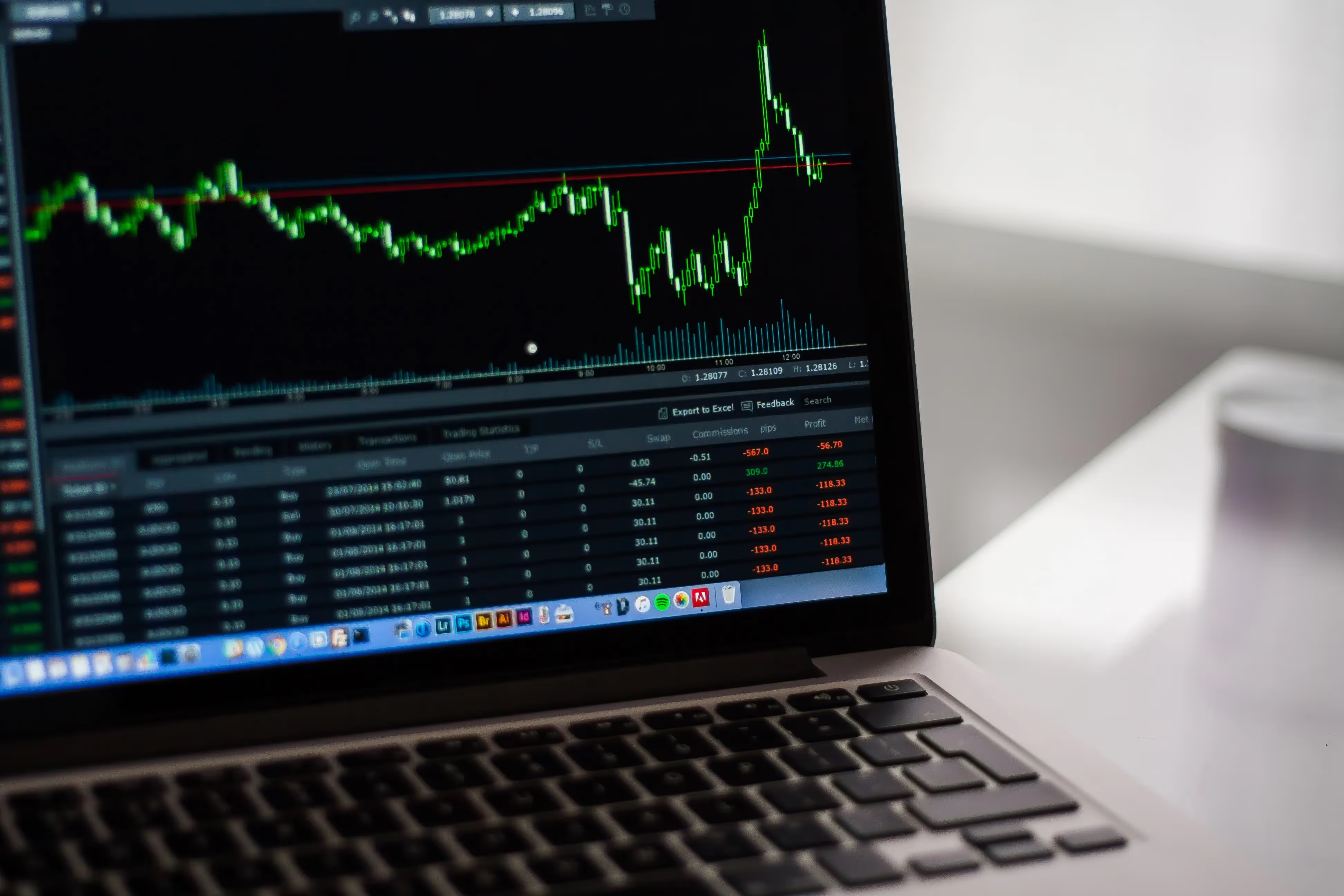
Live trading requires traders to refine risk management, timing, and platform selection. Forex Trading Success Stories demonstrate how honing technical analysis, backtesting, and trading psychology can transform modest stakes into scalable opportunities. A keen understanding of market mechanics and evolving strategies in online forex trading helps traders navigate real challenges with confidence.
Disciplined habits and proven setups lay the groundwork for success in volatile markets. A measured approach to risk and strategy not only improves performance but also builds the foundation for sustainable growth. AquaFunded's funded trading program provides tools and structure to support traders transitioning to live capital.
Summary
- The forex market’s scale demands execution focus; global FX trading reached $9.6 trillion per day in April 2025, so slippage and routing quality materially affect outcomes.
- Liquidity and volatility change by trading window; for example, London runs 0700 to 1600 UTC and New York 1200 to 2100 UTC, and the London-New York overlap concentrates order flow and intraday moves.
- Behavioral and process failures drive churn: 90% of new traders quit within six months, and over 70% of beginners lose money in their first year.
- Ten recurring beginner mistakes, from trading without a plan to misusing leverage, help explain broader failure rates, noting that roughly 95% of forex traders lose money in 2025.
- Demo success rarely predicts live readiness; the recommended sample to prove edge is on the order of 30 to 100 live trades before you increase leverage.
- Only a small minority sustain long-term profits, with about 5% of traders consistently profitable. In comparison, structural factors such as the US dollar being on one side of roughly 89% of trades make correlation and execution awareness critical.
- AquaFunded's funded trading program addresses this by having traders demonstrate their strategy in trial stages and then providing live capital with clear, rule-based risk limits to separate skill development from bankroll constraints.
What is Online Forex Trading

Forex trading is the market where currencies are exchanged, and you can make money by predicting changes in their values. It runs all week on business days, and successful traders view it as a series of distinct trading sessions rather than a single market. To enhance your trading experience, consider our funded trading program, which provides additional capital and resources to help you maximize your potential.
1. Market definition and scale
Key points: It is a worldwide market for buying and selling currencies. Think of it as a nonstop marketplace where prices change in response to economic data, policy decisions, and investment flows. For a sense of scale, consider that BestBrokers.com, "The global forex market is expected to reach $10.2 trillion by 2025". This indicates that the market is growing and that more large companies are getting involved. Also, BestBrokers.com, "The daily trading volume in the forex market is approximately $6.6 trillion," shows the vast opportunities and competing orders that come into the market every day.
2. How do trades execute, and which instruments do you use?
How trades are executed involves buying one currency and selling another in a pair, such as EUR/USD, GBP/USD, or USD/JPY. The price shows how many units of the second currency are needed to buy one unit of the first. Execution happens through brokers or platforms, which send orders to liquidity providers or handle them internally. Traders can choose from market, limit, or conditional orders based on their desired certainty and speed.
3. What are traders actually trying to capture?
Traders seek to capitalize on exchange-rate movements driven by factors such as interest rate differentials, unexpected economic news, political events, and shifts in risk appetite. Some traders focus on small changes in popular currency pairs during busy market periods, while others look for larger price movements over several days. No matter the strategy, every approach depends on correctly matching exposure, placing stops, and determining position size based on expected movement.
4. When are the market hours, and what is the session map?
Market hours and the session map (in UTC) are critical to trading strategies. Session timing matters because trading volume and price behavior vary regularly throughout the week. The regular session times in UTC are: Sydney 21:00 to 06:00, Tokyo 00:00 to 09:00, London 07:00 to 16:00, and New York 12:00 to 21:00. Each session has different participants, news flows, and market rhythms. The hours you pick to trade should match what your strategy needs in terms of liquidity and volatility. If you're interested in maximizing your trading potential, consider exploring our funded trading program.
5. Why do overlaps and session pacing matter?
Overlaps and session pacing are essential for understanding where volume concentrates. When sessions overlap, two groups of participants trade simultaneously, increasing order flow. The London-New York overlap is especially busy, resulting in steeper intraday moves and tighter fills. Since profits and losses depend on both volatility and liquidity, timing entry and exit during these busy periods can significantly improve execution quality.
6. What emotional and execution failure modes are standard?
Emotional and execution failure modes are common among both retail and institutional traders. A common problem is not knowing when to trade, which makes decisions difficult. This uncertainty heightens fear, which can lead to overtrading or panic selling. The stress from these situations can feel exhausting. This can lead to predictable actions, such as chasing moves after they occur or ignoring disciplined risk limits. To address these problems, traders should follow a structured process: define session filters, set entry rules based on liquidity conditions, and use pre-sized risk units. This way, one emotional impulse cannot disrupt a solid plan.
7. What is the familiar approach, and what is its hidden cost?
Most traders manage timing with manual calendars, scattered alerts, and ad hoc order entry because these methods are familiar and require little setup. While this approach works at first, as the number or size of trades increases, delays and mispriced fills can become expensive. Under stress, decisions can get mixed up, and small execution gaps can turn into significant P&L drag. Platforms like AquaFunded provide fast order routing, clear fee visibility, and built-in risk controls. These features help traders reduce execution delays, lower slippage, and maintain discipline as their activity grows.
8. What practical rules can help match sessions to goals?
Practical rules for matching sessions to goals emphasize the importance of aligning trading strategies with market conditions. For directional weekly context, traders should focus on early signals from Sydney and the overlap with Tokyo for initial momentum. When aiming for high liquidity and narrow spreads for short-term scalping, it's best to target the London session and its overlap with the New York session. If you are trading macro news or prominent positions, New York usually sets the tone for the next 24 hours. Use this checklist: select the session, define the allowed instruments, set the maximum risk per trade, and automate entries when possible.
9. What is the short checklist to make timing actionable?
- Pick one or two sessions and instruments, then trade them consistently.
- Define entry triggers that are linked to volume or spread thresholds.
- Size positions so that a typical stop-loss is affordable, both emotionally and financially.
- Log outcomes and change session choices based on your realized slippage and win rate.
How can you treat trading sessions?
Sessions can be treated like currents in a river. By learning where the water flows fastest and where it swirls, traders can effectively set up their strategies, steering their trades in the direction they want.
What is the broader context of timing in trading?
This narrow truth about timing is just the beginning. What follows will challenge how one thinks about skill, discipline, and effort.
Is Forex Trading Hard?

Forex trading is challenging in many ways. However, the difficulty primarily stems from behavior and process, not from exceptional talent. With structured learning, strict risk rules, and real practice, a beginner can become skilled. The real challenge is resisting shortcuts and emotional reactions that can hurt their chances of success.
Why do people say it is too hard for beginners?
Myth 1: “Forex trading is just too difficult for beginners.”
When we reviewed onboarding programs for new traders, we found a clear pattern: people struggle when they try to learn advanced tactics before mastering the basics. In reality, skills such as price action, position sizing, and stop placement are learnable step by step. By starting with one currency pair and practicing entries and exits until they are routine, beginners can make the learning process much smoother. The hard part is forming good habits, not an actual complexity barrier.
Why do people think you need exceptional intelligence?
Myth 2: “You need advanced math or special intelligence to succeed.”
This idea wrongly links skillful use of tools with intelligence. Success in trading depends more on patience, temperament, and adherence to consistent routines than on complex math. Traders who can control their urges, stick to a set risk plan, and accept small losses usually do better than those who chase fancy indicators. In short, discipline is a skill you can train; having a high IQ is not necessary.
Does demo profit equal live readiness?
Myth 3: “If I can make a few demo profits, I’m ready for live trading.”
Demo accounts are great for learning the basics, but they don’t capture the feelings that come with real risk. While demo trading is useful, it reduces the impact of your decisions; fundamental markets introduce factors such as slippage, latency, and fear that can affect your choices. I’ve seen new traders who seemed perfect in simulations but froze or overtraded when real money was on the line. The demo should be viewed as practice, followed by small, rule-based live tests to help train emotional responses.
Is consistent profit a myth?
Myth 4: “Forex is impossible to profit from consistently.”
This negative belief confuses variability with impossibility. Consistent profits are rare, mainly because most traders lack a repeatable strategy and adequate risk controls, not because the markets are unsolvable. When traders stick to a written plan, maintain a set risk for each trade, and follow disciplined review routines, they create opportunities to build on their success. The market rewards actions that can be repeated, not mere wishful thinking. Additionally, our funded trading program can provide the support and resources to help traders develop their strategies effectively.
Why does the learning slope spike early?
Unrealistic expectations often push traders to scale too quickly. Emotional reactions such as fear, impatience, and greed can cause far more damage than the mechanics of trading itself. This pattern is clear across new-trader groups: individuals chase setups without sufficient practice and then blame the market when the real issue is a lack of preparation. Misunderstanding tools is another problem, as traders may treat indicators as decision-making crutches rather than as inputs to a pre-agreed plan.
How does market scale and structure amplify the beginner problem?
The market’s scope makes human mistakes feel bigger than they really are. According to the 2025 Triennial Central Bank Survey, global FX trading reached $9.6 trillion per day in April 2025. This shows why execution quality and timing are more important now than they were ten years ago. Also, liquidity centers often follow the US dollar as a reference currency. In the 2025 Triennial Central Bank Survey, the US dollar was on one side of 89% of FX trades in April 2025, indicating that the dollar drives most price changes and is predictable at a basic level. This means that traders who understand the basics of execution and correlation have a greater advantage.
What practical mistakes make it feel impossible?
This problem shows up in everyday behavior. Traders may overleverage, thinking that margin feels like free money. They might stop following their stop rules after a series of losses or change their strategies weekly after a few bad sessions. These are examples of procedural failures. When AquaFunded-trained traders participated in a three-month program focused on position sizing and trade journaling, their win-rate volatility decreased, and decision noise decreased. Surprisingly, even though their entry techniques remained the same, their overall performance improved.
What do people actually do, and why does it break?
Most new traders manage risk and entries using ad hoc rules because they seem simple and require no additional systems. While this familiar approach can work for a short time, increasing trade frequency and live pressure can expose those shortcuts. Fills and slippage, along with emotional reactions, can quickly turn a small series of losses into a big account blowout. Platforms like AquaFunded offer fast routing, transparent fees, and built-in risk limits that help reduce execution drift. This setup stops impulsive decisions from leading to significant losses. It allows traders to transition from a method to regular practice without exacerbating minor issues.
How should you reframe the challenge?
Think of learning to trade like learning to pilot a small boat in a busy harbor. You can study charts and rules on land and practice docking in calm water. However, the real test is dealing with wind, wake, and traffic. By practicing in controlled live conditions, managing your risk per trade, and using tools that reduce execution surprises, the sea becomes manageable rather than terrifying.
Related Reading
- Forex Trading Success Stories
- Pros and Cons of Forex Trading
- Is Forex Trading Profitable
- How Many Forex Trading Days in a Year
- Forex Secrets
- How to Trade Forex With $100
- Day Trading vs Forex
- Forex Tax Rate
- Is Forex Closed on Christmas
- How to Use ADX Indicator for Day Trading
- Best Time Frame to Trade Forex for Beginners
- Is Forex Trading Hard
- Risk Management in Forex Trading
- Scalp Trading Forex
- Forex Trading Account Types
10 Mistakes Beginners Make While Trading Forex Online
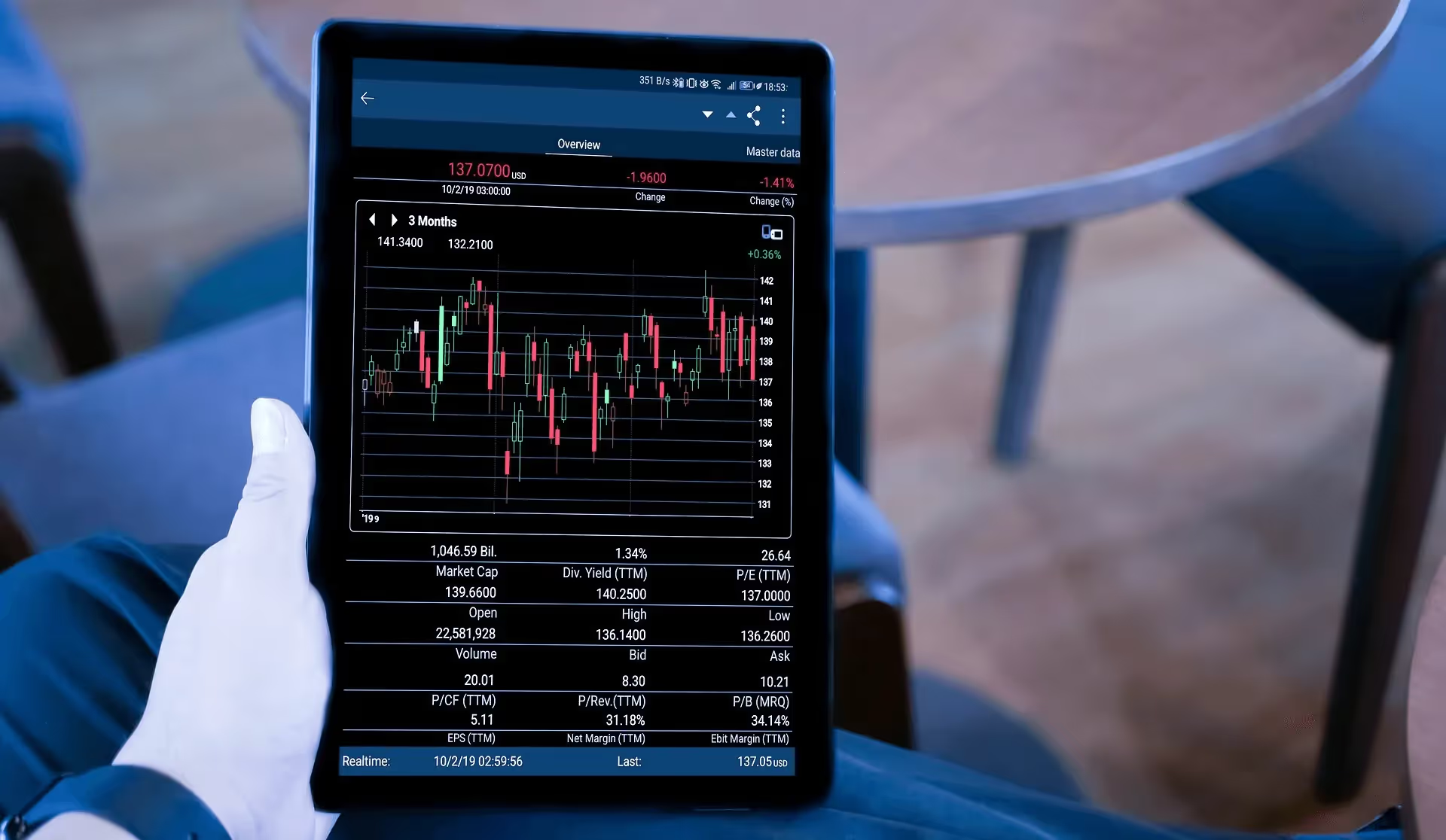
Beginners often fall into ten everyday habits that can quickly weaken their advantage and money. Each habit can be avoided through simple, repeatable rules and disciplined execution. Below, these mistakes are explained along with their real-world effects and how each of them explicitly hinders progress in online forex trading.
1. Trading Without a Clear Plan
- Results vary widely because there is no way to repeat a process to create more winners.
- Strategy elements cannot be separated, making improvement difficult.
- Emotions take over, turning rules into optional suggestions.
2. Weak Risk Management and Bad Position Sizing
- A few significant losses make recovery difficult.
- Their psychology struggles when facing large drawdowns, which can lead to revenge trades.
- They lose the ability to scale or test their strategies effectively.
3. Refusing to Use Stop-Loss Orders
- The size of the losses becomes unpredictable, and the risks to their accounts increase.
- Traders develop unhealthy attachments to their positions, relying on hope rather than evidence.
- Margin calls and forced exits can happen suddenly, not when you expect them.
4. Misusing Leverage
- Volatility that would be acceptable at normal sizes can endanger the entire account.
- Margin calls can wipe out positions before you can make smart adjustments.
- Constant stress from excessive exposure can impair clear thinking and decision-making.
5. Overtrading for Activity’s Sake
- Transaction costs and spread bleed reduce your overall profits.
- Being tired impairs judgment, leading you to accept weaker trade signals.
- Concentrating on quantity stops you from mastering a few reliable pairs.
6. Emotional Decision Making
- Discipline falters, making rules become exceptions rather than the standard way of doing things.
- Slight behavioral changes can accumulate, causing larger performance issues over time.
- Confidence varies, leading to unsteady position sizes and frequent changes in strategies.
7. Ignoring Economic Calendars and Events
- Price jumps that cause slippage and missed stops.
- Strategies made for normal liquidity do not work well when spreads widen.
- Trades often fail for reasons beyond your analysis, leading to a noisy learning experience.
8. Trying to Trade Too Many Currency Pairs
- You may miss critical signals and overlook conflicting drivers between pairs.
- Your time and focus are stretched thin, increasing the risk of errors.
- Systems that work well on one pair may fail when used on others without proper care.
9. What happens when traders have unrealistic expectations?
- Risk appetite increases as they chase returns, which can magnify losses.
- They abandon strategies before they can show meaningful results, based on statistics.
- Burnout and disillusionment set in, reducing the time required to learn.
10. Why is it essential to review trades systematically?
- No feedback loop is present to help improve your entry or exit points.
- Bad habits can become your default trading approach.
- Your progress may depend more on luck than on a reliable process.
What are the broader implications of these mistakes?
This pattern of errors shows up early and often, leading to a high churn rate in retail trading. According to CPT Markets, 90% of new traders quit within the first 6 months. The problem of losing money is also concerning, indicating that process failure, rather than market randomness, is the real enemy. This is also noted by CPT Markets, which reports that over 70% of beginner forex traders lose money in their first year in 2025.
How can ad hoc rules affect trading success?
Most traders address these problems using informal rules because they feel comfortable and don't require new systems. However, this method only works for a short time. As the number of trades, leverage, or account size increases, manual habits can lead to execution errors, missed stop orders, and hidden costs. Platforms like AquaFunded offer faster execution, transparent pricing, and built-in risk controls. These features help reduce execution gaps, lower slippage, and prevent impulsive decisions from becoming serious account mistakes.
What emotional challenges do beginners face in trading?
This list is not just a theory; the emotional side of trading matters a lot. It can be tiring to see your balances change unpredictably, to wake up feeling nervous before an announcement, and to study charts without knowing which changes will last. This stress often explains why many newcomers give up before they see results.
Why Is Having a Trading Plan Essential?
Trading without a plan is like driving at night without headlights. While you might go faster for a little while, you won't see the curve until it is too late.
What is the most frustrating part of trading?
The most frustrating part of trading isn't always the hardest thing to understand.
10 Tips for Online Forex Trading Like a Pro
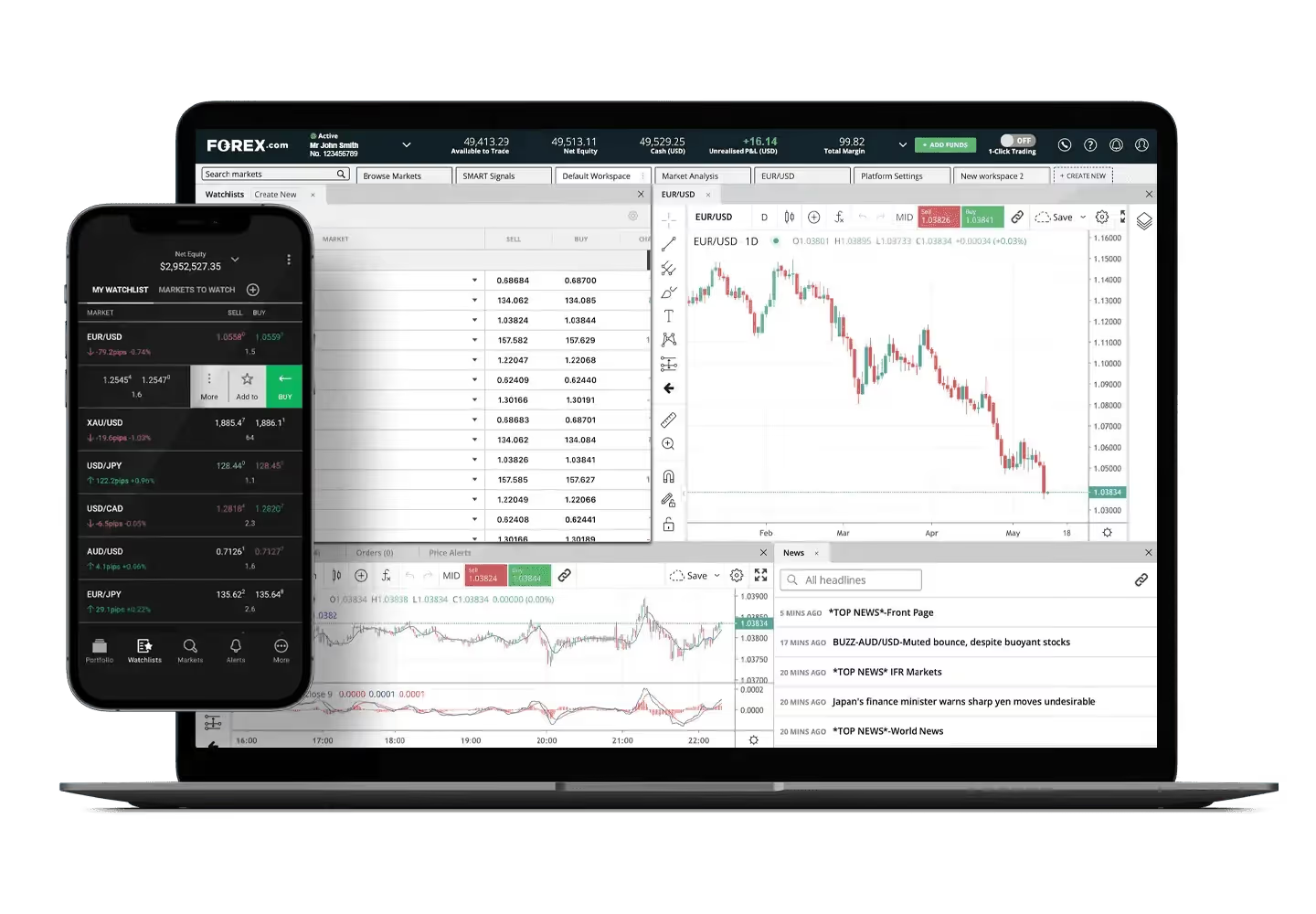
Trade with discipline, not hope. Create a simple checklist to use every time you make a trade. Let your risk rules determine how much you invest before placing any orders.
1. Trade With a Clearly Written, Tested Plan
A good trading plan should be both detailed and easy to use. Start with a one-page rule set that includes: trigger conditions, exact stop placement, target rules, maximum risk per trade, allowed sessions, and contingencies for slipped fills. In a three-month coaching program, traders who converted their spoken plan into a one-page checklist stopped mid-trade adjustments. As a result, their trade-to-trade differences decreased significantly, as decisions became procedural rather than emotional. Treat the plan like a control panel; if a condition is not listed, do not trade.
2. Put Risk Management Ahead of Profit Targets
Establish practical rules that protect your runway. Size every position so that a single loss costs only a fixed small percentage of equity, and enforce a hard daily loss limit to prompt a time-out. Consistently use stop orders and calculate position size based on stop-to-risk, rather than your desired return. This simple discipline ensures you stay in the game long enough for your edge to materialize, which distinguishes occasional winners from sustainable accounts.
3. Use Leverage Sparingly While You Prove Edge
Use leverage sparingly while showing your skills. It's essential to increase your exposure without facing significant problems. Start with a small margin until your strategy demonstrates it can perform consistently across 30 to 100 live trades. Once your win rate, adjusted for volatility, and your drawdown metrics look steady, think about increasing your leverage. Consider leverage as a tuning knob rather than a booster rocket; use it only when your systems and mindset are ready to handle larger changes.
4. Be Selective — Trade Fewer, Better Setups
Focus on quality over quantity in practice. Create a clear checklist that defines what makes a valid setup and stick to it. I encourage traders to limit themselves to one to three setups per week when they begin, and only expand once results justify it. This helps reduce unnecessary trading, keeps transaction costs low, and allows you to improve execution on specific, repeatable conditions through our funded trading program.
5. Make Rules Your Emotional Governor
Make rules your emotional governor by using simple tactics that reduce confusion. Automate stop placement, create a plan for taking profits, and set a hard limit on the amount of risk you will take each day. When your emotions start to get strong, it’s essential to take a break and write down the feeling in your trade log instead of acting on it. This break turns emotional reactions into analyzable data and helps reduce the urge to revenge-trade after losses.
6. Build a Learning Foundation Before Increasing Size
How to structure ongoing education. Combine measured live exposure with focused study: 20-minute debriefs after each trading day, weekly reviews of 10 trades, and a quarterly reassessment of indicators and session choices. Continuous practice paired with immediate feedback closes the gap between knowing a rule and executing it under stress. If you're considering our funded trading program, remember that ongoing education can significantly enhance your performance.
7. Anticipate Economic Events and Adjust Exposure
A clear routine for handling events is essential. Block or reduce the size of high-impact reports, set slippage assumptions in advance, and widen stop buffers when spreads widen. Use a simple traffic-light system: green for normal liquidity, yellow for scheduled risk, and red for unscheduled shocks. This method ensures that decisions are not made under undue pressure.
8. Narrow Your Focus to Master a Few Pairs
Narrow your focus to master a few pairs. Specialization leads to success. By selecting two currency pairs, traders can observe their unique behaviors over 90 days. This includes how these pairs respond to US data, their typical trading ranges by session, and their correlations with major crosses. Mastery comes from repetition with attention; track how often your setups hit profit or stop, not how many pairs you can monitor.
9. Keep Expectations Grounded and Time-Based
Keep expectations grounded and time-based. Establish realistic horizons and measurable goals. Replace phrases like “make X per month” with objective, process-based milestones. For example, aim for a reward-to-risk ratio of 1.5 to 2.5 on average, and limit monthly drawdown to a specific percentage. This approach shifts the focus from chasing returns to building a repeatable system that compounds over time.
10. Choose Platforms That Lower Execution Risk and Support Discipline
How platform choice changes outcomes. Most traders stick with familiar manual strategies because they don’t require new habits, and that makes sense at first. However, as things get more complicated, these strategies can lead to execution issues, fragmented risk controls, and avoidable losses. Platforms like AquaFunded offer quicker routing, transparent fees, and built-in risk limits. This helps traders work faster and keep their decisions aligned with their rules, rather than struggling with the tools as markets move.
Why Does Process Matter in Trading?
A hard truth about why process matters now, not later, comes from data showing that in 2025, TradingView, "95% of forex traders lose money in the market. This statistic highlights how common poor risk control is. Only a small number of traders can make repeatable profits. In fact, TradingView, "only 5% of traders are consistently profitable. Because of this, we should focus on maintaining our capital strength and pursuing a slight, reliable advantage rather than chasing big, unpredictable wins.
What are the risks of informal risk management?
Most teams manage risk using spreadsheets and ad hoc alerts because this method is familiar and easy to implement. While it may work on a small scale, spreadsheets can break down as trade frequency, position size, or market stress increases. Alerts may be missed, and execution errors can lead to significant losses. Solutions like AquaFunded centralize risk controls, enable quick order routing, and provide clear cost insights. This helps traders maintain discipline and move faster without adding extra work.
How should you perceive your trading plan?
Consider your trading plan as a cockpit checklist during a storm, not just a suggestion on a sticky note. In challenging situations, the checklist helps keep the plane from changing direction unexpectedly. With our funded trading program, you can navigate your trading journey with confidence and clarity.
What pressures exist in trading capital?
The real pressure comes when you have to trade other people's capital, and you need to keep control; that's when things get interesting.
Related Reading
- Forex Algo Trading
- Types of Forex Trading
- Forex Trading Spreads
- Forex Market Liquidity
- Forex Mini Account
- Forex Price Action Trading
- Forex Hedging Strategies
- Forex Trend Indicators
- Advanced Forex Trading
- Best Forex Pairs for Scalping
- London Session Forex Pairs
- Best Currency Pairs to Trade for Beginners
- Minor Currency Pairs
- Best Time to Trade USDJPY
- Forex Swing Trading Signals
Join Our Funded Trading Program Today - Trade with our Capital and Keep up to 100% of the Profit.
When progress gets stuck due to a small account size and daily challenges, it can make trading consistently more difficult. You need a straightforward way to keep skill development apart from bankroll constraints. Consider platforms like AquaFunded, which offer funded trading programs. These programs give forex traders access to live FX capital and more precise operational limits. This helps you concentrate on disciplined execution and measurable improvement.
Related Reading
- Best Forex Pairs to Trade During Asian Session
- Best Forex Funded Account
- Top Prop Firms
- Best Prop Firm
- Forex Prop Firms
- Best Forex Pairs to Trade During New York Session
- Best Forex Trading Platform
- Forex Trading for Beginners
- Forex Trading Hours
- Forex Trading Brokers
- Forex Trading Course
- What Is Forex Trading and How Does It Work
- Forex Currency Trading
- Forex Online Trading
- How Does Forex Trading Work
