




13 Best Funded Prop Firms for Beginners
Discover the 13 best funded prop firms perfect for beginners. AquaFunded reveals top-rated firms with proven track records and trader-friendly terms.

Trading with substantial capital without risking personal funds has become possible through funded accounts offered by proprietary trading firms. Understanding what a funded account is becomes crucial when evaluating the best funded prop firms, as these partnerships can transform trading careers by providing significant capital, attractive profit splits, and the freedom to execute strategies without depleting personal savings. The right prop firm offers more than just capital access; it delivers comprehensive support systems that enable traders to focus on performance rather than financial risk.
Selecting the ideal prop trading firm requires evaluating factors beyond marketing promises, including evaluation criteria, scaling opportunities, payout structures, and ongoing trader support. Experienced traders seeking larger allocations and newcomers ready to demonstrate their skills both benefit from firms that prioritize transparent processes and trader success. AquaFunded offers traders competitive profit splits, flexible trading conditions, and straightforward evaluation processes through its funded trading program.
Summary
- Reputable funded prop firms demonstrate reliability through transparent terms, documented payout histories, and clear risk management frameworks. The industry includes both trustworthy operators funding thousands of traders and questionable firms that exploit evaluation fees. Legitimate firms publish profit splits, payout timelines, drawdown limits, and position sizing rules openly on their websites before collecting a dollar. When companies share community-validated payout records showing consistent withdrawals over months or years, that's verification of a sustainable business model, not marketing.
- Evaluation pass rates across the prop trading industry hover around 10%, a statistic that reflects the difficulty of maintaining discipline and risk management even in simulated environments. This number makes some traders suspicious, but it actually reflects that 9 out of 10 traders struggle with consistency and capital protection. The firms that survive long enough to pay out millions across thousands of traders have proven their risk parameters work to protect capital while allowing competent traders to demonstrate profitability. Rules focused on daily drawdowns and maximum losses serve both parties by preventing catastrophic account destruction.
- Transaction costs determine whether profitable strategies remain profitable at scale, yet beginners often overlook spreads until winning trades barely cover execution fees. The gap between the buy and sell prices represents the cost incurred at every position entry and exit. Wide spreads force traders to hold positions for longer or take larger positions to compensate, thereby unnecessarily increasing risk exposure. Firms displaying clear spread ranges before evaluation signal transparency, while those burying costs in fine print reveal they don't want fee comparisons with competitors.
- Evaluation structures that include untimed challenges and rewards during the learning phase acknowledge that skill development happens in stages rather than binary pass-fail outcomes. Most beginners don't pass their first evaluation, making 50% or greater reset discounts essential for continued development without prohibitive costs. Firms offering scaling paths that unlock larger allocations without additional evaluation fees create sustainable growth opportunities, while those keeping traders at initial funding levels limit upside regardless of demonstrated competency.
- Profit split percentages matter less than the payout infrastructure that backs them, as an 80% split with 24-hour processing and documented payment histories outperforms a 100% split with withdrawal delays and unanswered support tickets. Top firms now offer splits of 80% or higher, but the percentage only creates value when money actually reaches trader accounts. Firms with thousands of verified payouts over multiple years have proven their business models work for both parties, while those launched recently haven't survived long enough to demonstrate sustainability across different market conditions.
- AquaFunded's funded trading program addresses these evaluation and payout concerns by offering instant funding access, 48-hour guaranteed withdrawals, profit splits reaching 100% at higher tiers, and fully refundable evaluation fees that align the firm's success with trader performance rather than repeated challenge attempts.
Are Funded Prop Firms Reliable?
Yes, trustworthy, funded prop firms are reliable when they offer clear terms, proven payout histories, and strong risk management frameworks. The industry contains both honest firms and questionable operators that exploit evaluation fees. The difference lies in proven track records, published rules, and community-verified payment proof.
🎯 Key Point: The reliability of a prop firm depends entirely on their transparency and verified payout history - not just their marketing promises.

"The difference between legitimate and questionable prop firms comes down to proven track records, published rules, and community-verified payment proof."

⚠️ Warning: Always research a prop firm's payout history and read trader reviews before paying any evaluation fees - many questionable operators rely on these upfront payments as their primary revenue source.
How do legitimate firms demonstrate transparency?
Established prop firms disclose all terms upfront: profit splits, payout timelines, daily drawdown limits, maximum loss thresholds, and position sizing rules. When these terms appear on the website rather than in fine print, you're dealing with a firm that wants to pay traders, not trap them.
What does payment history reveal about a firm?
Payment history tells the real story. Companies with thousands of verified payouts aren't running a scam—they're running a business model where trader success equals company sustainability. Community-validated payout records showing consistent withdrawals over months or years prove this.
How do questionable operators reveal themselves?
Sketchy operators reveal themselves through what they hide: anonymous leadership, newly launched websites, excessive discounts, and instant funding promises without proper evaluation. These aren't red flags—they're sirens.
Why do prop firms impose strict risk management rules?
Many traders view drawdown limits and position-sizing restrictions as obstacles. Firms set boundaries to protect capital that funds hundreds of accounts simultaneously. When one trader breaks risk parameters and loses $50,000, that loss affects the firm's ability to fund the next qualified trader.
What do pass rates reveal about trader discipline?
According to FunderPro, evaluation pass rates remain around 10% across the industry. Nine out of ten traders struggle with discipline, consistency, and risk management in simulated environments. The 10% who pass demonstrate they can protect capital while generating returns—precisely who should receive funding.
How do risk rules benefit both traders and firms?
Risk management rules help both traders and firms. Traders learn to work within limits that prevent catastrophic losses. Firms maintain capital reserves to fund successful accounts. When a firm survives long enough to pay out millions to thousands of traders, those rules have succeeded.
What makes instant funding legitimate despite common skepticism?
It makes sense to be sceptical about instant funding, given scams in similar areas. However, legitimate instant funding works differently than traders assume. You're not receiving $100,000 in cash to withdraw—you're gaining immediate access to trade using that amount after demonstrating competence through an evaluation. The firm takes the market risk. You execute the strategy.
How do platforms process payouts so quickly?
Platforms like funded trading programs provide capital access once traders pass evaluation challenges. Our 24-hour payout processing demonstrates modern payment infrastructure compared to the multi-week delays some firms impose. Traders withdraw earnings from their trades.
Why do traders confuse access with ownership?
The confusion around instant funding stems from mixing up access with ownership. You don't own the trading capital; you access it under specific terms that protect both parties. When those terms are clear, and payouts are verified, instant funding delivers what it promises: an immediate opportunity to trade with serious capital without risking your savings.
How do evaluation fees reveal a firm's true intentions?
Companies make money from evaluation fees. The question is whether they profit with traders or off traders. Companies that make money only from failed evaluations and endless resets have built a business model around trader failure. They want you to keep paying, not keep trading.
What do legitimate evaluation fees actually fund?
Compare that to companies where evaluation fees pay for the systems supporting thousands of funded accounts: payment processing, risk management technology, customer support teams, and reserves for growing successful traders. When a company pays out millions while charging evaluation fees, those fees cover operational costs rather than serve as the primary revenue source.
How does the business model affect trader success?
This difference shapes how companies operate. Firms that need traders to succeed invest in education, clear rules, and support systems to help traders succeed. Firms that profit from failure add hidden restrictions, change terms during evaluation, and create obstacles around payouts. The business model reveals what the company actually wants.
Benefits of Funded Prop Trading
Funded prop trading gives you access to capital you couldn't save, infrastructure you couldn't afford, and significant profit splits. You trade with a firm's resources while keeping a substantial portion of gains—an arrangement that works when your skill generates returns justifying the capital allocation.

🎯 Key Point: The beauty of prop trading lies in the leverage multiplier effect—your $5,000 personal account becomes a $100,000+ trading vehicle overnight, amplifying your potential returns without requiring decades of capital accumulation.
"Successful prop traders can earn 70-90% of their trading profits while accessing 10-20x more capital than they could fund independently." — Industry Analysis, 2024

⚠️ Warning: While the capital access is immediate, remember that most prop firms require you to prove consistent profitability before scaling your account size—it's not free money, but rather earned leverage based on demonstrated trading performance.
Why do personal savings limit trading opportunities?
Personal savings limit opportunity. A trader with $5,000 can execute only small position sizes with proportional returns. One bad week can erase months of growth.
How do prop firms remove capital limitations?
Prop firms remove that ceiling. You get access to $25,000, $100,000, sometimes $200,000 or more in buying power without moving funds from your bank account. The firm takes on the risk of losses while you run the strategy. When the trade works, you split the profit. When it doesn't, you haven't lost your rent money or depleted your emergency fund.
What psychological advantages does prop capital provide?
Trading with money you can't afford to lose creates desperation. Every position feels like a matter of survival, and decisions are clouded by fear rather than guided by strategy. Prop capital changes that dynamic: you can focus on execution instead of catastrophe.
What kind of education do legitimate prop firms provide?
Prop firms provide structured education built around strategies that work in today's market conditions, including risk management frameworks, position-sizing formulas, and backtesting methodologies. This knowledge typically takes years to develop through trial and error.
How do training programs improve trader success rates?
According to Investing.com Analysis, 95% of traders fail within their first year. Most beginners lack the discipline, risk awareness, and strategic thinking required to navigate market changes. Training programs addressing these gaps help traders succeed.
Why is mentorship from experienced traders valuable?
Learning from traders who have managed real money provides knowledge that books and videos cannot teach. They have seen how strategies fail under stress, which patterns break down in volatile markets, and the difference between strategies that look good on paper and those that work in practice. This knowledge accelerates your learning.
What technology advantages do prop firms provide?
Big traders use platforms, data feeds, and analytical tools that cost thousands of dollars per month. Retail traders managing $10,000 cannot afford these expenses. Prop firms provide that infrastructure as part of the deal. Real-time market data, advanced charting software, algorithmic execution tools that reduce slippage, and risk management dashboards are competitive necessities in markets where milliseconds and basis points determine profitability.
How does automated risk management protect traders?
The technology enforces discipline through automation: daily loss limits that lock your account before emotions take over, position sizing calculators that prevent overleveraging, and automated alerts when you approach risk thresholds. These guardrails protect you from impulsive decisions that can destroy your account.
How do profit-sharing structures reward trading performance?
How you get paid in prop trading ties your success to the firm's success. You earn a percentage of the profits you generate, typically 50% to 100%, depending on the program and your performance. Platforms like AquaFunded offer profit splits up to 100% for top performers, with payouts processed in 24 hours and backed by a $1,000 guarantee. Payout records showing consistent withdrawals over months prove the model works.
Why does this business model benefit both traders and firms?
The arrangement creates a sustainable business model: firms profit when traders succeed, and traders profit when they develop consistency and scale performance. Neither party benefits from failure, which shapes how firms structure evaluations, support systems, and growth opportunities.
How do prop firms enable scaling without additional capital?
Successful traders at prop firms don't stay at their starting funding level. A trader who regularly makes money on a $50,000 account might grow to $100,000, then $200,000, eventually managing multiple accounts with over $1 million in buying power without additional capital. Your track record becomes your collateral. The firm increases your allocation because data shows you can handle bigger positions while maintaining risk discipline. Growth stems from proven skill rather than accumulated capital.
What metrics determine your scaling progression?
The scaling path provides clear milestones: profit targets, maximum drawdown limits, and consistency requirements over a specific number of trading days. You know exactly what metrics unlock the next funding tier. But access to capital and technology matters only if you're partnering with a firm that wants you to succeed. Our funded trading program provides the capital and tools you need to scale your trading.
Related Reading
- What is a Funded Account
- How to Grow a Small Trading Account
- What is Trading Commodities
- Long Term Trading Strategy
- Capital Growth Strategy
- What is a Cash Account in Trading
- What is Compound Trading
- How Much Money Do You Need to Start Trading Stocks
- Scale Trading
- Small Account Trading
- How to Evaluate Investment Opportunities
- Blown Trading Account
- What is PNL in Trading
- Do Prop Firms Use Real Money
- Prop Firm Account Management
- Borrowing on Margin
- Trading Leverage
- Does FTMO Offer Instant Funding
- Prop Firm Static Drawdown
- Funding Traders Rules
- What Is Prop Firm Account
- Synthetic Funded Account
- What Is Funded Firm
- Trading Challenges
- Prop Firm IP Address Rule
- Instant Funding Rules
- Do Prop Firms Use Real Money
- How to Get a Funded Trading Account
- FTMO vs The5ers Comparison
- Best Forex Pairs to Trade
- Best Automated Crypto Trading Platform
- Prop Firms in USA
How to Choose the Best Funded Prop Firm for Beginners
Look for clear fee structures, realistic evaluation requirements, and documented payout histories. Choose firms that publish rules upfront, provide educational support, and don't profit from failed challenges. The right firm treats your success as its business model.
🎯 Key Point: A legitimate prop firm makes money when you make money, not from challenge fees alone. Look for firms with transparent profit-sharing models and proven trader success stories.
"The best prop firms have payout rates above 80% and provide comprehensive trading education to help traders succeed." — Prop Trading Industry Report, 2024

⚠️ Warning: Avoid firms that have complex withdrawal processes, hidden fees, or require you to pay monthly subscriptions after funding. These are red flags that indicate the firm profits more from fees than from successful trading.

Why do spreads and execution costs matter for your trading edge?
Transaction costs decide whether a profitable strategy remains profitable at scale. A spread is the gap between the buy and sell price of an asset—the cost you pay each time you enter and exit a position. Wide spreads require larger price movements to break even, which shrinks your edge before execution. Beginners often overlook this until winning trades barely cover costs. A firm offering tight spreads on major currency pairs or liquid futures contracts gives you room to profit from smaller moves. Wide spreads force longer holding periods or larger position sizes to compensate, both of which increase risk exposure.
How can you identify transparent execution costs?
Good firms display their spread ranges clearly before you buy. If you must contact support or read the fine print to find out about execution costs, the firm discourages fee comparisons with competitors. Transparency reveals whether the firm expects traders to succeed or struggle against hidden friction.
What capital requirements should beginners consider?
According to Phidias Propfirm, beginners can start with $55 for evaluation accounts. This matters when testing whether prop trading suits you without spending hundreds of dollars upfront.
How do you calculate the value of evaluation costs?
Compare the account cost to the buying power it unlocks. A $100 evaluation leading to a $25,000 funded account gives you 250 times the leverage on your initial investment. A $200 evaluation for the same capital cuts that ratio. This calculation directly affects your risk-reward profile.
Why do scale-up opportunities matter for long-term growth?
Scale-up opportunities separate firms that want you to grow from those that don't. When you consistently hit profit targets while respecting drawdown limits, top firms increase your allocation from $25,000 to $50,000 to $100,000 without additional evaluation fees. Your performance serves as collateral for greater capital access. Firms without scaling paths limit your upside regardless of trading performance.
How do untimed evaluations reduce trading pressure?
Time limits create artificial pressure unrelated to trading skill. If you work full-time or care for family, a 30-day evaluation window forces quick decisions to meet the deadline. Firms offering untimed challenges let you advance based on performance rather than calendar constraints. You hit the profit target and follow risk rules whenever your schedule permits consistent trading.
What rewards can you earn during evaluation phases?
Some firms give rewards during the evaluation phase itself: smaller payouts or account credits as you show consistency, even before full funding. That structure reduces the financial burden of learning and acknowledges that improvement happens in stages, not binary pass-fail outcomes.
Why do reset discounts matter for skill development?
Resetting options with discounts matters when building skill. Most beginners don't pass their first evaluation. Companies offering 50% or greater discounts on retries understand that learning includes mistakes, emotional reactions, and strategy changes requiring time to master. They're investing in your growth rather than maximising revenue from each attempt.
What educational resources do the best firms provide?
Having access to a platform doesn't make you a better trader. The best firms offer organized education addressing specific beginner gaps: risk management frameworks explaining position sizing, backtesting methodologies for strategy validation, and emotional discipline training for live trading pressure. Many traders feel abandoned after paying evaluation fees, left to figure out complex platforms and risk rules through trial and error. Firms that profit from failure have no incentive to improve their chances. Firms that profit from your success invest in training, responsive support, and educational resources to help you learn faster.
How do professional trading tools impact your success?
Tools for creating professional-grade charts, providing live data feeds, and enabling automatic risk management require licensing and maintenance fees. When firms include these in their evaluation and funding accounts, they eliminate the need for thousands of separate subscriptions. This infrastructure becomes a competitive advantage as you scale. Platforms like funded trading program combine instant funding access with 24-hour payout processing and comprehensive trader support, enabling beginners to focus on skill development without bureaucratic delays. Our transparent profit splits up to 100%, and fully refundable evaluation fees align our success directly with trader performance.
What questions should legitimate firms answer upfront?
Every company should answer these questions on its website before you pay anything: What's the daily drawdown limit? What's the maximum total loss allowed? How many trading days must you demonstrate consistency? Which instruments are restricted? Are there minimum or maximum position sizes? Can you hold trades overnight or over weekends? When these details appear in FAQ sections, terms of service documents, and public dashboards, you're dealing with a company that expects questions. When you must email support or discover restrictions after paying, you're dealing with a company that conceals problems until you've spent money. The difference reveals whether they see traders as partners or merely as revenue sources.
Why do profit splits matter less than reliable payouts?
Profit split percentages matter less than beginners assume. According to the World Business Outlook, top firms now offer profit splits of 80%or higher. An 80% split with fast, reliable payouts beats a 90% split with withdrawal delays, hidden fees, or sudden rule changes. The percentage matters only if you receive the money.
13 Best Funded Prop Firms for Beginners
Choosing your first prop firm means matching evaluation structure, capital access, and support systems to your skill level and trading style. The firms below offer verified track records, transparent rules, and beginner-focused features. Each provides different advantages depending on whether you prioritise instant funding, multi-asset flexibility, educational depth, or scaling potential.

🎯 Key Point: The right prop firm for beginners balances manageable evaluation criteria with strong educational support and clear progression paths.
"Beginner traders who choose prop firms with transparent rules and educational resources are 3x more likely to pass their first evaluation compared to those who prioritize only funding amounts." — Prop Trading Research, 2024

💡 Tip: Focus on evaluation structure and support quality over maximum funding amounts when starting your prop trading journey.
1. AquaFunded

Instant funding removes the waiting period between proving you can do the job and accessing capital. Complete a simple evaluation, demonstrate strong risk management, and start trading with AquaFunded's capital within 24 hours. Get immediate access to accounts up to $400,000, with no multi-phase challenges or verification delays.
How does the profit structure benefit traders?
The profit split reaches 100% at higher tiers, meaning every dollar you generate stays with you. Combined with 48-hour payout guarantees and fully refundable evaluation fees, the financial structure aligns with trader success. When firms profit from your trading performance rather than from repeated challenge attempts, incentives shift toward support rather than obstacles.
What makes their trading requirements flexible?
Flexible profit targets and relaxed daily limits let beginners develop consistency without artificial pressure. You're not racing arbitrary deadlines or risking account termination from a single bad trading day. The structure prioritizes sustainable skill development over short-term metrics.
Why does community support matter for new traders?
The community aspect matters more than most beginners expect. Access to traders facing similar challenges, sharing strategy adjustments, and discussing emotional discipline creates peer accountability that books and videos cannot replicate. Clear rules published upfront prevent hidden restrictions from emerging mid-evaluation.
2. For Traders

AI-powered performance coaching analyzes your trade execution, identifies behavioural patterns that reduce profits, and suggests specific adjustments based on your trading history. This feedback loop shortens the gap between recognizing mistakes and correcting them.
How do customizable challenges improve trading success?
Customizable challenges let you adjust risk parameters and profit targets to match your strategy, rather than forcing your approach into rigid templates. A scalper trading forex needs different drawdown limits than a swing trader holding crypto positions overnight. When the evaluation structure adapts to trading style, pass rates improve because rules align with realistic execution. Multi-asset capabilities across forex, crypto, futures, commodities, and metals offer diversification without opening accounts with separate firms. According to For Traders, the platform offers a $5,000 first prize in the Euro Trading Cup, demonstrating investment in competitive trader development.
What tracking tools help traders improve performance?
Built-in trading journals and analytics track every position, entry timing, exit reasoning, and emotional state during execution. Most traders overestimate their discipline and underestimate their emotional reactions until they see timestamped evidence. Fast 48-hour payouts with clear pricing eliminate withdrawal concerns, while reliable support resolves technical issues before they impact trading opportunities during volatile market windows.
What limitations should traders consider?
The platform can be complicated for beginners unfamiliar with basic order types and position sizing. MT5 and cTrader also restrict certain features for US residents.
3. FTMO
FTMO's documented payout history across thousands of traders over multiple years demonstrates that the business model works. That track record reduces the risk of partnering with newer firms whose viability remains unproven.
How does FTMO's evaluation process test trader consistency?
The evaluation process includes separate challenge and verification phases that test consistency across different market conditions, demonstrating repeatable performance that justifies ongoing capital allocation and filters for discipline rather than luck.
What educational resources does FTMO provide for traders?
Educational resources cover specific risk management frameworks, position sizing formulas, and psychological preparation for evaluation pressure. The FTMO Calculator helps traders understand how drawdown limits work with position sizes before risking real evaluation attempts.
What funding levels and profit splits does FTMO offer?
Funding ranges from $10,000 to $200,000, with profit splits reaching 90% at higher levels. Our simple rules and intuitive interface reduce cognitive load during evaluations. Strict daily loss and drawdown limits create psychological pressure that can trigger emotional reactions and destroy accounts. The structure favours traders who have already built strong discipline rather than those still developing it.
4. OneFunded
Low entry barriers starting at $2,000 let beginners test prop trading without significant upfront commitment, helping you determine if the evaluation structure matches your approach.
What trading flexibility does OneFunded offer?
Flexible rules that allow news trading, weekend holds, and expert advisors remove common restrictions. If your edge comes from volatility around economic releases or algorithmic execution, you need a firm that permits those approaches rather than banning them outright.
How do OneFunded's scaling and profit structures work?
Accounts range from $2,000 to $100,000 with profit splits reaching 90%. No time limits on challenges eliminate artificial urgency that causes rushed decisions, allowing you to progress based on performance metrics rather than calendar constraints. Clear rules and reliable payouts lay the foundation for trust in long-term partnerships. When you know exactly what's expected, and payouts arrive as promised, you can focus on trading instead of worrying about rule changes or withdrawal delays.
What are OneFunded's main limitations?
Smaller account sizes limit initial earnings compared to those offered by firms with $50,000 or $100,000 starting allocations. Fewer advanced analytical tools may require separate subscriptions for sophisticated charting or backtesting, depending on your strategy.
5. The Funded Trader
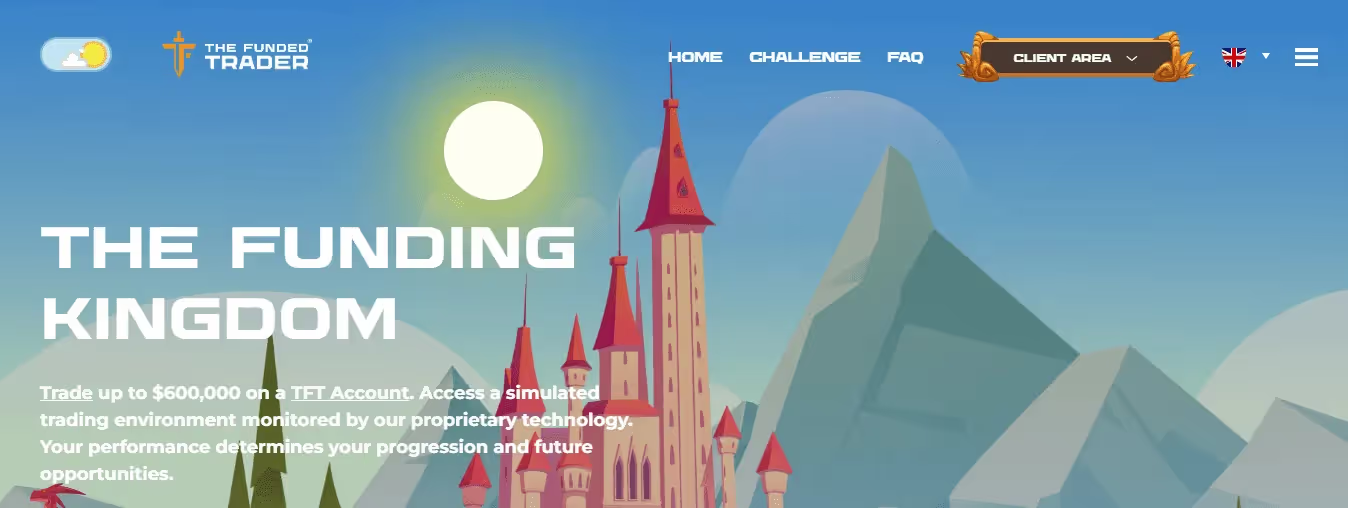
Gamified interfaces transform evaluation pressure into engagement through achievement systems, milestone rewards, and visual progress tracking. This psychological shift helps beginners maintain motivation when facing setbacks during skill development.
How do multiple challenge paths improve trader success?
Different challenge paths work for different trading styles without forcing uniform rules. Scalpers need different settings than position traders, and day traders require different drawdown calculations than swing traders. When firms offer pathway options, more traders pass because the rules align with how they actually work.
What profit splits and drawdown limits does The Funded Trader offer?
Profit splits reach 90% with a maximum drawdown of 6%, giving traders more room for position changes than firms imposing 4% or 5% limits. This flexibility matters for beginners learning position sizing and stop-loss placement.
What are the advantages and limitations of The Funded Trader?
High Trustpilot ratings around 4.7 out of 5 reflect positive customer experiences supported by hundreds of verified reviews. The company maintains clear rules that prevent traders from encountering hidden restrictions after paying evaluation fees. The firm focuses on forex and CFD trading, which limits options for traders interested in futures or crypto markets. It lacks the global recognition of FTMO or For Traders, resulting in a smaller community and fewer resources for strategy discussion.
6. Funded Trading Plus

Flexible programs with quick funding options let beginners choose between traditional evaluation paths and immediate capital access based on their confidence level and preparedness.
How does the scaling system work for growing traders?
Growing your accounts as you make more profits gives you clear goals to work toward. You start with an initial amount, demonstrate consistent trading performance, and gain access to larger accounts without additional evaluation fees. Profit splits can reach 100% at higher levels, meaning the firm makes more money when you make more money. This aligns the firm's incentives with your success. You can also choose from different platforms like MT5, cTrader, and TradingView, so you can trade using tools you already know rather than learning new software while being evaluated.
What makes this platform accessible for beginners?
Fast payouts and 24/7 support address common pain points. Low entry costs, starting at $119, make it accessible to beginners with limited capital.
What challenges should traders be aware of?
Picking the right program options requires careful thought. Ensure the evaluation structure matches your trading style. Some programs begin with simulated profits before transitioning to real money, which can be confusing if you're unsure whether you're trading on a real or practice account.
7. TopStep Trader

A futures-focused structure provides specialized education and evaluation designed for derivatives markets rather than generic trading principles. This specificity benefits those interested in commodities, indices, or interest rate futures.
What makes TopStep's evaluation process effective?
Structured evaluation helps traders develop good habits by setting clear daily goals and requiring consistency. Coaching and webinars from experienced futures traders provide information that books don't cover, particularly regarding contract details, margin requirements, and rollover mechanics. Profit splits around 80% with simulated evaluations that match real trading conditions, preparing you for live market execution.
What are the limitations of TopStep's approach?
This platform focuses exclusively on futures trading, excluding traders interested in forex, crypto, or stocks. The limited flexibility prevents the use of different strategies across markets, making cross-market arbitrage and correlation analysis impossible.
8. BrightFunded

Trading multiple asset types with unlimited growth potential removes the limit on career growth within a single firm. According to MarketMates, the platform serves over 45,000 students, demonstrating significant reach for learning opportunities with other traders. Capital access reaches $400,000 with weekly payouts processing in as little as 4 hours, a speed that matters when deciding whether firms actually pay traders or make withdrawals difficult.
What profit-sharing and trading options does BrightFunded offer?
Profit splits reach 100% at top tiers. Our crypto options covering 40+ pairs let you diversify in digital asset markets that most traditional prop firms don't offer. The loyalty program rewards consistent traders through lower fees, priority support, and faster scaling timelines, making long-term partnerships more valuable than constantly switching firms.
What are the potential drawbacks of choosing BrightFunded?
Founded in 2023, BrightFunded lacks the long history of established competitors, which increases the risk that operational changes or issues could affect your funds. The platform's advanced features may require a learning curve for newcomers.
9. The5ers

Low barriers to entry and instant funding options provide quick capital access for traders who are confident in their preparation. The structure encourages long-term trading careers through progressive scaling rather than one-time evaluation passes. Profit splits reach 80% with flexible trading rules that permit news trading and weekend holds. Scalable accounts grow with demonstrated performance, creating clear advancement paths without additional evaluation purchases. Smaller profit potential compared to firms offering $100,000+ starting allocations limits initial earning capacity. Fewer advanced analytics tools mean you'll need third-party software if your strategy requires sophisticated backtesting or multi-timeframe analysis.
10. My Funded Futures
One-step evaluation processes eliminate multi-phase verification, allowing you to demonstrate competency once and begin trading with firm capital immediately. No daily loss limits on most accounts removes termination risk from single bad trading days, reducing the psychological pressure that causes emotional reactions and poor decision-making.
What profit sharing and market access does My Funded Futures offer?
Profit splits reach 100% for the first $10,000 earned, then 90% thereafter. Trading futures on top exchanges, including CME, CBOT, COMEX, and NYMEX, provides access to liquid markets with tight spreads.
What are the limitations of My Funded Futures?
You can choose your payout frequency and select account options suited to your cash flow needs and trading style. However, the platform focuses exclusively on futures, so beginners interested in forex or crypto trading cannot use it. The platform may also prove challenging to learn initially if you lack experience with futures-specific software.
11. SurgeTrader
Quick evaluation and instant funding get real money to traders faster. Flexible rules permitting weekend and news trading remove common constraints on strategy choices. Capital reaches $250,000 with profit splits up to 80%. Shorter evaluation phases mean faster funding. However, lower profit splits than competitors' 90-100% mean you keep less of your earnings. Limited global community presence means fewer opportunities to learn from other traders and discuss strategies compared to firms with active Discord servers and educational forums.
12. FXIFY

You can withdraw your money immediately and trade daily without delays or time restrictions. With up to $4 million in total capital available through FXIFY, you have substantial room to grow your account. You can keep up to 90% of the profits you make. FXIFY supports automated trading strategies, including expert advisors, allowing traders to use computer programs for automatic trading. Setting up MT4 or MT5 can be challenging for newcomers unfamiliar with MetaTrader. FXIFY offers limited beginner training, so you'll need to seek external resources to learn basic trading concepts and risk management.
13. BluFx
A forex-focused structure with low entry costs and no time limits provides an accessible introduction to currency trading. Support for automated trading enables the deployment of algorithmic strategies and expert advisors. Capital reaches $100,000 with profit splits between 70-80%. Clear rules and educational resources reduce confusion during evaluation phases.
What are the limitations of BluFx?
Being limited to forex trading means you cannot diversify across different investment types. Smaller maximum account sizes compared to firms offering $200,000+ allocations limit earning potential for traders ready to scale beyond $100,000 in buying power. Finding your ideal match requires understanding how the evaluation structure, support systems, and trading flexibility align with your development stage, not your capital size or profit splits.
Related Reading
- Sources of Capital
- Cash Reserve Account
- Short Term Stock Trading
- Investment Performance Analysis
- Managed Account vs Brokerage Account
- Systematic Trading
- How to Analyze a Stock Before Buying
- Forex Capital Trading
- What is a Retracement in Trading
- How is Risk Involved in Calculating Profit?
- Convergence Trading
- Liquidity Trading
- Futures Trading Minimum Account Size
- What is Drawdown in Trading
- No Activation Fee Prop Firm
- Prop Firms That Allow Trade Copiers
- Best Prop Firms in UAE
- Regulated Prop Firms
- Prop Challenge
Find Your Perfect Beginner-Friendly Funded Prop Firm
Finding your first prop firm comes down to alignment. You need evaluation structures that match your current discipline level, support systems that fill your knowledge gaps, and transparent rules that don't punish you for learning. Firms that succeed long-term want your success because it creates their revenue stream, not your repeated evaluation fees.
🎯 Key Point: Most beginners chase the largest capital allocations and highest profit splits, assuming bigger numbers equal better opportunities. But a $200,000 account with a 4% daily drawdown limit will terminate your trading faster than a $50,000 account with 6% breathing room if you're still calibrating position sizing. The capital size only matters if the risk parameters let you execute your strategy without constant termination anxiety.
"Untimed challenges signal confidence that competent traders will eventually pass when they're ready, while 30-day countdown clocks create artificial urgency that has nothing to do with trading skill." — Industry Analysis, 2024
Evaluation timelines reveal firm philosophy more than marketing language does. Untimed challenges signal confidence that competent traders will eventually pass when ready. Thirty-day countdown clocks create artificial urgency unrelated to trading skill, forcing rushed decisions that lead to failures and reset purchases. If your schedule involves full-time work or family commitments that prevent daily trading, time pressure can make it difficult to demonstrate your ability to manage risk and generate returns.
⚠️ Warning: When comparing profit splits, look past the percentages to the payout infrastructure behind them. An 80% split with 24-hour processing and documented payment histories beats a 100% split with vague withdrawal timelines and support tickets that go unanswered for weeks. Firms with thousands of verified payouts over multiple years have proven their business model works for both parties. Firms launched six months ago, promising revolutionary splits, haven't survived long enough to demonstrate sustainability.
Platforms like AquaFunded simplify the decision by removing friction points that overwhelm beginners. Our instant funding access, flexible daily limits that accommodate learning curves, and fully refundable evaluation fees shift the model away from profiting off repeated failures toward supporting sustainable trader development. When our funded trading program offers 100% profit splits at higher tiers and processes payouts in 48 hours with guarantees, the incentive structure aligns completely with your success rather than your struggle.
🔑 Takeaway: Your trading style determines which restrictions matter most. If your edge comes from volatility around economic releases, you need a firm that allows news trading rather than banning positions during high-impact announcements. If you hold swing positions across multiple days, weekend trading rules become critical. If you run algorithmic strategies, expert advisor permissions aren't optional features but fundamental requirements. Match your actual execution approach to the firm's allowed methods before paying evaluation fees.
Related Reading
- How To Take Profits From Stocks
- Accumulation Distribution
- Short-Term Capital Gain Tax On Shares
- What Is Reit Dividends
- Cash Available To Trade Vs Settled Cash
- Best Pairs To Trade Forex
- Can You Day Trade In A Roth Ira
- What Is A Conditional Order
- Orb Strategy Trading
- Stop Loss Vs Stop Limit
- Flag Pattern Trading
- Characteristics of Growth Stocks
- Forex Compounding Plan
- Top Trading Prop Firms
- Forex Prop Firms in the US
- Prop Firms That Use MT5
- Prop Firms With Instant Funding
